A hip-fired Gnasher blast in Gears of War: E-Day begins as two possible shots. The Coalition says the game checks one path from the camera and another from the shotgun's muzzle, then applies whichever better matches what the player expected to hit. Only one blast reaches the fight. Behind it sits a small, revealing admission: in a third-person shooter, physical accuracy and visual fairness are not always the same thing.
The studio disclosed the system in its 30 September launch update, after two August beta weekends and a round of weapon tuning. In Gears 2 through Gears 5, aiming down sights fired from the camera, while hipfire travelled straight from the Gnasher's muzzle. The latter sounds more literal, but it could produce a maddening result near cover or at an awkward angle: a target appears caught in the spread, yet the weapon's lower, offset origin sends the shot elsewhere.
E-Day's answer is not a new reticle or an aim-assist flourish that players must learn. It is an arbitration step. When the player fires at a target from the hip, the game checks both interpretations of the shot and uses the one that better agrees with the visible setup. The Coalition summarises the goal plainly: a shot that looks as though it should hit should hit. The Coalition hasn't published the exact rules it uses to choose.
The camera and the barrel disagree
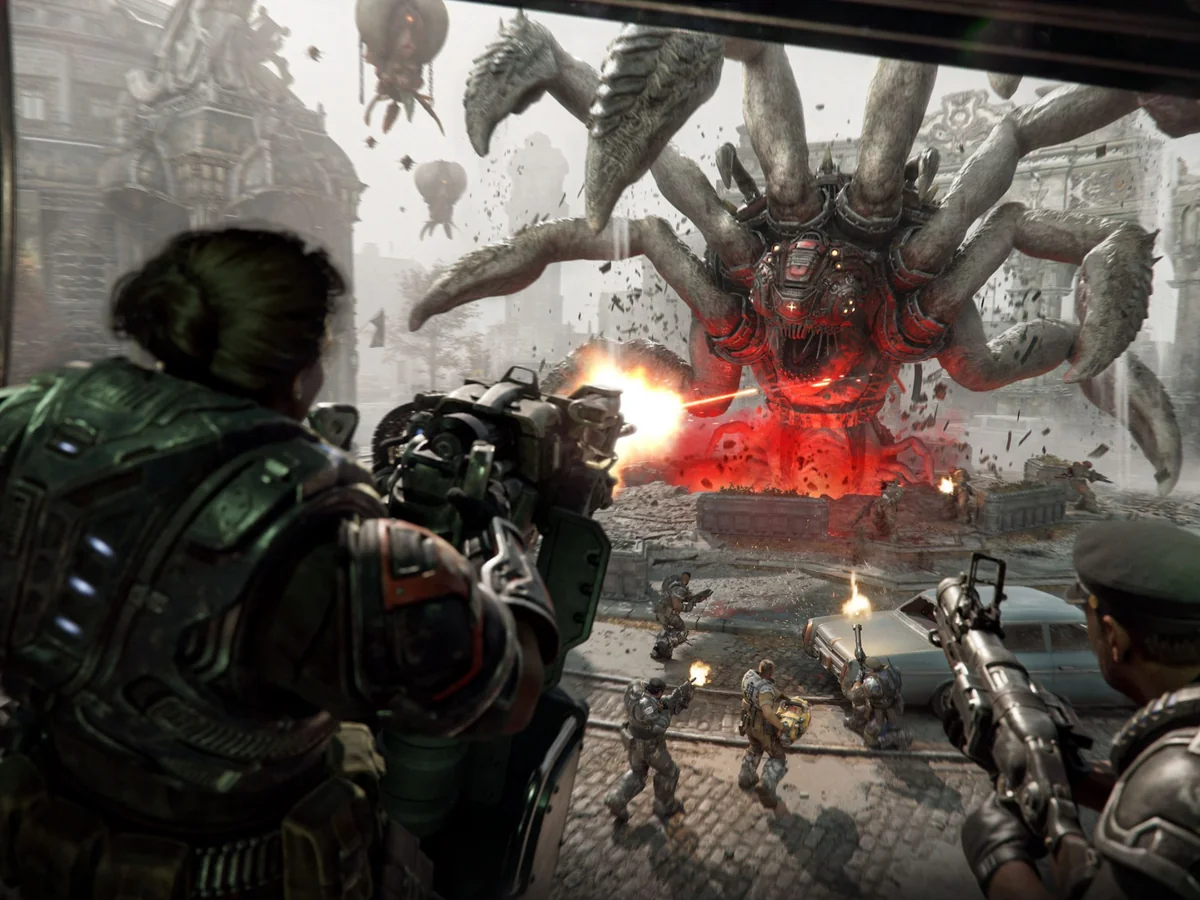
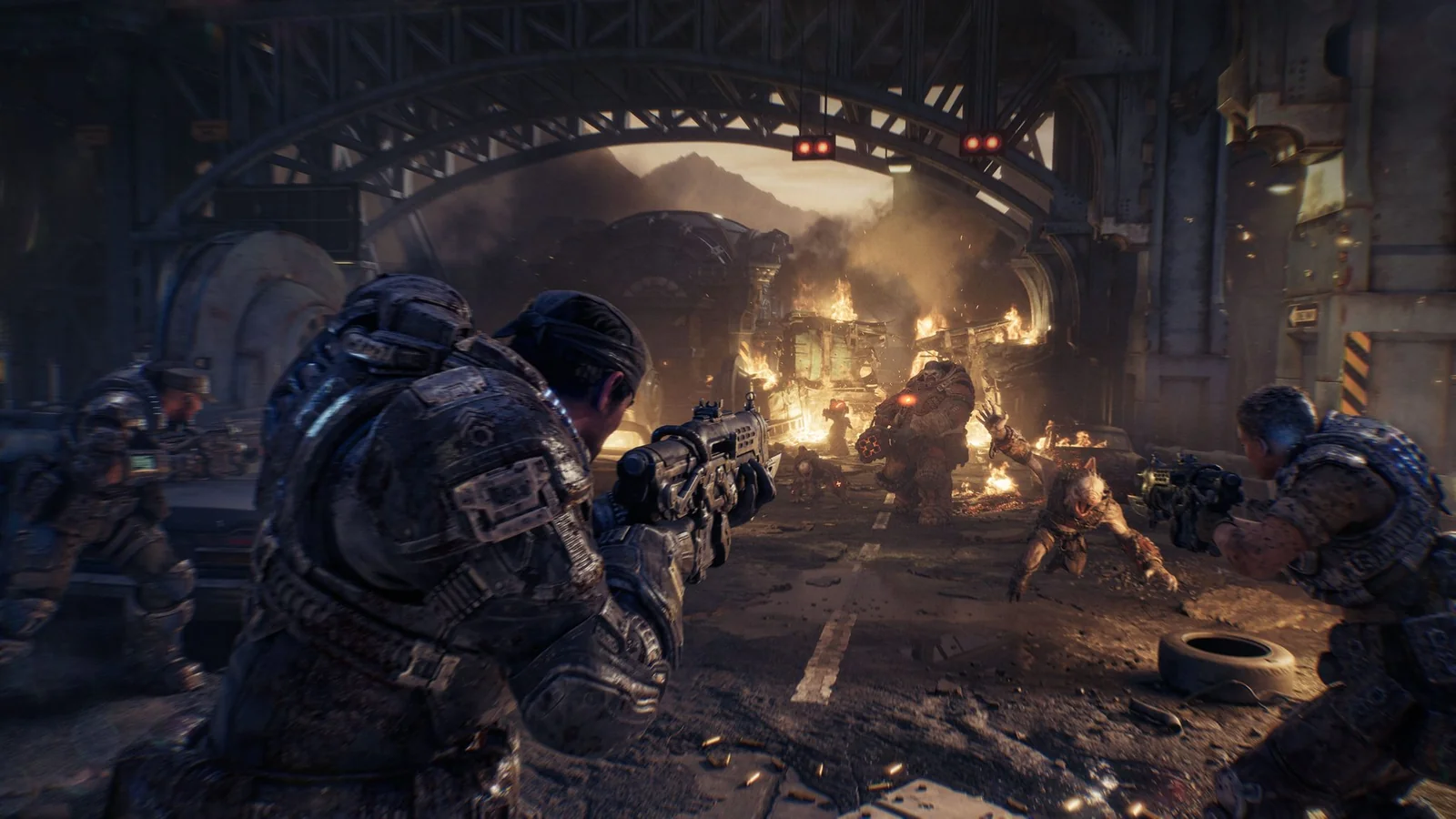
Third-person gunfire has an unavoidable geometry problem. The camera looks over and behind the character, while the barrel sits lower and to one side. A ray cast from the centre of the screen can clear a corner that the physical weapon has not cleared; a projectile leaving the muzzle can clip nearby cover even when the reticle rests on an enemy. Neither origin is universally honest. One respects the weapon's position in the world, while the other respects the picture used to make the decision.
The Gnasher makes that disagreement unusually visible because its work happens at conversational distance. Players slide towards cover, turn through a doorway or fire while two bulky characters nearly fill the screen. It's also where years of Gears muscle memory live, which is why a technical correction like this matters. A close-range weapon lives or dies by whether a familiar input produces a legible result quickly enough to trust it.
A fairer hit can still feel heavy
Choosing the more intuitive of two shot checks could sound like the game is quietly bending space for the player. It is, but only to reconcile two views that the game itself presents. The muzzle remains meaningful because it supplies one candidate; the camera is not treated as unquestionable because it supplies the other. The interesting choice is not realism against assistance. It is which piece of the staged image should carry authority when the character model, gun and reticle cannot all occupy the same line.
The surrounding changes show that The Coalition is not simply removing friction from close combat. Its July gameplay breakdown reduced the Gnasher from eight shells to six and added round-by-round active reloading, letting a player feed in one or two shells rather than commit to a full reload. Cover entry now carries more momentum, and cancelling it requires getting within 1.5 metres of the destination. The 30 September update then reduced slide distance and adjusted cover-entry speed after the beta. Reliable hit interpretation sits inside a harsher rhythm of commitment, ammunition and positioning.
That's why consistency can't be separated from timing. A hit that registers fairly still has to come out of movement that feels heavy but responsive, and the slide and cover changes tune exactly that: how long you commit before you can cancel, and how far a slide carries you into a fight.
The invisible fix has to earn trust
E-Day's launch update says the Gnasher now uses the hybrid check for hipfire and keeps the established camera-origin shot while aiming. It also reports improved hipfire consistency, more damage while aiming at range and multiple fixes to movement, input delay and shots registering outside the direction of the barrel. Latency, spread and animation will still shape what you think happened in a close fight.
The feature is nevertheless more interesting than a simple accuracy buff. Extra damage would change who wins a duel; this system changes which representation of the duel the game trusts. It accepts that the player does not see the battlefield from the shotgun's stock and that strict muzzle simulation can become misleading when the camera has already framed a clean hit. The correction remains invisible unless it fails, which is exactly the point. Nobody should have to picture two rays before pulling the trigger.
Gears of War: E-Day launched for PC and Xbox Series X|S on 6 October, after Premium Edition early access from 1 October. Its Gnasher will still be judged in fractions of a second, by players with years of habits and very little patience for a blast that feels stolen. Checking two possible shots is a clever compromise because it does not ask them to choose between the camera and the barrel. It asks the game to settle that argument before the pellets fly.
Sources
Where this story comes from, and where you can check it.
Official sources
- Gears of WarEmergence Begins – Tomorrow ↗
- Gears of WarGears of War: E-Day Gameplay Updates ↗