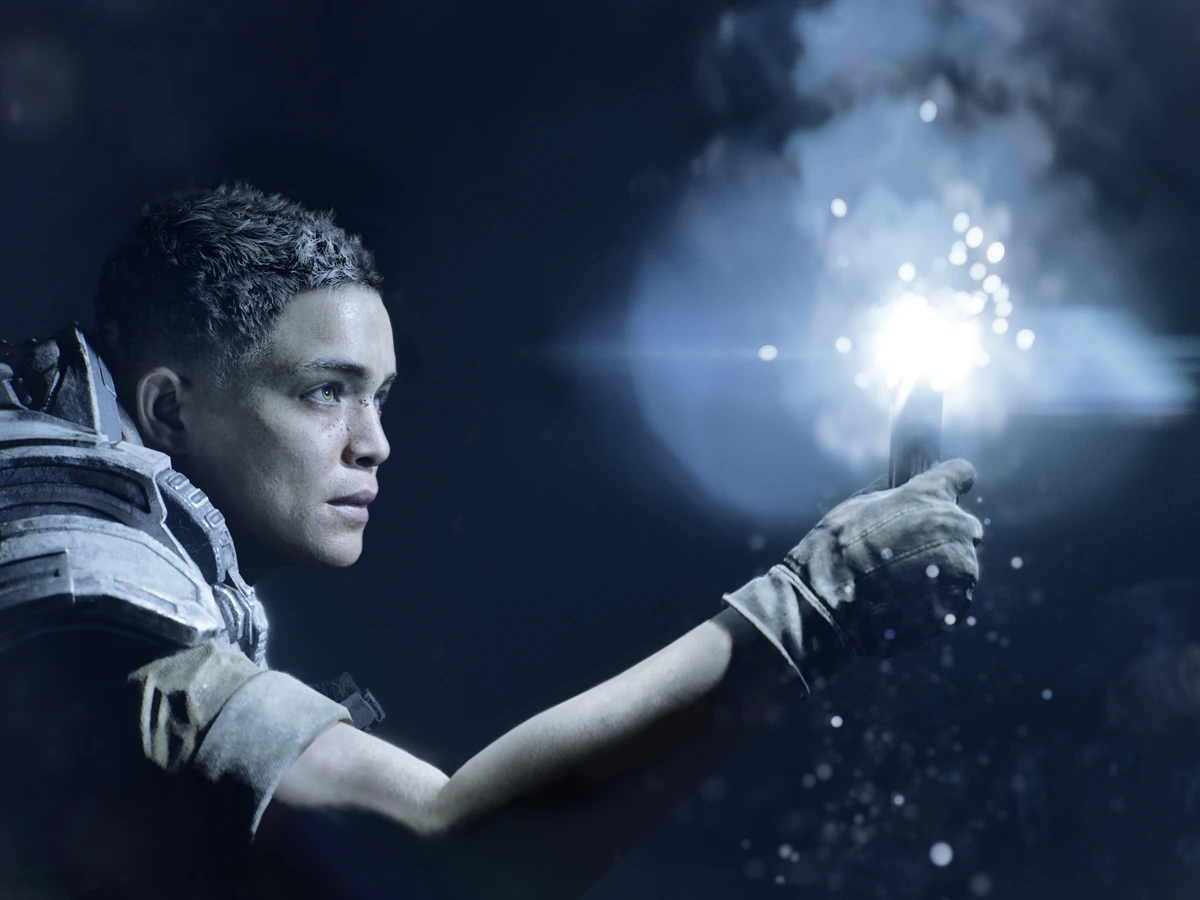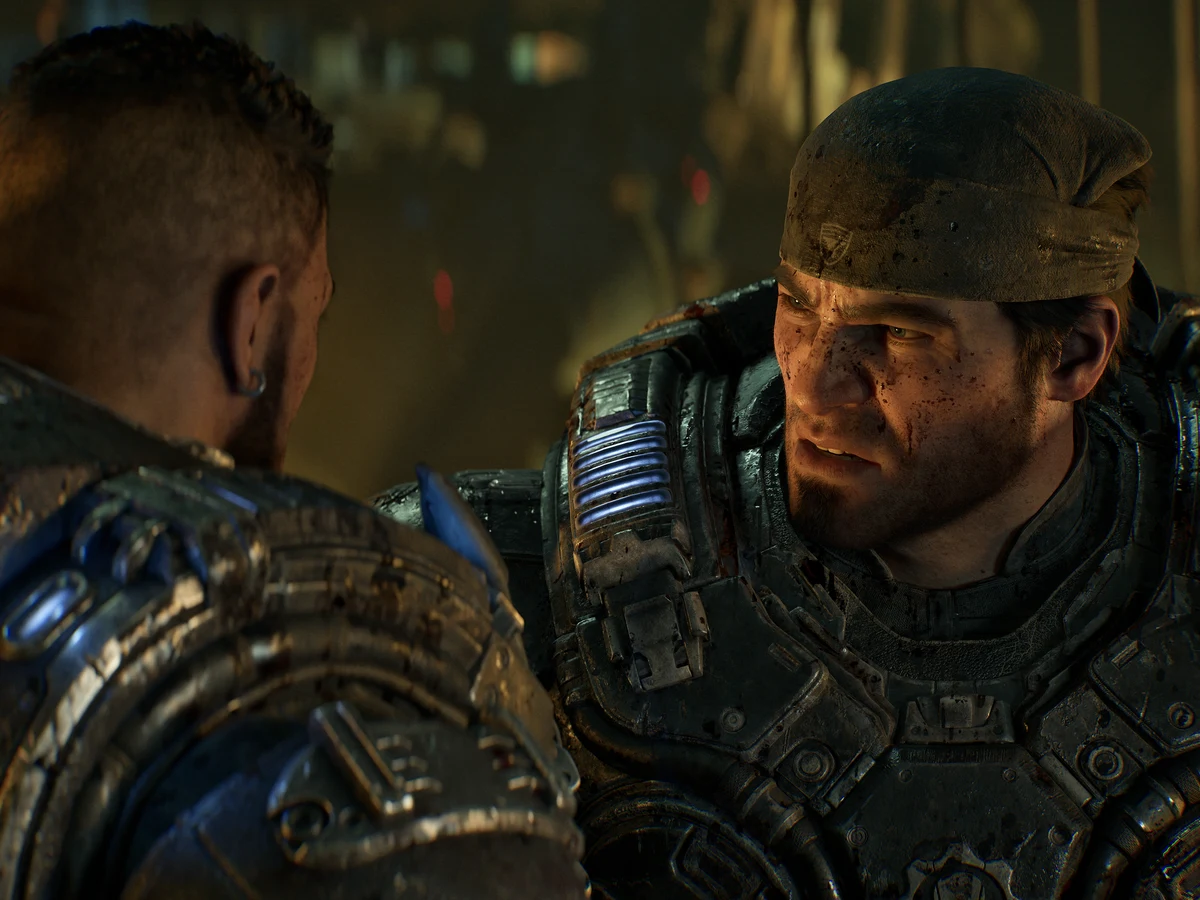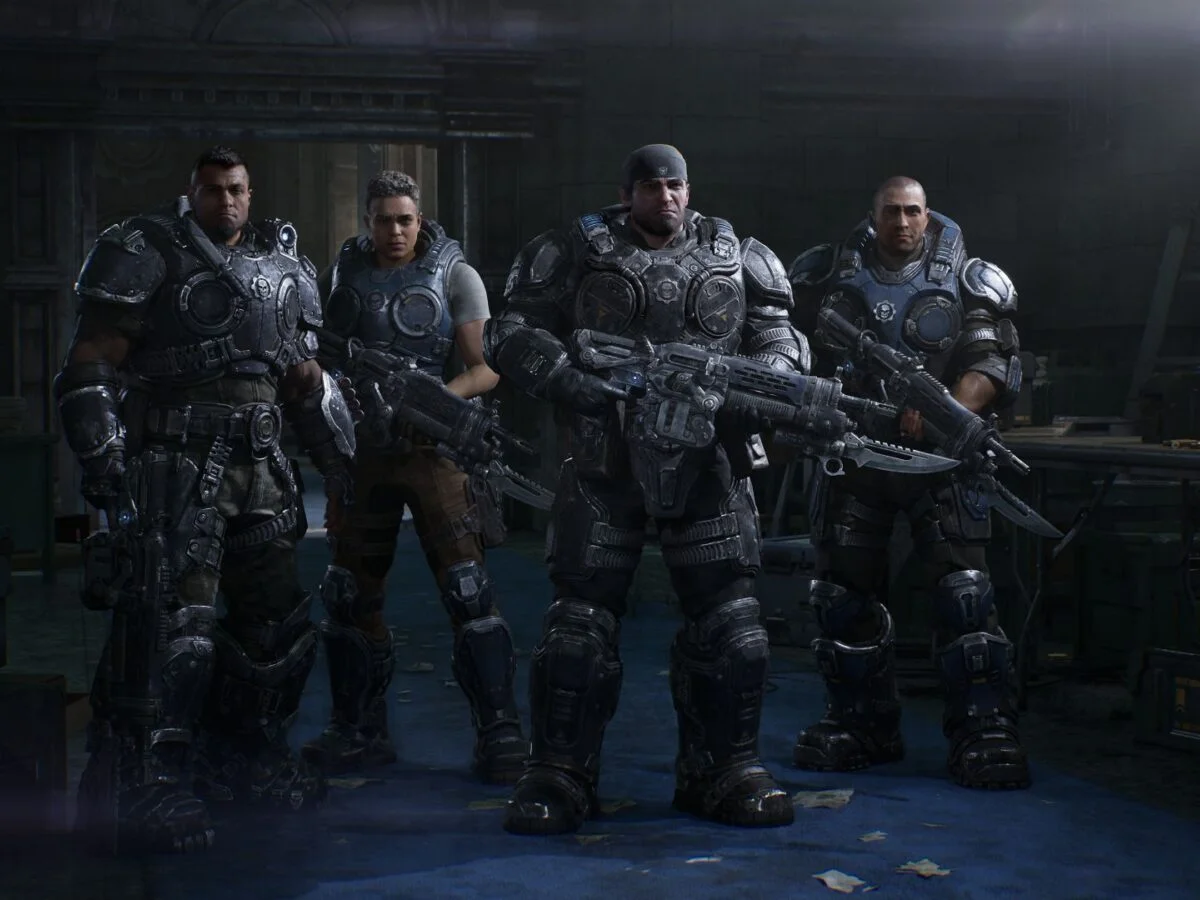
Legacy Bridge keeps coming back in Gears of War: E-Day. In GamesRadar+'s PC campaign review, Andy Brown describes returning to the landmark several times as Kalona falls apart around it. A bridge is a useful thing to remember in an invasion: you can recognise the place and still find that the city on either side has changed.
With the full game released on PC and Xbox Series X|S on 6 October, that repeated geography gives E-Day a more interesting way to tell its origin story than simply introducing younger Marcus Fenix and Dom Santiago. The Locust invasion is familiar history to returning players. Kalona supplies something they haven't already lost: a city whose ordinary uses are still visible as the fighting takes them over.
A stadium with a new job
The Coalition's campaign design director Raul Figueroa explained the approach on September's Official Xbox Podcast. The team wanted players to see the city before the catastrophe, during it and into its aftermath. Familiar landmarks would change as the campaign progressed. Keeping the action in one city gave the developers a way to follow particular people through an event much bigger than any squad.
Xbox Wire's August campaign demonstration offered unusually concrete examples. City Hall had become a makeshift command centre and medical triage point. Oria Stadium was now a military forward base. These details belong to that preview account, rather than a GamerGuru play session, but they explain the appeal clearly: civic buildings have work to do, and the emergency has abruptly changed what that work is.
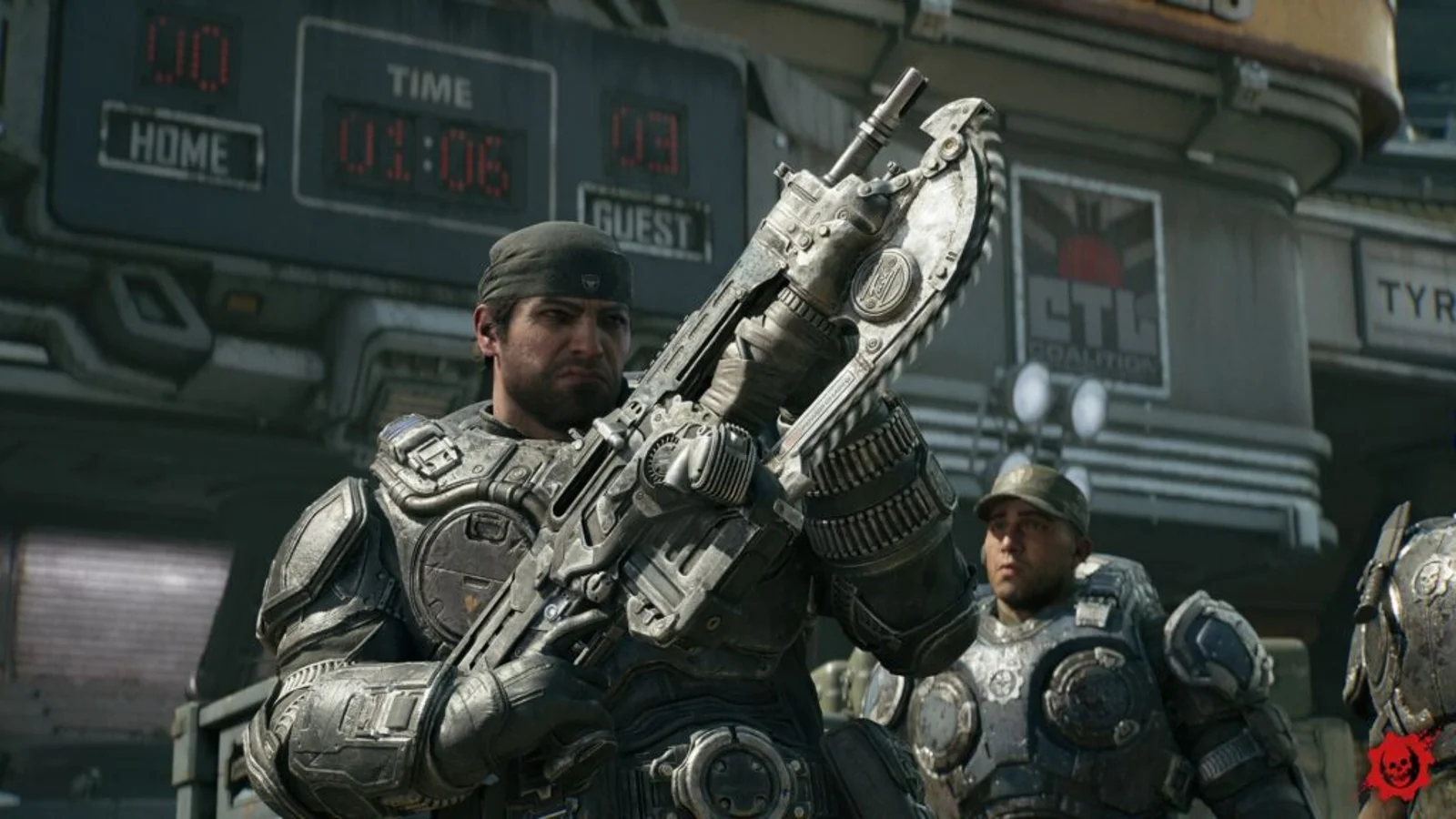
A stadium is especially good at carrying that change. Its stands and scoreboard still describe a place built for spectators, even when the people occupying it are soldiers. The official image of Marcus holding the Chainsaw Lancer leaves the scoreboard in view behind him. You don't need an account of every cancelled fixture to understand that something else used to happen here.
In the same demonstration, Bravo Squad picked up a tourist pamphlet that became the map for the more open city segment. That's a lovely practical detail. A document meant to help visitors enjoy Kalona becomes a way to navigate a military emergency. It gives the city a civilian past without requiring the story to stop and deliver a lecture about it.
Return to somewhere you recognise
Brown's finished PC campaign account supplies the important follow-through. He describes a city of dockyards, military forts and Gothic streets, with billboards celebrating the end of the earlier war against the Union of Independent Republics. E-Day then brings him back to locations such as Legacy Bridge while their surroundings deteriorate. The setting has a recent memory of peace as well as a future the audience already knows.
Revisiting a landmark gives destruction a reference point. Another ruined building can register as scenery; a place you recognise lets you compare what is there now with what was there before. That is the value of Figueroa's before-and-after approach. Kalona can communicate the invasion's progress through a changed place, alongside the dialogue and the arrival of larger monsters.
There is a limit to what that geography can carry. In TheSixthAxis's Xbox Series X review, Nick Petrasiti praises the environmental detail but finds that the larger exploratory stretches lose momentum. He also argues that repeated Locust introductions gradually blunt the initial terror. A familiar place can deepen a return visit, but it doesn't automatically make every journey between encounters compelling.
Those accounts describe different responses to the campaign, rather than a settled verdict on its pacing. Their useful point of contact is Kalona itself: both notice the detail of a city being devastated. The closer argument here is that returning landmarks give that detail a sequence. The player has something to remember while the game shows what the invasion is doing to it.
A scoreboard behind an armed soldier does quiet work in a game with very loud monsters. It preserves the stadium's earlier purpose in the middle of its new one. Legacy Bridge extends that idea across repeated visits: the invasion keeps changing a place the player can recognise. Kalona's destruction has something specific to take away.
Sources
Where this story comes from, and where you can check it.
Official sources
- Xbox WireGears of War: E-Day Campaign - Brotherhood and Hope in a Hopeless World | Official XBOX Podcast ↗
- Xbox WireGears of War: E-Day Campaign Hands On - Brutal, Brilliant, and Quintessentially Gears ↗
- Xbox WireGears of War: E-Day - Surviving the First Night of Emergence ↗