Star Wars: Galactic Racer is worth watching because it is trying to make a campaign choice matter as much as the next corner. Fuse Games is not simply promising a familiar selection of events wrapped in Star Wars scenery. Its published description frames the solo campaign as a series of runs in which the player chooses a vehicle, upgrades it and selects events on the route to the Galactic League. That structure could give an arcade racer a welcome sense of consequence, provided those choices alter how a race is approached rather than merely changing a menu before it. The release is confirmed for 6 October on PC, PlayStation 5 and Xbox Series X|S. The important uncertainty is whether its runs make defeat, recovery and experimentation feel connected.
The route should be more than a bracket
Fuse has said that players will make consequential decisions about their path to becoming an elite pilot, from a starting vehicle and upgrades to the events selected along the way. The studio calls that inspiration from runs-based games. Game Informer's preview independently reports a single-player mode with roguelike sensibilities alongside arcade modes, time trials and online multiplayer. That is the detail that separates the project from a straightforward licensed racer. A branching route can make a safe event, a difficult rival or a risky upgrade part of one continuing judgement. It is only an appealing premise at present, not proof that the finished campaign sustains that tension.
TechRadar's Summer Game Fest hands-on describes a map where the player picks routes through races, choosing safer progress or greater risk and reward. Its writer also reports that vehicle parts interact with track conditions, including water and heat. Taken together, that suggests the campaign may ask players to read the next location as well as their current position in a race. The useful version of that idea is not an enormous list of components. It is a meaningful question before an event: should this build favour durability, handling or a track-specific advantage, and what does that choice cost on the following stop?
Vehicle classes need to change the racing language
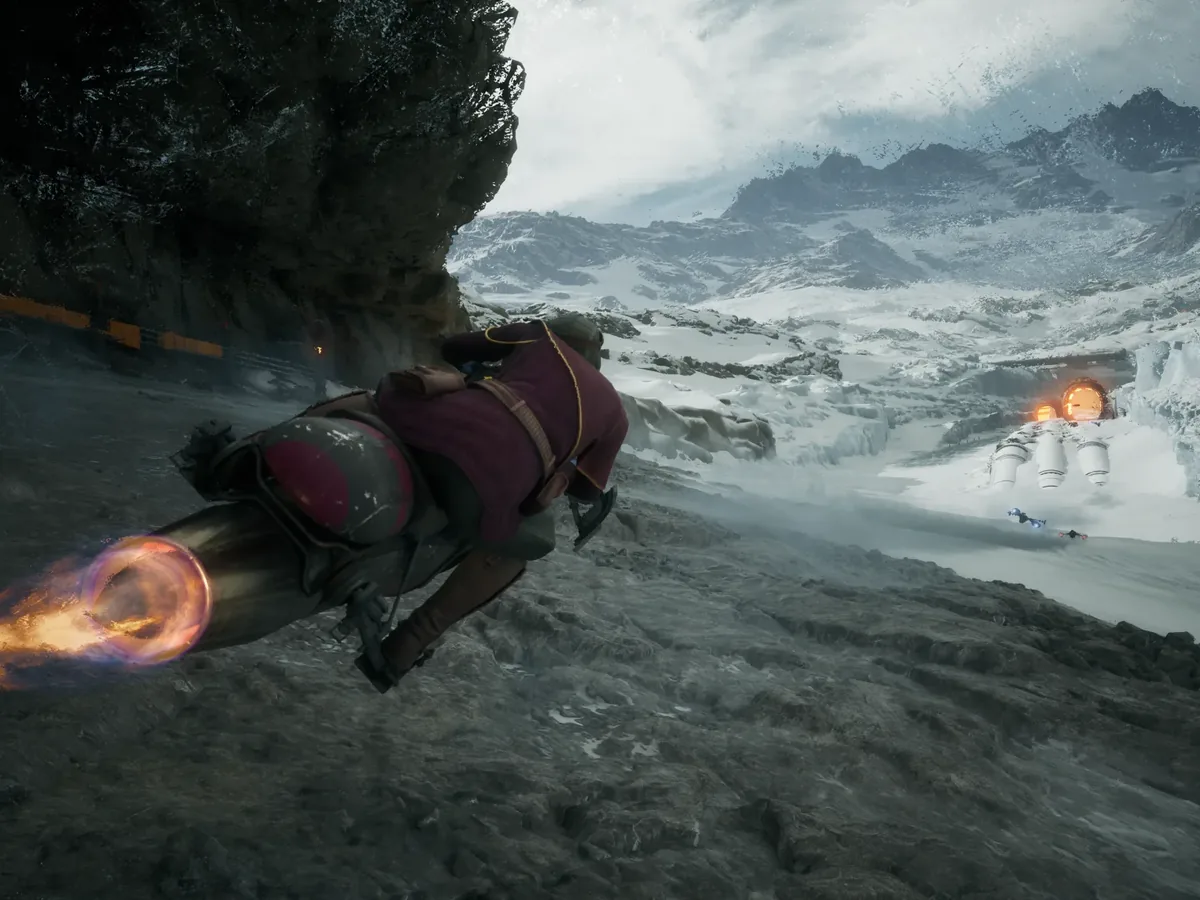
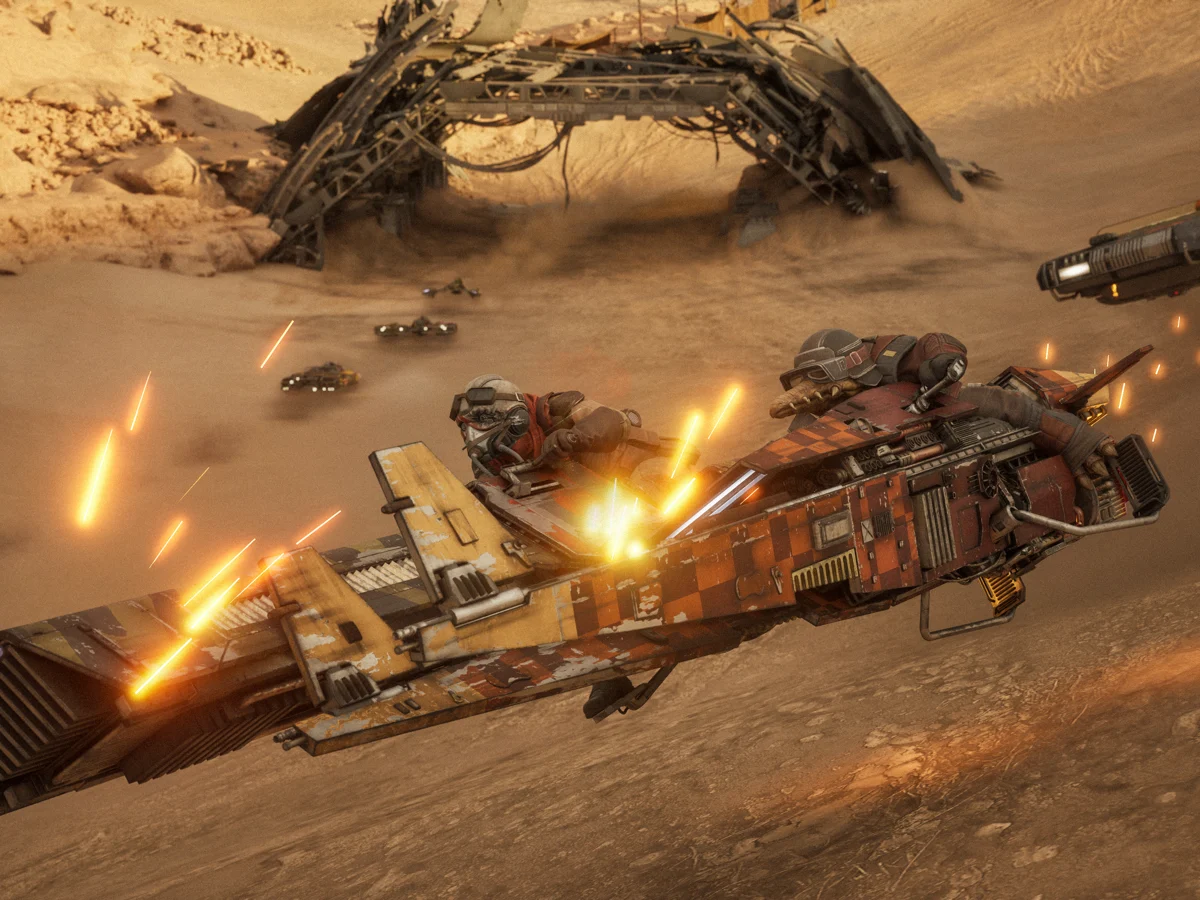
The official material gives that campaign choice a physical basis. Fuse has shown landspeeders, speederbikes and a new skim speeder, with each class described as having distinct capabilities. The studio says skim speeders reward momentum, flowing lines and banking through narrow gaps, while speederbikes demand heavier braking and hard acceleration on the exit. It has also said that different classes can race together, bringing their different lines into contact. That is a better reason to pay attention than the presence of a recognisable licence: the same circuit could ask for a different rhythm depending on the machine brought to it.
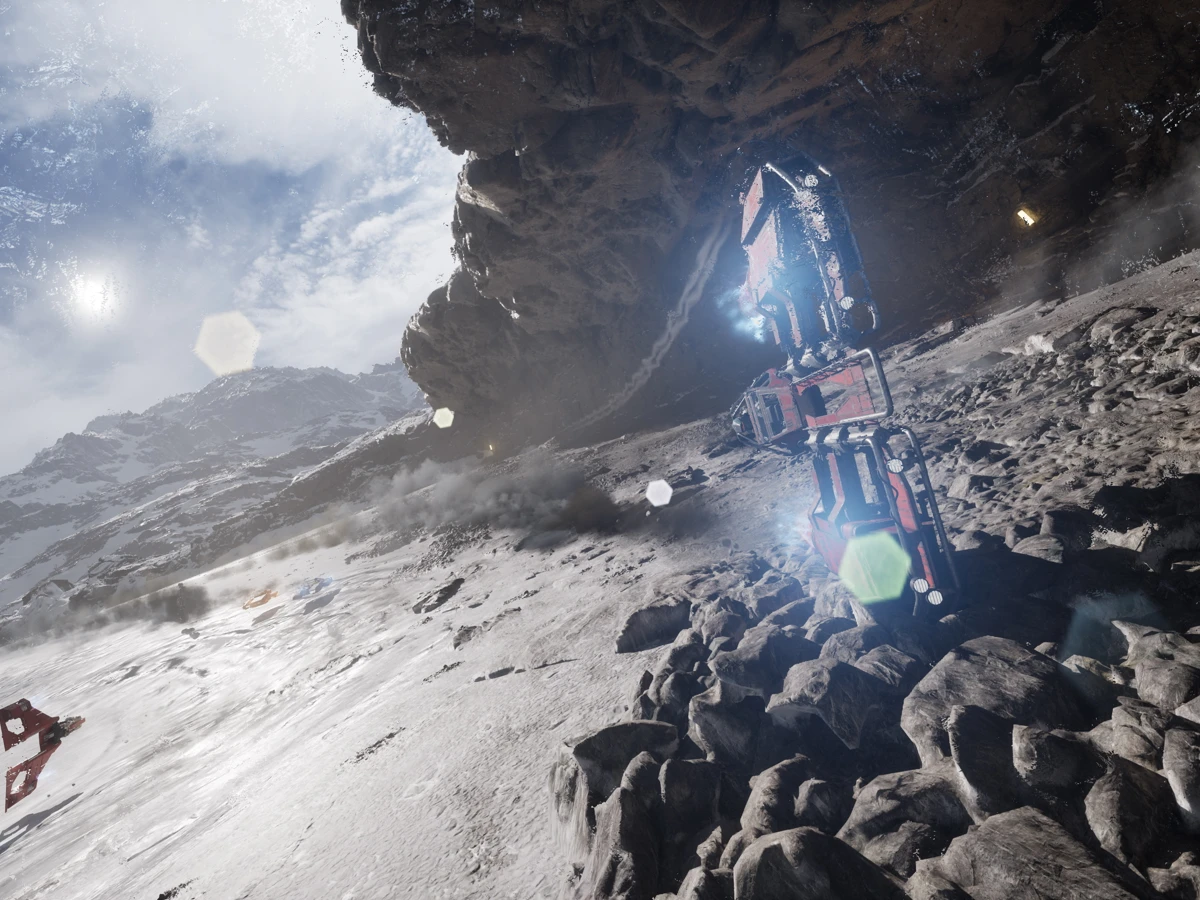
Track conditions are the other half of that claim. StarWars.com identifies Sentinel One as a toxic wasteland where fumes interfere with engines, while independent hands-on coverage describes routes, collisions and environmental synergies. Those details make the broader build system easier to assess. If planets only change the background, customisation becomes busywork. If heat, water, terrain and class-specific handling force a player to adapt their approach, then a vehicle assembled for one run can create a genuinely different race in the next. The published material points toward the latter, but it has not yet demonstrated how often a strong setup can be reused without compromise.

Fuse has a credible, but limited, pedigree
The studio's history is relevant because this is a new team attempting a difficult blend. Lucasfilm says key leaders at Fuse previously worked at Criterion on racing series including Burnout and Need for Speed, and Game Informer says Fuse was founded in 2023 by ex-Criterion developers. TechRadar's report from the show floor found collisions, route choices and vehicle handling energetic rather than theoretical. That does not turn a studio biography into a verdict. It does explain why the game has a clearer design identity than a standard checklist of Star Wars references: its campaign premise is built around racing decisions, not around collecting cameos.
There is a limit to what the previews establish. The independent reports are controlled demonstrations, not a review of the full campaign. They do not tell players how varied late-run events are, how forgiving a failed run will be, how the story manages repeat attempts or whether online modes will carry the same vehicle balance. Fuse has announced that the game has gone gold, which supports confidence in the 6 October date. It does not answer those design questions. Players looking for a deep single-player racer should wait for reviews that follow the route beyond its opening choices.
What to look for in the final lap
There is a practical reason to put Galactic Racer on a watchlist now. Its launch date, three platforms, named vehicle classes and campaign structure are all confirmed, while multiple independent hands-on reports have seen the central loop in action. The best case is a racer where vehicle selection, conditions and route decisions give each campaign attempt its own character. The weaker outcome is an event ladder with upgrades that only look consequential. That distinction should be visible in longer launch coverage: look for evidence that a changed build does more than alter statistics, and that losing a race creates an interesting next decision rather than a simple restart.
Fans of arcade racing have a specific reason to follow the game. The promise is not that familiar planets will make a racer distinctive. It is that a run through those planets may turn the vehicle, the route and the next event into one connected decision. The game has enough confirmed material to make that an informed expectation, not a guarantee. Its full campaign structure, event variety, balance between classes and the effect of optional in-game purchases on progression remain untested until release and independent reviews.
Who should watch Galactic Racer?
- Follow it for
- a campaign-focused arcade racer where route, vehicle and upgrade choices may change the feel of a run.
- Wait for reviews if
- you need evidence that its decisions stay meaningful after the first few events.
- What remains unknown
- the full campaign's event variety, failed-run pacing, long-term balance and the practical effect of optional in-game purchases.
Galactic Racer has a particular test before launch: its campaign needs to make the road between races as compelling as the racing itself.
Sources
Where this story comes from, and where you can check it.
Official sources
- StarWars.comWe're Going Back to Jakku this October in Star Wars: Galactic Racer - Exclusive Interview ↗
- Fuse GamesSTAR WARS: Galactic Racer has Gone Gold ↗
- PlayStation StoreSTAR WARS: Galactic Racer ↗