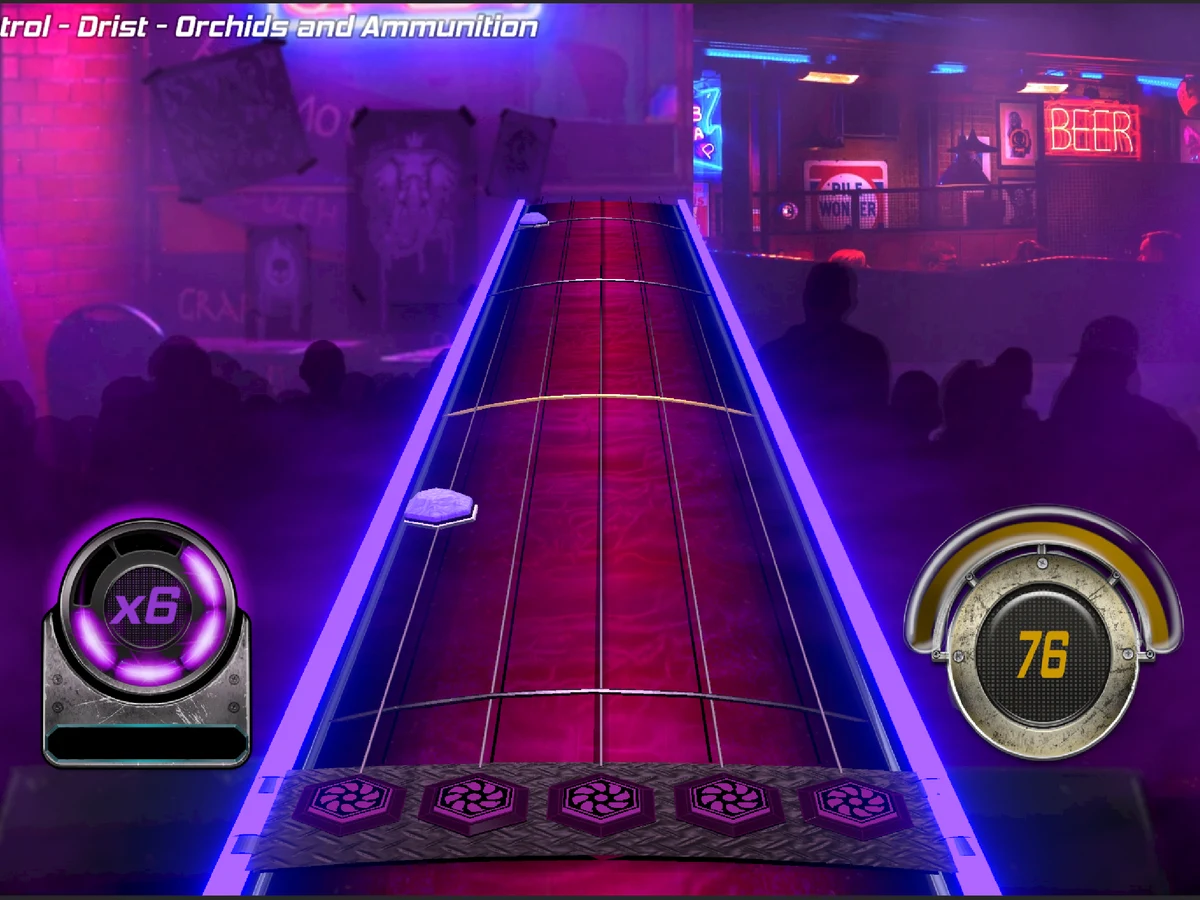
Miss a note in Sound System and Classic mode lets the song carry on. Miss eleven in Pro and you're out. Echo Foundry Interactive's rhythm game gives the same act of playing along two very different stakes: reaching the last chord with room to stumble, or holding your nerve while every mistake brings the end closer. The appealing detail is that forgiveness extends to timing, too. Classic gives you more room around each note; Pro wants you right on it.
The PC Early Access release is set for 4 November, following a move from 16 October. Guitar parts, coloured notes, sustains and a whammy bar provide the familiar vocabulary, while local play brings up to three people onto one PC. Before the promised uploads and online features arrive, there's a smaller, useful question to explore: how do you make a song welcoming enough for a gathering and demanding enough for somebody chasing a cleaner performance?
Let the song finish
Classic's answer starts with keeping the music session alive. You can make mistakes without failing the song, and its wider timing windows let you score points without placing every input perfectly. There's still something to work towards: hitting notes builds combos and multipliers, while long notes ask you to hold them. Forgiving timing leaves space to learn that sequence without making the end of the track conditional on already knowing it.
That suits the social promise particularly well. A player discovering the fret layout can stay with a song through the messy bits. Finishing gives that person a chance to encounter the later passages as well as the opening, and to find out which changes catch them out. The attraction is easy to picture: a complete run with rough edges, followed by another attempt at the awkward stretch that stayed in your head.
Sound System also separates its difficulty descriptions from its Classic and Pro rules. Easy starts with three frets and a small number of notes; the four named levels run through Medium and Hard to Legendary. At that end, all five frets enter the arrangement, alongside hammer-ons, pull-offs, tapping and up-and-down strumming. Those are changes to what your hands have to do. Classic and Pro govern how closely the timing is judged and whether mistakes can end a song.
Eleven mistakes sharpen the chase
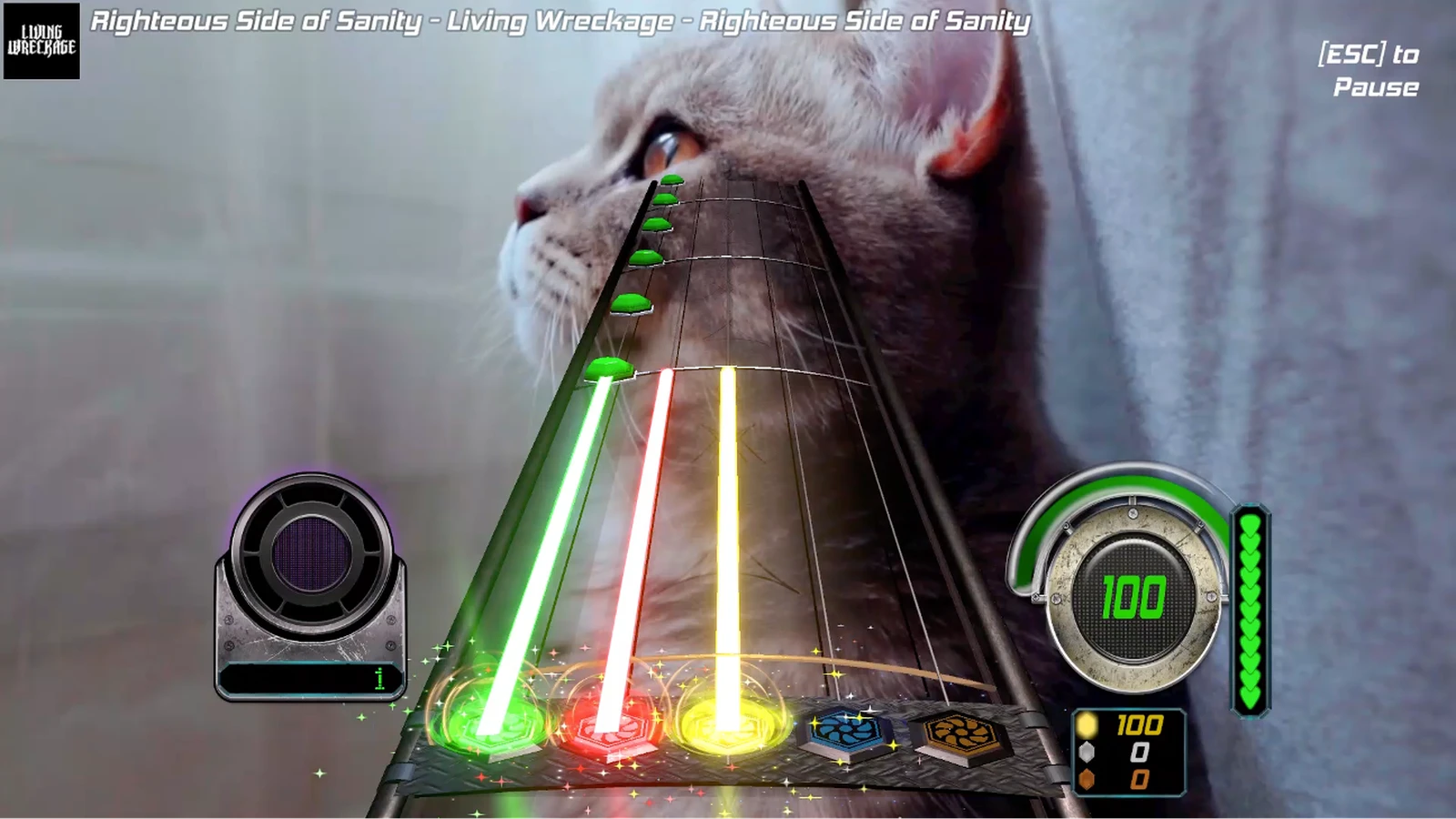
Pro brings a specific limit to that performance. Eleven missed notes put you out, and tighter timing windows raise the demand on inputs that do land. It also rates each note Bronze, Silver or Gold. That adds a second target inside the effort to survive: a note can contribute to a successful passage while still leaving a better timing result to chase. Getting through and getting closer to Gold are different achievements within the same performance.
A hard passage therefore carries two kinds of pressure. There's the immediate job of hitting enough notes to keep going, alongside the finer job of placing them accurately. The per-note ratings give precision a visible scale rather than leaving it entirely inside a final total. For a player drawn to refining one song, that is an attractive little invitation: pay attention to how cleanly each input lands, even while the next notes are already approaching.
The whammy and sustained notes keep the performance from becoming only a succession of separate taps. Players hold sustains and bend them with the whammy, with combos feeding the multiplier. Its gallery shows coloured notes stretching down the highway towards the fret positions. Length, timing and continued input all have a place in that picture. A gold chase sits inside the recognisable business of following a guitar part.
A band can have two bassists
Local multiplayer allows up to three players, with freedom over the lineup, including two bassists in the same band. Cooperative play uses shared multipliers and stage effects, making the group's performance part of the show. Competitive play gives each person their own stage and multiplier, with the highest score winning. The same gathering can have a collective target or a straightforward contest, without needing everyone to fill a different role in a conventional band.
That is a pleasingly relaxed approach to assembling the group. An instrument choice can follow what somebody wants to play rather than the obligation to occupy a vacant slot. The cooperative and competitive rules then decide where the score belongs. Readers interested in another kind of shared music session can compare Let's Sing 2027's competitive and cooperative singing modes, where the player count also changes with the activity. Sound System's immediate setting is three people around one PC.
There is a longer plan around that room. The studio's 1 October announcement places personal music uploads later in Early Access and online multiplayer at the full release, with roughly six months planned for development. PulseMap, the built-in note-chart editor, belongs to that creator ambition. For the November opening, the clearest attraction is already in the performance rules: Classic keeps a faltering run moving towards the last chord, while Pro makes eleven misses enough to stop it. Choose the kind of attention you want to give the song.
Sources
Where this story comes from, and where you can check it.
Official sources
- Bonus Stage PublishingSound System ↗
- SteamSound System ↗
- Echo Foundry InteractiveSound System Early Access Date! ↗