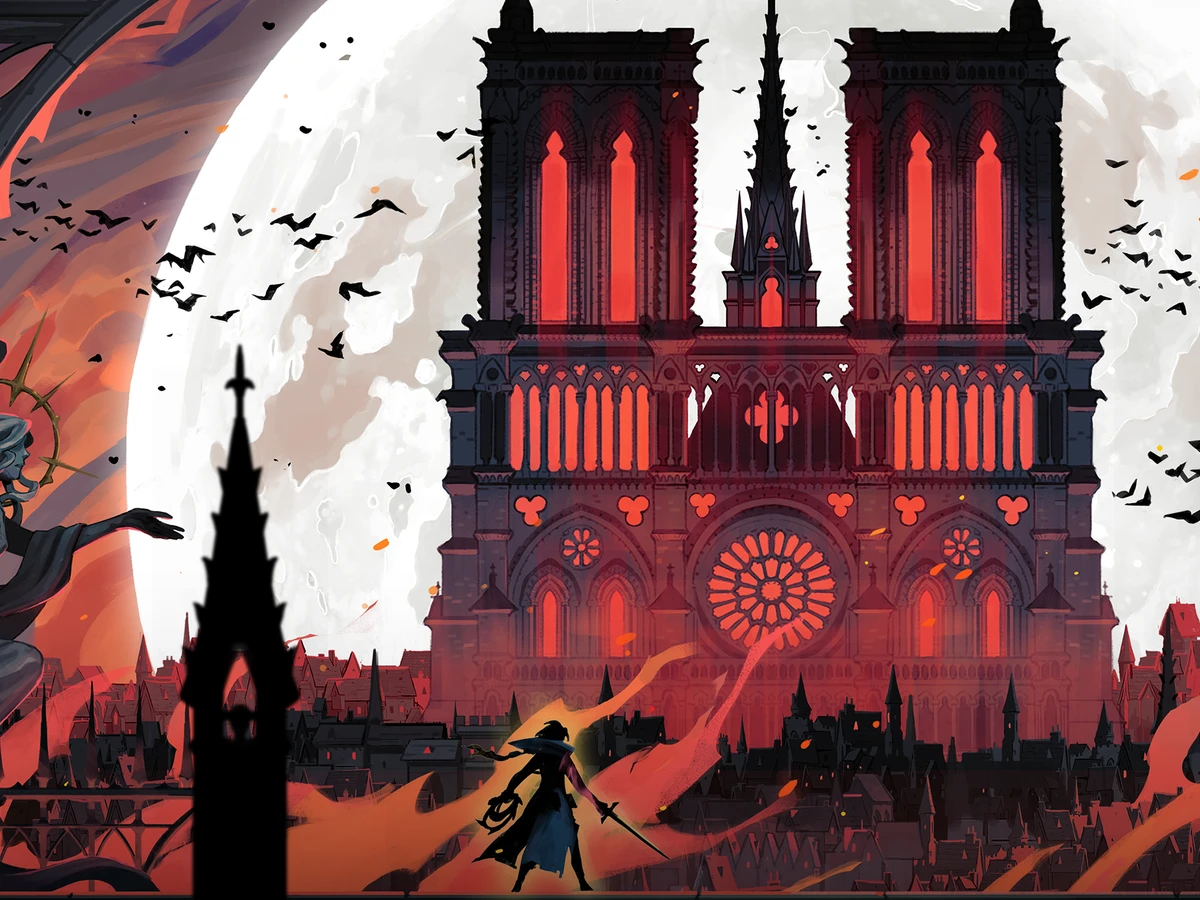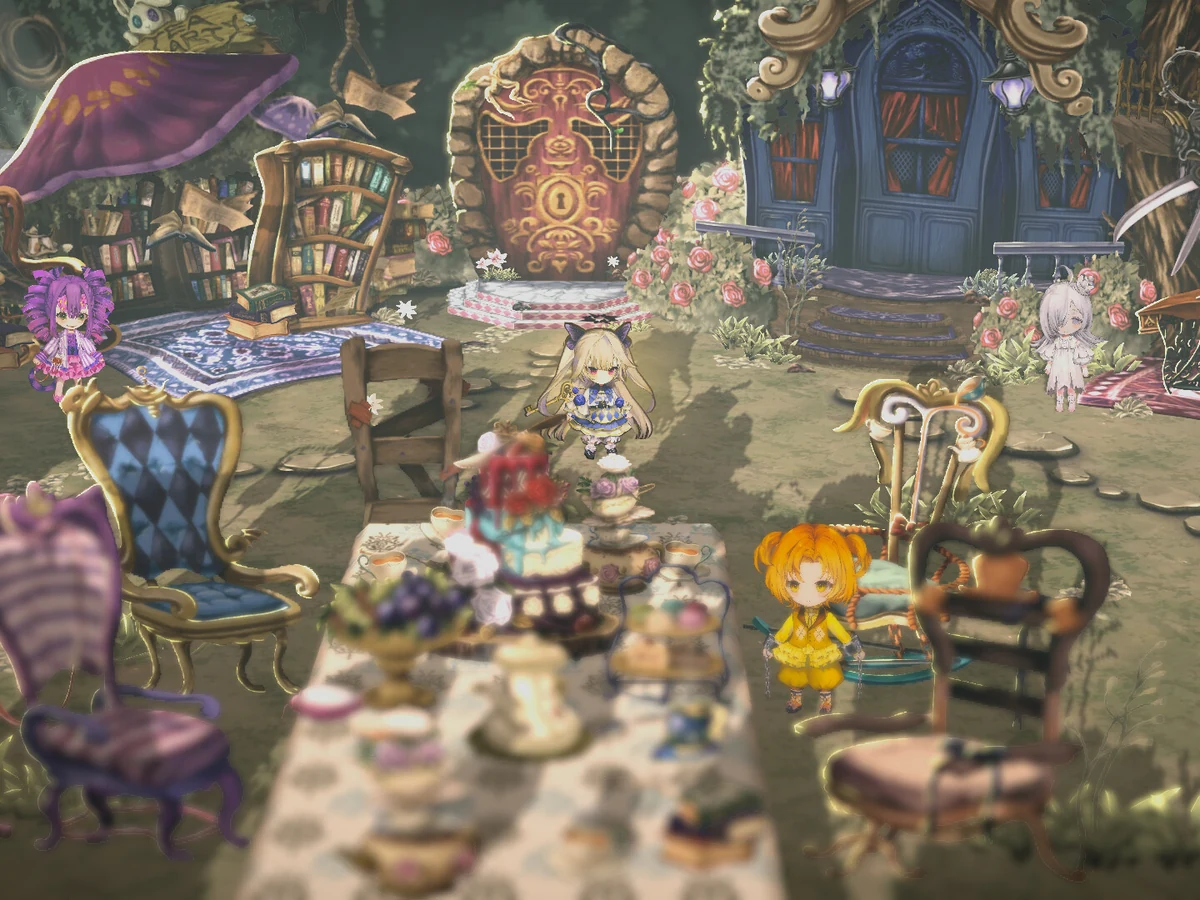
Lose a fight in CRYMELIGHT and the five-card hand you've assembled goes with it. Back at the Tea Party Hall, Alice has another way to grow: confess the sins collected in battle, turn the resulting materials into stronger equipment and head out again. There's a pleasing division of labour here. Cards give the current attempt its particular flavour; weapons and accessories give you something to work on between attempts.
FuRyu's Steam demo now follows that journey from the beginning of the story through Chapter 1. Released on 17 September, it replaces a Battle Demo built around a roughly 15-minute event slot. Producer Takumi Isobe puts the new version at around an hour and a half to three hours or more, including the hall's upgrades and Repentance System. Ahead of the announced 5 November release in Japan, that fuller loop gives CRYMELIGHT a much more interesting introduction than a detached stretch of combat.
Five cards with a short life
Clearing a stage presents three skill cards, with one chosen for your hand. Up to five combine into poker-style hands, and stronger combinations produce stronger effects. Each selection therefore asks you to look beyond the new card on its own. Its place amongst the cards you're already holding becomes part of its appeal. A promising combination gives the next selection a context: you're building towards something across successive fights.
The action gives those choices a visible destination. Defeated enemies spread an indigo field called the Wonder Dimension. As it expands, abilities strengthen and the action speeds up; acquired skills affect both its expansion and the enhancements it supplies. Choosing cards feeds into how Alice fights amongst the effects. The attraction is that your developing hand can change the pace and shape of combat while the attempt is still unfolding.
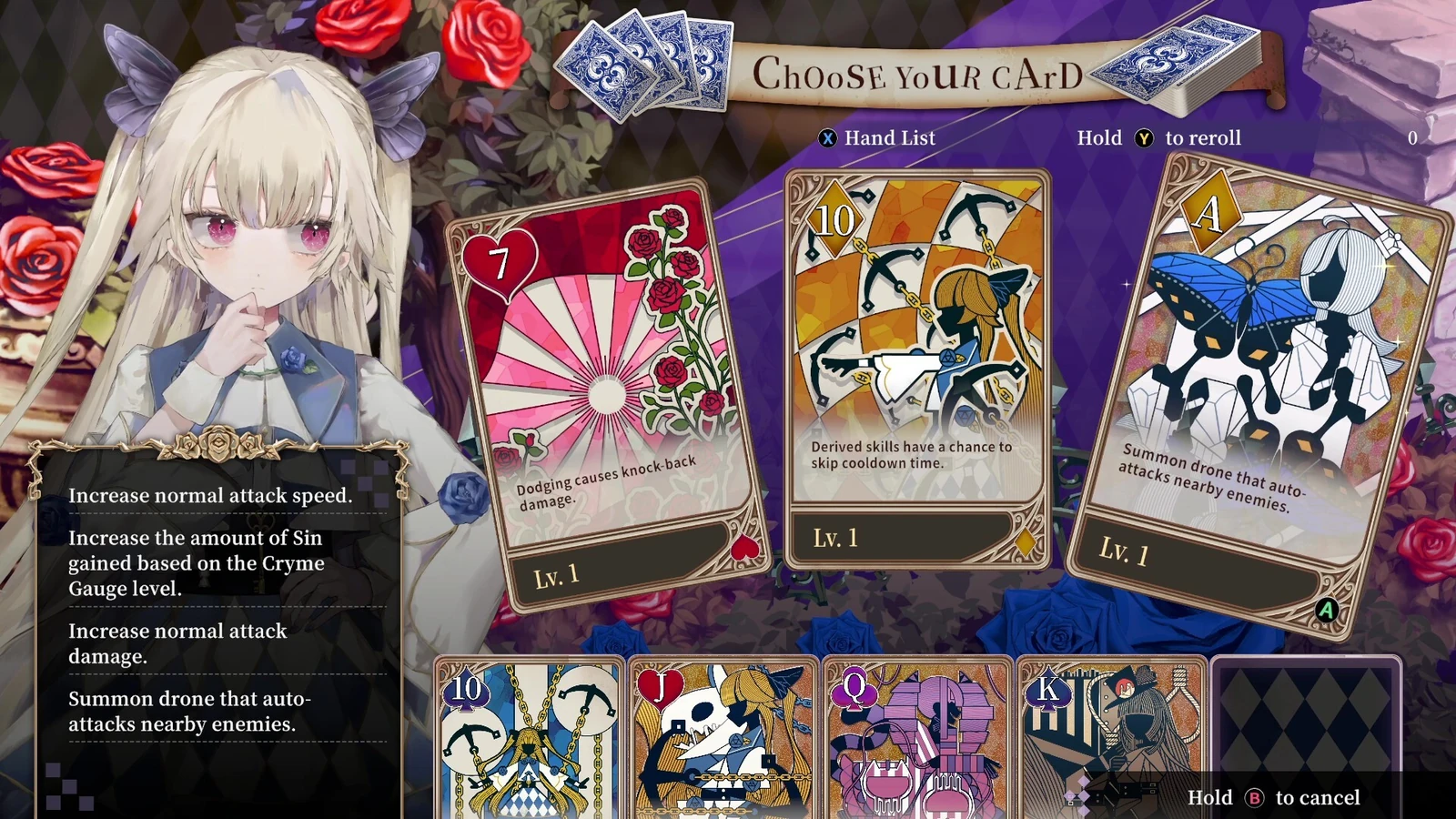
The official card-selection screenshot makes that pull easy to picture. A seven of hearts adds knock-back damage to dodging; a ten of diamonds gives derived skills a chance to skip their cooldown; an ace of spades summons an attacking drone. Those are different behaviours to weigh alongside their place in a poker hand. A card can be attractive because of the action it enables, even before you consider the combination taking shape below it.
The hall keeps a different kind of progress
The Tea Party Hall handles the part that survives a lost hand. Alice shoulders the sins of defeated souls, then repentance produces materials for improving weapons and accessories. These upgrades preserve some progress when defeat sends her back. It gives the next attempt two starting points: a character you've strengthened and a new sequence of card choices. Keeping the equipment leaves room to pursue a different hand without making every return feel like an empty reset.
It's a wonderfully peculiar setting for that routine. Wonderland is a prison for dead souls, Alice has lost her memories, and defeating the Queen offers a route to freedom. The hall gathers the participants for conversation as well as preparation. Exchanges change as time rewinds, touching on the girls' pasts and sometimes the enemies already defeated. Coming back brings another opportunity to learn about the people sharing this uncomfortable little refuge.
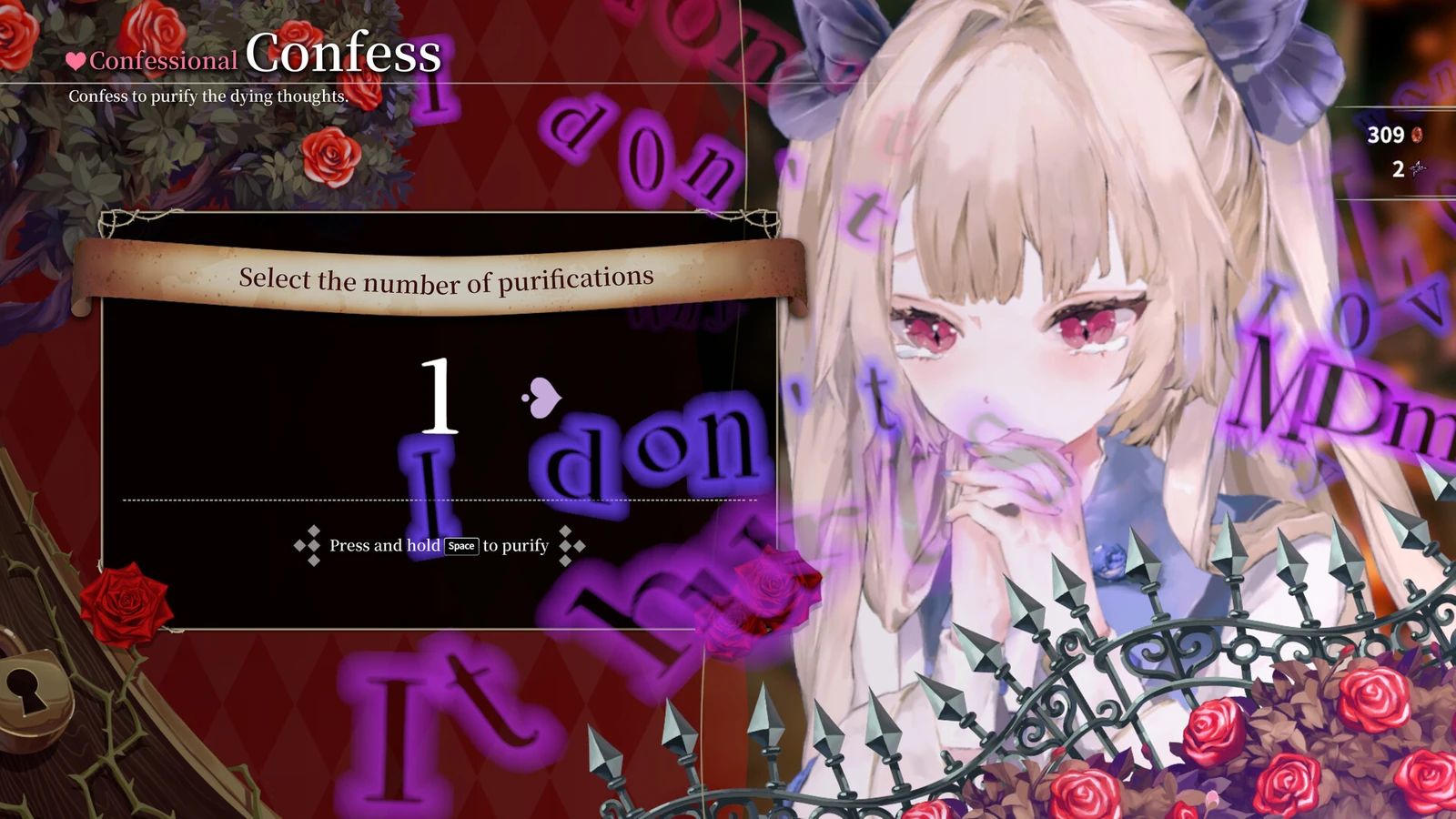
That combination gives the tea break a welcome purpose beyond maintenance. There is equipment to improve and company to keep, with the next run waiting outside. The contrast suits the premise: a game about carrying sins makes its quieter space the place where those burdens become useful. The cards are temporary, while the hall gives Alice continuing business. Both parts can make a return worth paying attention to, even after the fighting has gone badly.
A clearer route into Wonderland
FuRyu overhauled card effects and designs to make builds clearer. The longer demo also changes how those systems arrive. Tutorials now follow the story, explanations of game-specific terms can be checked during adventure scenes, and item descriptions appear on the map. FuRyu has revised branches and routes too. These are modest-sounding additions with a direct benefit for a first visit: there's less vocabulary to hold in your head while deciding where to go or what a reward might do.
Difficulty can be changed at the Tea Party Hall, with the same story across settings. That leaves room for someone chiefly interested in Alice's companions as well as somebody seeking tougher roguelite fights. Readers drawn to that choice can also explore Sound System's different stakes for a performance. Here, the place where you prepare for another attempt also lets you adjust the challenge awaiting you.
The demo's 19 September update followed up with fixes to skill activation conditions, the hall's interaction interface and scenario auto-play, alongside an adjustment to Dum's attack power in Story and Normal modes. For this introduction, both halves deserve attention: the card hand taking shape during combat, and the refuge that receives Alice afterwards. CRYMELIGHT's appeal sits in the journey between them. You leave with a hand to build and return with another reason to prepare.
Sources
Where this story comes from, and where you can check it.
Official sources
- FuRyuFull Demo Release Confirmed & "Battle Demo" Availability Ending ↗
- FuRyuCRYMELIGHT | Official Website ↗
- SteamCRYMELIGHT ↗
- FuRyuFull Demo Available Now! A Surprise Awaits at the End...? ↗
- FuRyuFull Demo Update ↗