Play two rounds, swap ends, then watch the battlefield rebuild itself. Kill Block gives Call of Duty: Modern Warfare 4's Gunfight a wonderfully concrete way to interrupt a routine: the ground your team just learnt is replaced with another arrangement. With the full game now released, the interesting detail is the small window it gives both sides to understand the same space before moving them on.
Infinity Ward's modular training facility launches with 3v3 and 10v10 Gunfight. Its launch patch notes put 6v6 support and additional map sections on the post-launch list. That makes the opening version a particular kind of experiment: single-life rounds played across a compact, rearranging arena, with the same weapons distributed to everyone. A familiar corner can still be useful. You just need to check what is connected to it.
Two rounds to learn the neighbours
Kill Block builds each battlefield from three sections called Slabs. Two End Slabs flank a Central Slab; together they form a Combo, the complete map. The footprint stays rectangular and roughly the size of 2019's Modern Warfare map Shoot House. Within that boundary, the arrangement changes routes, cover and views across the joins. The launch design has more than 500 possible configurations. That number describes combinations of the sections, giving familiar pieces different neighbours. The appeal is learning a collection of spaces, then reading how they fit together this time.
The Gunfight sequence gives that idea a useful rhythm. Teams change sides after the first round. After the second, the facility changes to another Combo and supplies a new random loadout. The cycle continues until one side has won six rounds. Each pair therefore lets you approach the same arrangement from both ends before another layout arrives. There is a brief opportunity to answer the route that just beat you.
That return trip is the clever part. A single visit would put all the emphasis on immediate recognition; a whole match on one arrangement would give teams longer to settle into it. Two rounds leave room for a small correction. You have seen where the opposition appeared, and now your starting point has changed. The next decision can draw on a very recent mistake, while the next pair asks you to look again.
The scenery comes with a mechanism
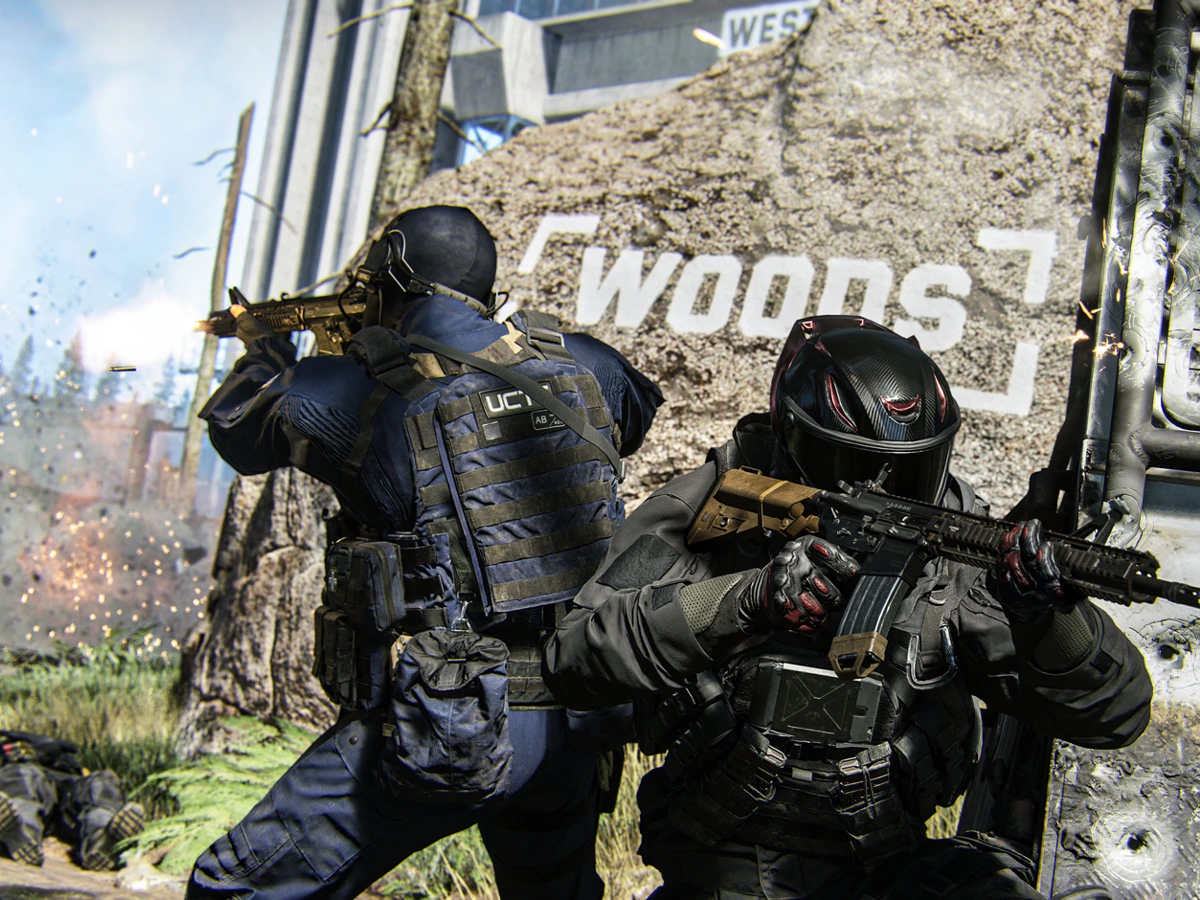
West Bridge is an elaborate piece of fictional military machinery. Concrete towers contain the equipment that moves enormous reinforced sections along rails. Slabs can be lowered beneath the arena and replacements raised into position. It is an enjoyably excessive explanation for a multiplayer map selection: somebody has built an entire underground storage system so operators can have a different arrangement of walls to shoot around.
The training-ground setting also makes the joins legible. Temporary structures, containers and barriers belong in a purpose-built exercise space. Activision's PlayStation Blog breakdown describes perimeter section markers and painted signs that help players orient themselves. Those fixed references are a sensible companion to moving terrain. A team needs words for where it is looking, particularly when a route through the middle has just been replaced.
Some sections use simulated rainfall or snow, with fans driving the weather across the play space. Water and ice also appear on weapons until you reload or swap them. It is a pleasingly theatrical extension of the facility: even the bad weather has been installed by somebody. The visibility change adds another thing to read alongside the walls, rooftops and openings, while the weapon detail carries the effect right into the foreground.
A shared weapon, a changing route
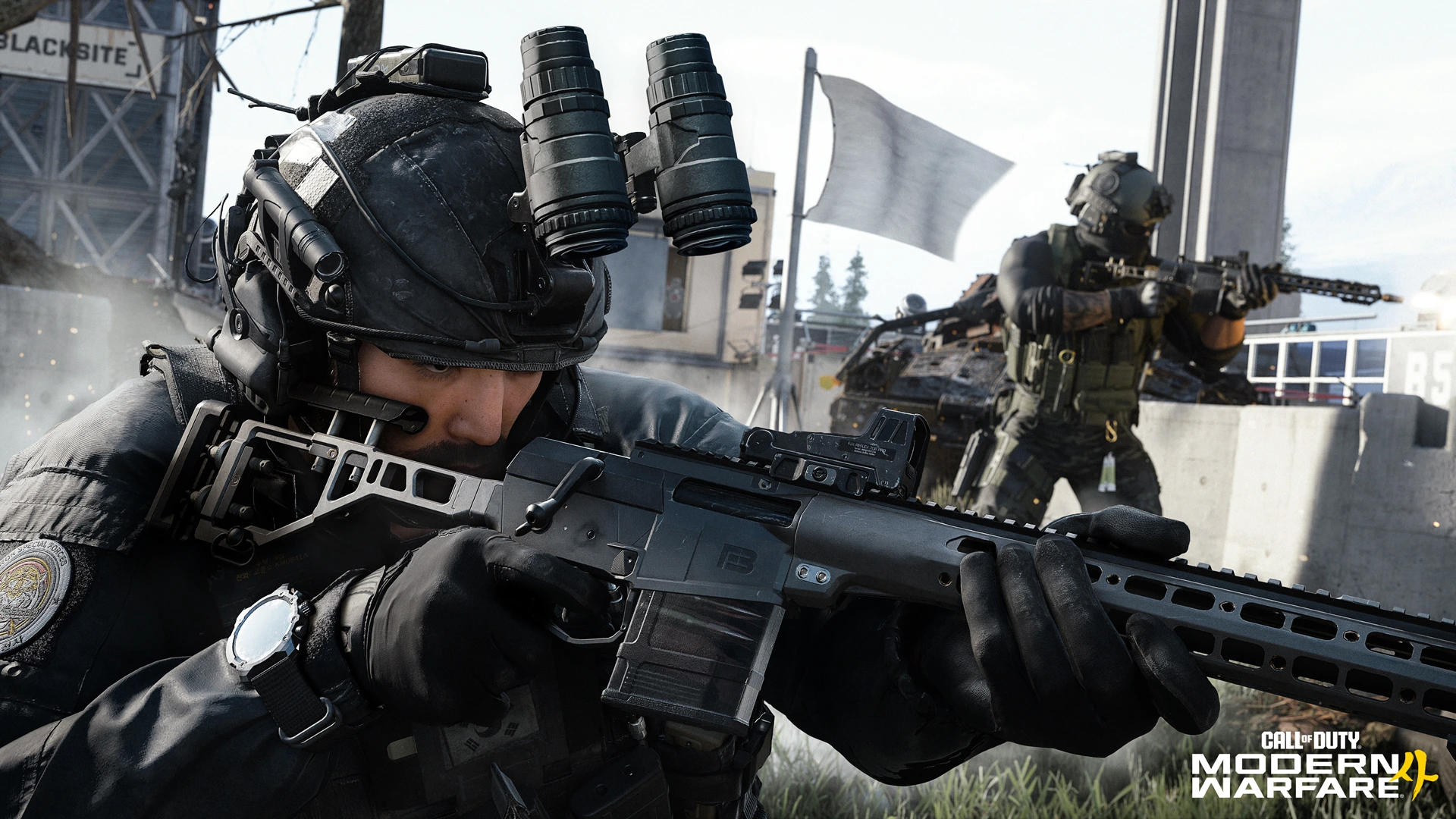
Gunfight starts each round with matching random primary and secondary weapons, plus tactical and lethal equipment. Everyone has one life. If both teams survive the timer, an overtime flag draws them towards an objective; capturing it wins, while a remaining health advantage can decide the round when time expires. The shared kit gives the changing map a clear partner: everyone must work with the same tools in the space they have been handed.
Three players per side and ten players per side put very different numbers of teammates inside that format. The larger version has more people available to cover approaches, and more opposing guns to account for. The launch roster also includes four separate 2v2 Gunfight maps, alongside twelve Core 6v6 maps and three Ground War maps. Kill Block sits within that wider offering as its own modular destination, with its own team sizes.
GamerGuru's earlier look at Private Park's campaign role follows the soldiers caught inside the game's invasion story. Kill Block enjoys the other end of military fiction: a controlled exercise whose organisers can replace the neighbourhood. Its strongest idea is the paired round. You get one look from each side, a chance to respond, and then the machinery gives everyone a fresh arrangement to work out.
Sources
Where this story comes from, and where you can check it.
Official sources
- Call of Duty BlogModern Warfare 4 Multiplayer: Kill Block Intel ↗
- PlayStation BlogEverything to know about Modern Warfare 4's ever-changing Kill Block Multiplayer mode ↗
- Call of DutyCall of Duty: Modern Warfare 4 Launch Patch Notes ↗
- Call of Duty BlogReady for Launch: Multiplayer Maps and Modes Confirmed ↗
- SteamCall of Duty: Modern Warfare 4 ↗