In Orbitals, the second player is not there to add a little noise to someone else's adventure. Nintendo's listing calls it an asymmetric two-player co-op puzzle adventure, and Kepler's own description has Maki and Omura travelling beyond a cosmic storm together to save their station home. The practical question arrives before either explorer fires a gadget: who can join you? Orbitals has a sensible answer. Its Global Friend's Pass lets an invited second player enter the complete game free, which makes the partner the game needs easier to bring to the sofa or the online session.
The idea is more interesting than a giveaway because it matches the shape of the game. A solo adventure can treat co-op as an optional extra, a pleasant mode if someone happens to be around. Orbitals cannot make that assumption. Its official store page says each character has unique tools and that the route beyond the Storm Wall depends on smart teamwork and clear communication. If the design is asking two people to solve one problem from different positions, charging both people before they can discover whether that arrangement suits them puts a toll booth in front of the very thing being sold.
An invitation is the first puzzle
The Global Friend's Pass is specific about the bargain. One player owns the full game, sends an invitation, and the person with the free pass can join the entire co-op adventure. The pass also includes a local-co-op-only demo. That is a useful split. A pair can try the basic rhythm together without pretending that a short demonstration is the full online experience; once one player owns Orbitals, the invitation opens the rest of the route. It is not two copies for two people, nor a vague promise that co-op might be available later.
There are still real boundaries, and Nintendo states them plainly. The listing supports two people on one system or online, while online GameShare requires GameChat, an internet connection, a Nintendo Account and a Nintendo Switch Online membership. The pass does not make every form of playing together free or frictionless. It does, however, stop the second player's price from being the first test. For a game whose official pitch begins with a pair of explorers, that is the right order. Find the person first; argue about the asteroid field after.
Different jobs, one shared problem
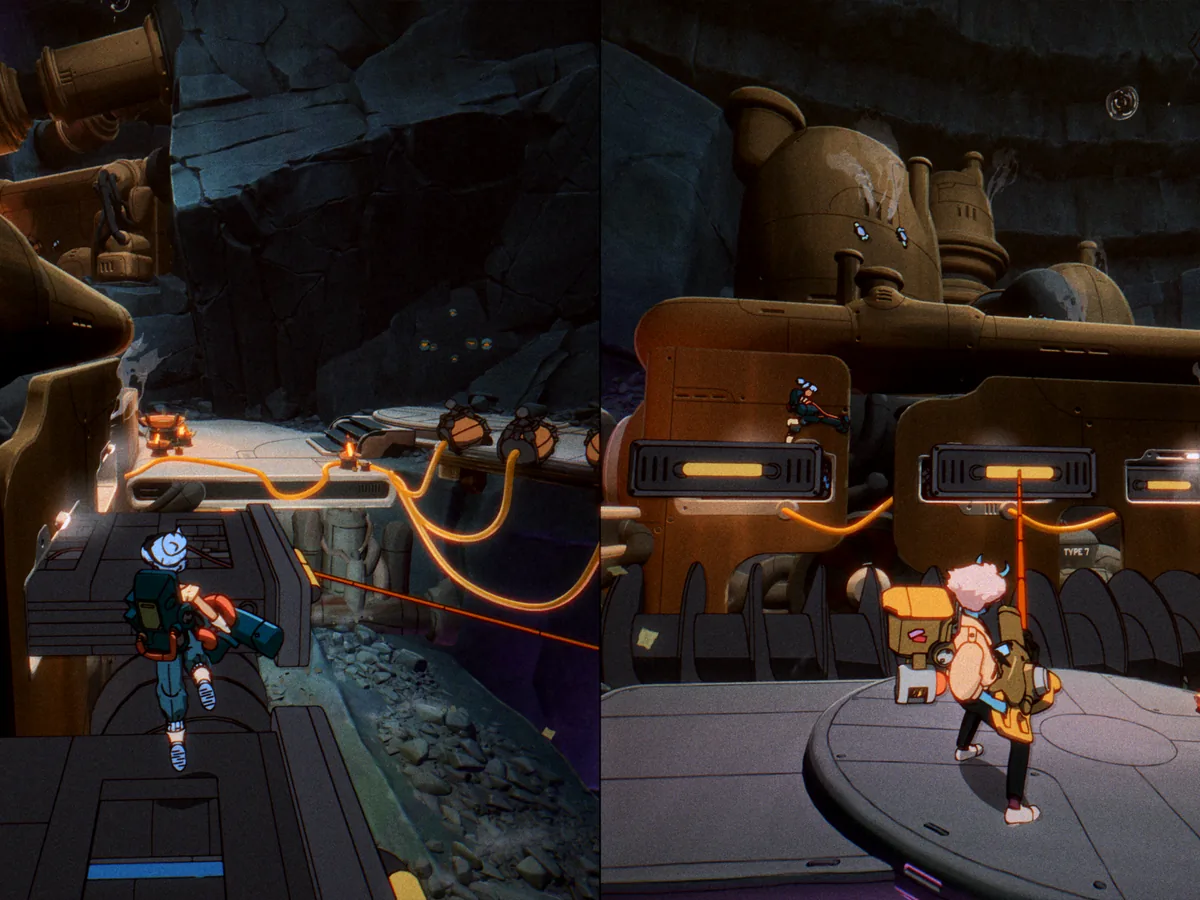
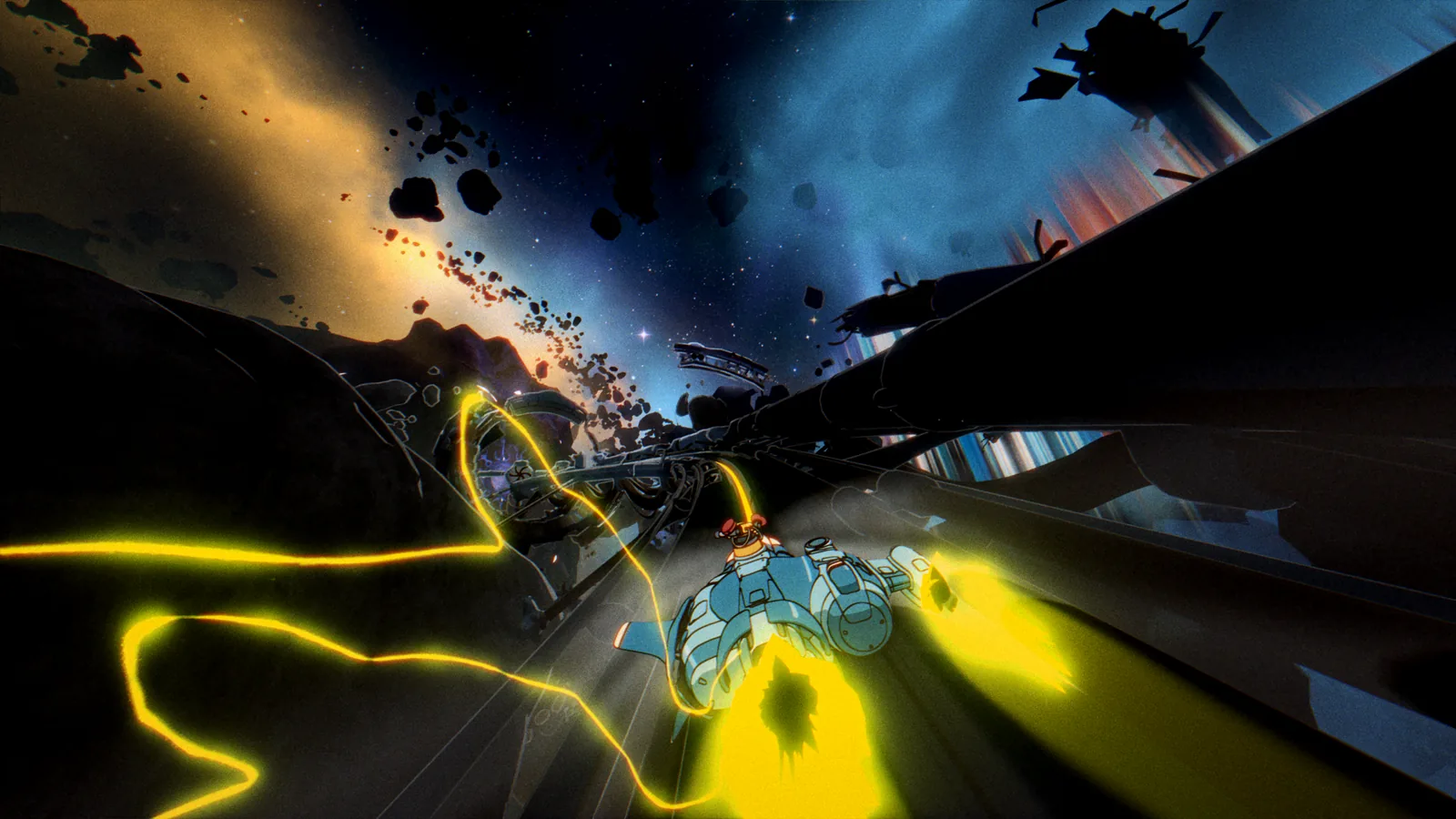
Orbitals has to make the person on the other side of the screen feel necessary, not merely present. Kepler describes it as a two-player puzzle adventure, while Nintendo says its asymmetric design gives each character unique tools. Creative Bloq's launch review gives those broad claims a more concrete shape. Its reviewer reports recurring gadget roles, including a liquid launcher, beam cannon and scrap hook, then describes ship sections where one player pilots while the other works as gunner. Those are not parallel lanes with a second camera. They are jobs that ask the players to notice different things and time their actions together.
That division changes what the Friend's Pass is doing. It is not just a way to add a spectator to a story already built for one person. The invited player is part of the operating system. A pilot needs someone covering the other role; a tool puzzle needs the player with the relevant tool to see the opening; a split screen has to turn two partial views into one plan. The pass recognises that the game is incomplete without its other half. A co-op game can still be enjoyable when it is played side by side, but Orbitals has designed the dependency into its moments of progress.
The pass cannot choose your co-pilot
Free access is not a magic spell for mandatory co-op. Creative Bloq's review is candid about the remaining risk: it calls the asymmetric ideas inventive, but says enjoyment depends on the co-op partner. That is not a complaint the store page can solve with a better button. Coordination, patience and a shared appetite for failing at a puzzle are social facts, not platform features. The local demo is a modestly clever response because it lets a pair test that rhythm before the full journey starts, rather than asking them to discover a mismatch halfway through it.
That is why Orbitals' access choice feels thoughtful rather than generous for its own sake. The game cannot guarantee that every pair will enjoy the same jokes, react to the same mistake or agree on who missed the obvious switch. It can remove the unnecessary second purchase and give the two people a clearer way to try their luck. For a retro-anime adventure about Maki and Omura getting through a storm together, that is a well-judged bit of production design. The game asks players to share the work; its Friend's Pass makes sharing the way in part of the premise.
Sources
Where this story comes from, and where you can check it.
Official sources
- NintendoOrbitals: Global Friend's Pass ↗
- Kepler InteractiveOrbitals ↗
Independent reporting
- Creative BloqOrbitals review: a co-op playable anime dream ↗