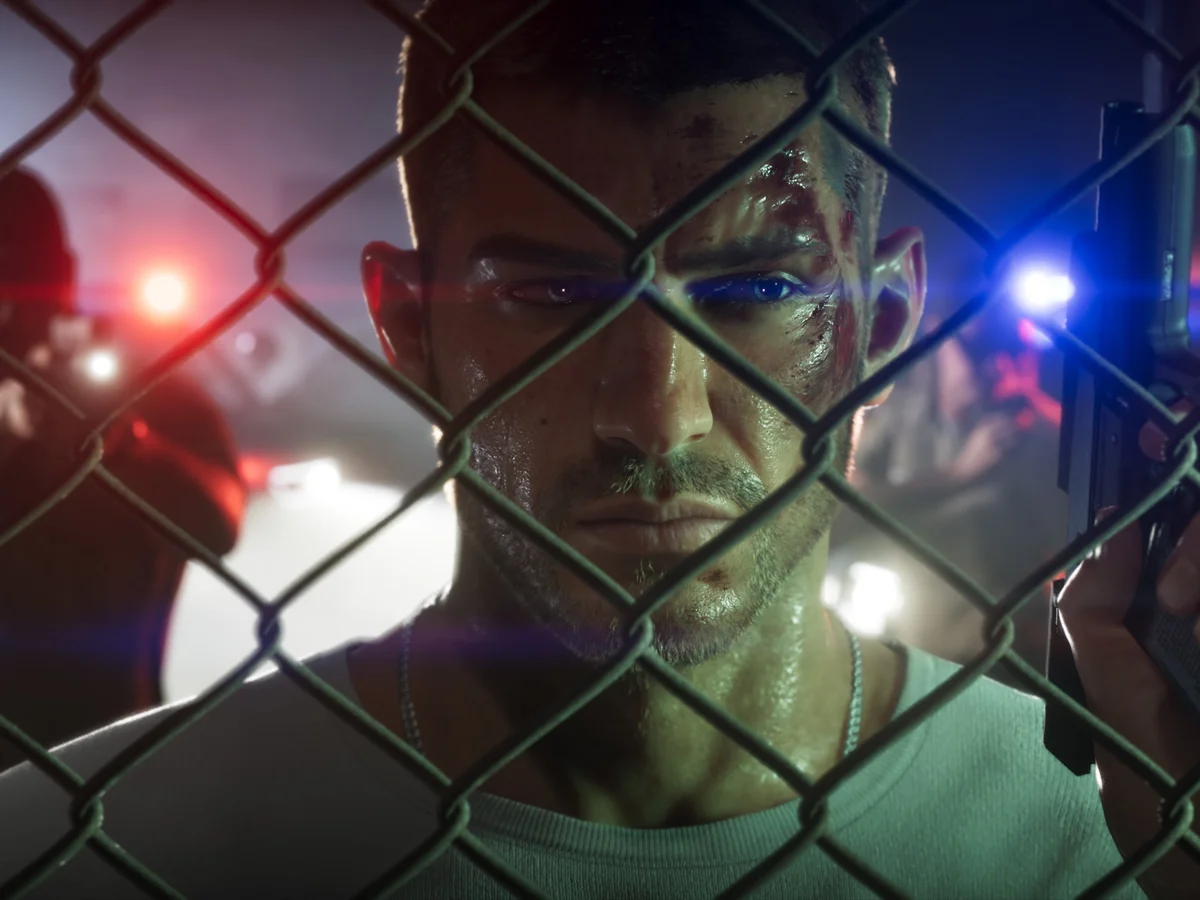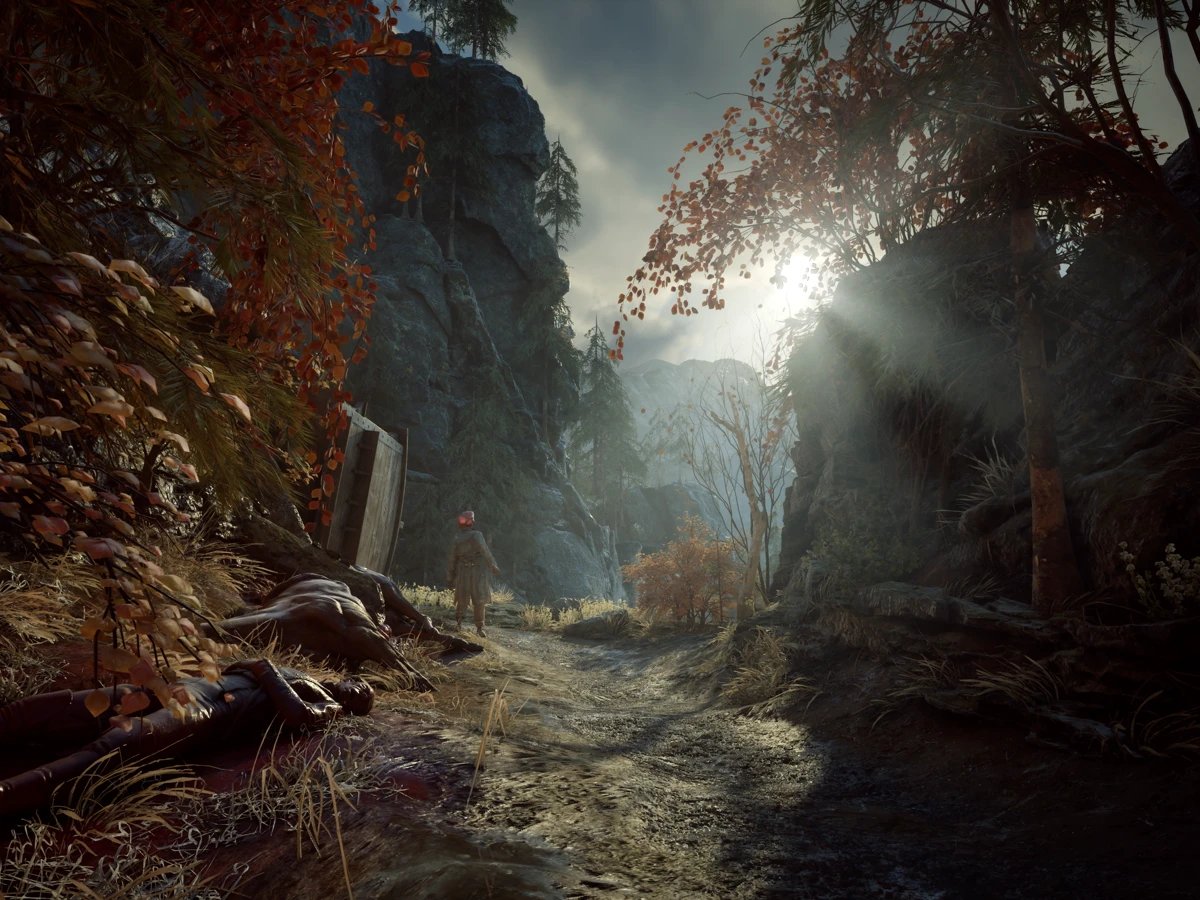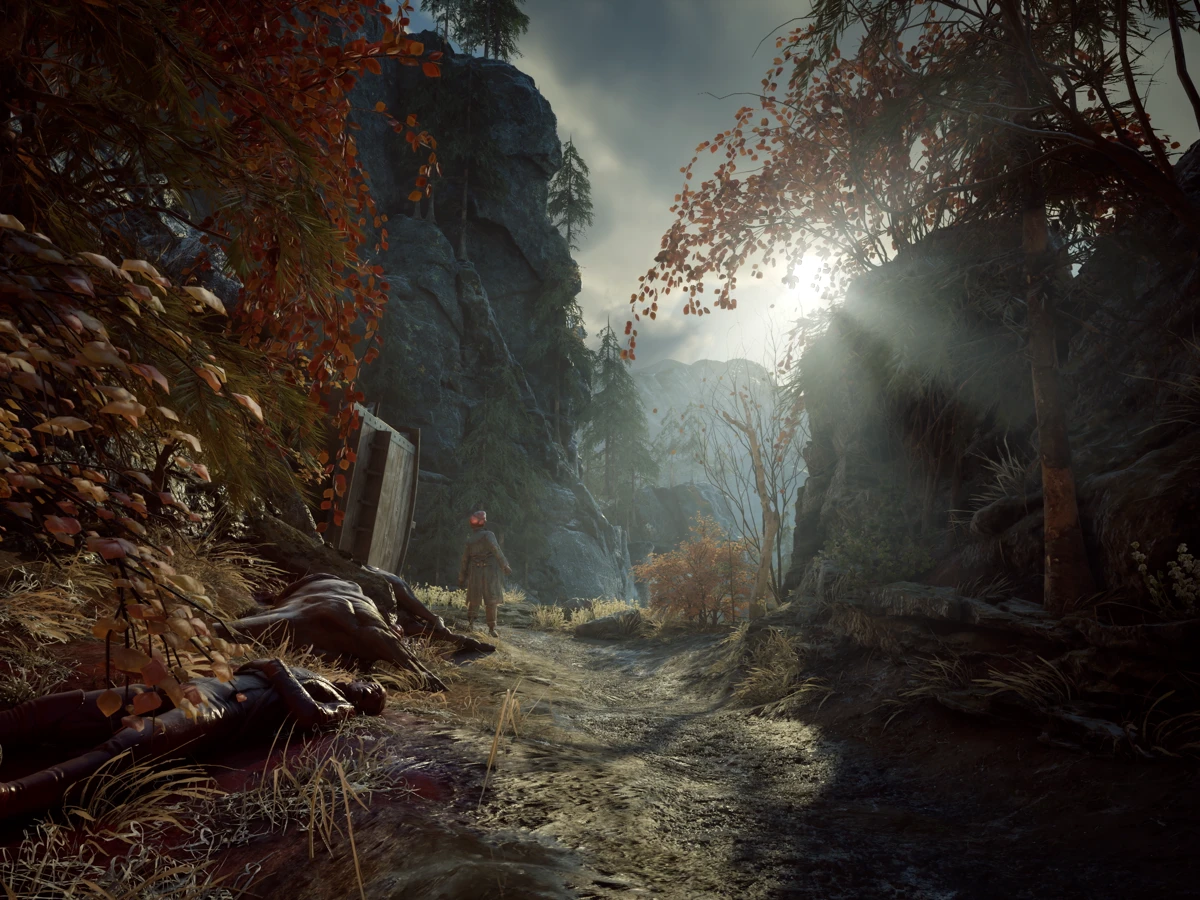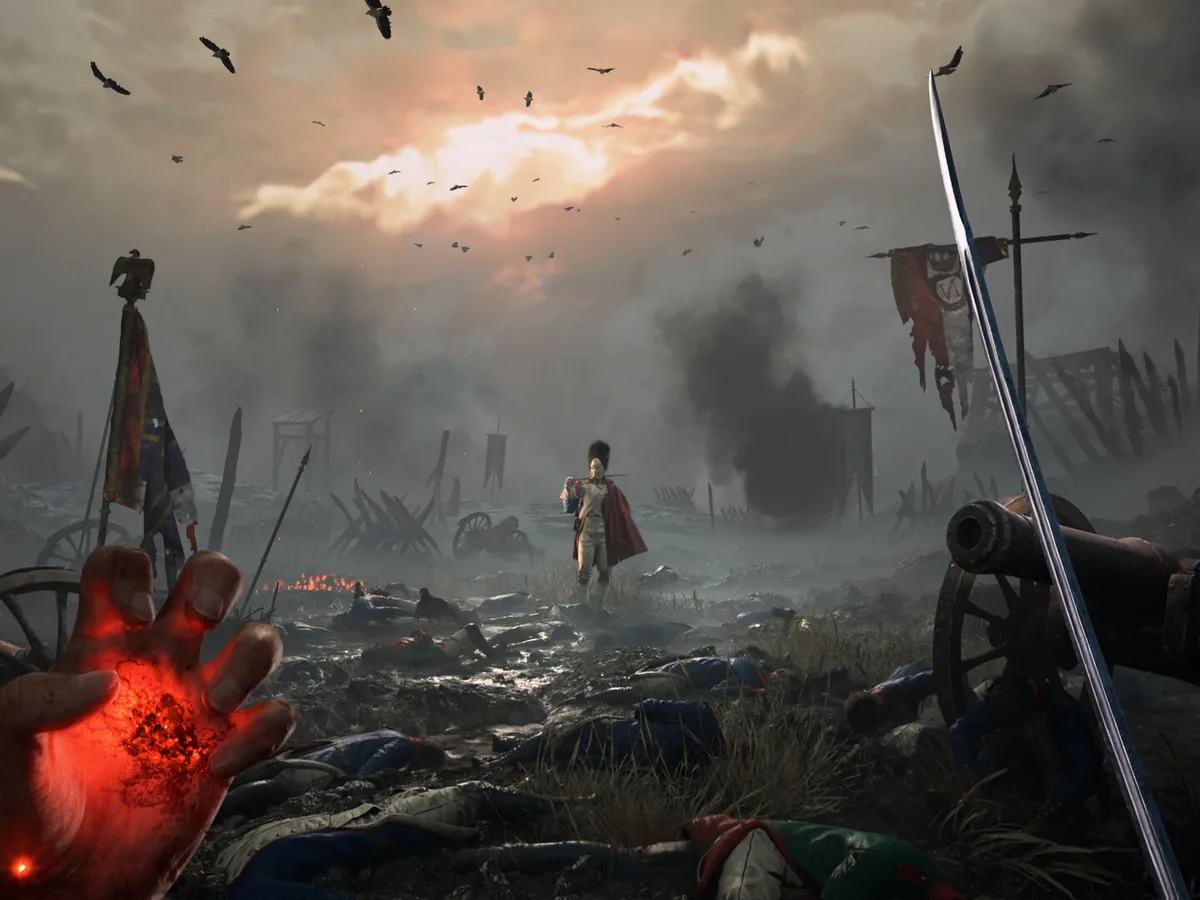
Valor Mortis is asking a hard question of a genre built around reading space, distance and an opponent's full body: can it still work when the camera sits behind the sword? One More Level has a more credible shot than most. Ghostrunner proved that the Polish studio can make a fast, first-person blade feel exact rather than slippery. Its next game deliberately slows that instinct down, marrying parries, firearms and supernatural abilities to a Soulslike structure. The result is worth watching not because the label is novel, but because the developers have already identified the awkward parts and are still changing them before 13 October.
The point is not simply to put Dark Souls in first person
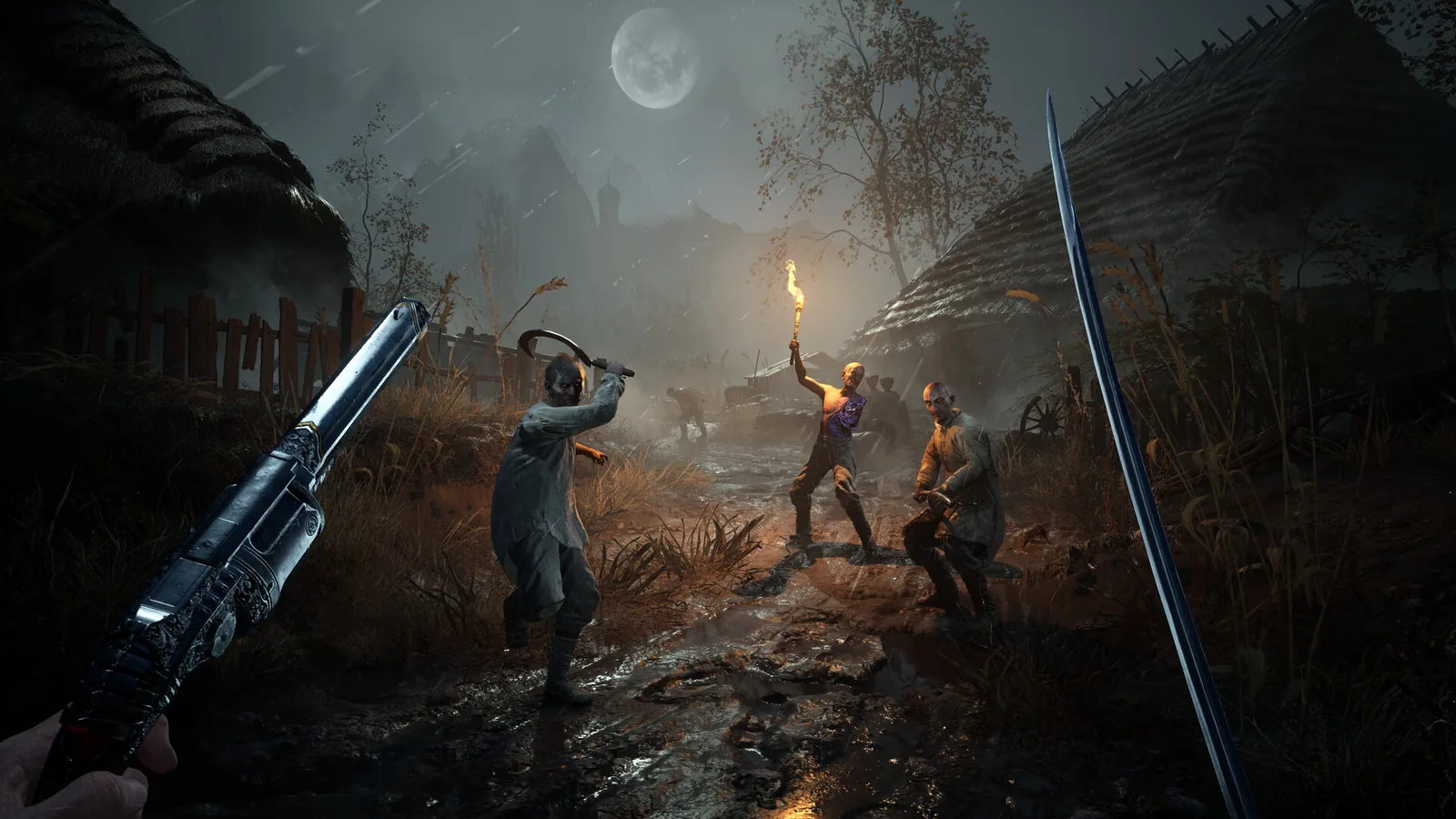
Valor Mortis puts William Dowsett, a dead soldier of Napoleon's Grande Armee, back on an Eastern European battlefield altered by a plague called Nephtoglobin. The confirmed setup is alternate history rather than a retelling: William has been resurrected with corrupting power in his veins, while the story brings supernatural horror into the Napoleonic Wars. It is a specific setting, and that matters. The ruined villages and uniformed monsters in the official material do more than supply period costumes. They give the action a physical character distinct from the usual castles and crypts of the genre.
The more consequential choice is the camera. A third-person Soulslike can let players judge a swing's reach and track threats at the edge of the arena. First person trades some of that overview for a closer relationship with a weapon and a parry. PC Gamer's early reporting highlighted that One More Level knows the distinction, describing the project as a first-person Soulslike rather than a conventional action game with a stamina bar. The studio's Ghostrunner history is evidence that it understands first-person melee; it is not evidence that a slower, more methodical version will automatically work.
A demo offered proof, and a useful warning
Steam's current description promises parries, dashes, finishers, several weapons and powers that can enhance attacks. The playable demo made that premise tangible. GamesRadar's Steam Next Fest coverage praised the combat and the unsettling environments after playing it, while noting the game as an undead soldier's fight through a plague-ridden version of nineteenth-century France. That is encouraging material rather than a finished-game verdict, but it gives the project something more valuable than trailer rhythm: an account of how the central combat idea felt in players' hands.
It also exposed the danger. In a recent official development update, One More Level said that the demo's General Lothaire encounter was regularly considered too punishing because players reached it after around 30 minutes. The full game will place that boss at the end of Chapter II instead of Chapter I, after more time to learn the system and build William. The team also says it has worked on combat readability, hitbox range, staggering, boss variety, performance and the balance between platforming and combat. Those are sensible targets, but their need is a reminder that first-person precision has less room for confusion.
Why One More Level has earned the benefit of attention
There is a reason to take that self-criticism seriously. Ghostrunner was not a Soulslike, but it made rapid movement, close-range attacks and instant failure legible from a first-person view. Valor Mortis has a different tempo and a very different demand: it needs an enemy's wind-up, a parry window and a recovery animation to read at a speed that supports deliberate decisions. The studio cannot solve that merely by borrowing the look of a familiar genre. It needs the player to understand why a death occurred, even when the weapon or the threat has temporarily disappeared beyond the frame.
The final release also has a clearer shape than the original announcement. Gematsu reports that Lyrical Games and One More Level delayed it from 24 September to avoid a crowded month, and now lists PlayStation 5, Xbox Series consoles and PC via Steam. Steam separately lists the 13 October date, single-player support, full controller support and fourteen interface languages, with English voice acting. A release delay is not a virtue by itself. Here, though, the stated changes are attached to concrete demo issues rather than a vague request for polish, which makes the extra time easier to assess.
What still needs an answer
The demo is not a reliable slice of the finished game's overall balance. One More Level says its Chapter I and Chapter VII sections were bespoke versions made for Steam Next Fest, and that they are no longer representative of the final game's optimisations, tuning and fixes. The demo is due to go offline on 8 September. That means it remains useful evidence of the combat concept, but not a safe guide to difficulty, progression or technical performance at launch. Players who miss it should not treat that as a reason to pre-order.
Nor is the full scale clear. The official material points to branching historical levels, weapons, powers and a conspiracy around Napoleon, but does not establish how varied the later environments, bosses or builds will be. Price, editions and console performance targets were not confirmed in the sources reviewed for this preview. The sensible expectation is a single-player action game with an unusually tactile central idea and a developer willing to revise it. The key question is whether October's version turns first-person proximity into tension rather than leaving players fighting the camera.
Who should keep it on the radar?
- Follow it for
- a rare attempt to make parries, firearms and close-range horror work inside a first-person Soulslike.
- Wait for reviews if
- you need proof that the final difficulty curve and console performance match the game's strong premise.
- What remains unknown
- the full build variety, later boss design, price and edition details.
Valor Mortis merits attention because its toughest design problem is visible, specific and still being addressed. That is a better reason to watch than a polished trailer, but the final judgement belongs to the complete game.
Sources
Where this story comes from, and where you can check it.
Official sources
- SteamValor Mortis ↗
- Steam CommunityThe Final Stretch - Development Update ↗