A firefighter in Theos: Cities of Myth has two ways to get around town. On an ordinary patrol, they follow a route you can plot with flags. When a building catches fire, a crew from the nearest station heads straight for it along the fastest available route. There's a pleasing bit of common sense in that arrangement: you organise the daily rounds, and an emergency gives the people doing them a different priority.
Triskell Interactive's Greek city builder launches on PC on 4 November, with a demo available since 13 October. Its gods, sanctuaries and competing city-states give the settlement a grand setting, but the workers walking past its homes deserve a closer look. Their routes turn a road junction into a decision about which households receive food, water, protection and culture. Drawing those journeys is part of building a prosperous city.
The journey home counts too
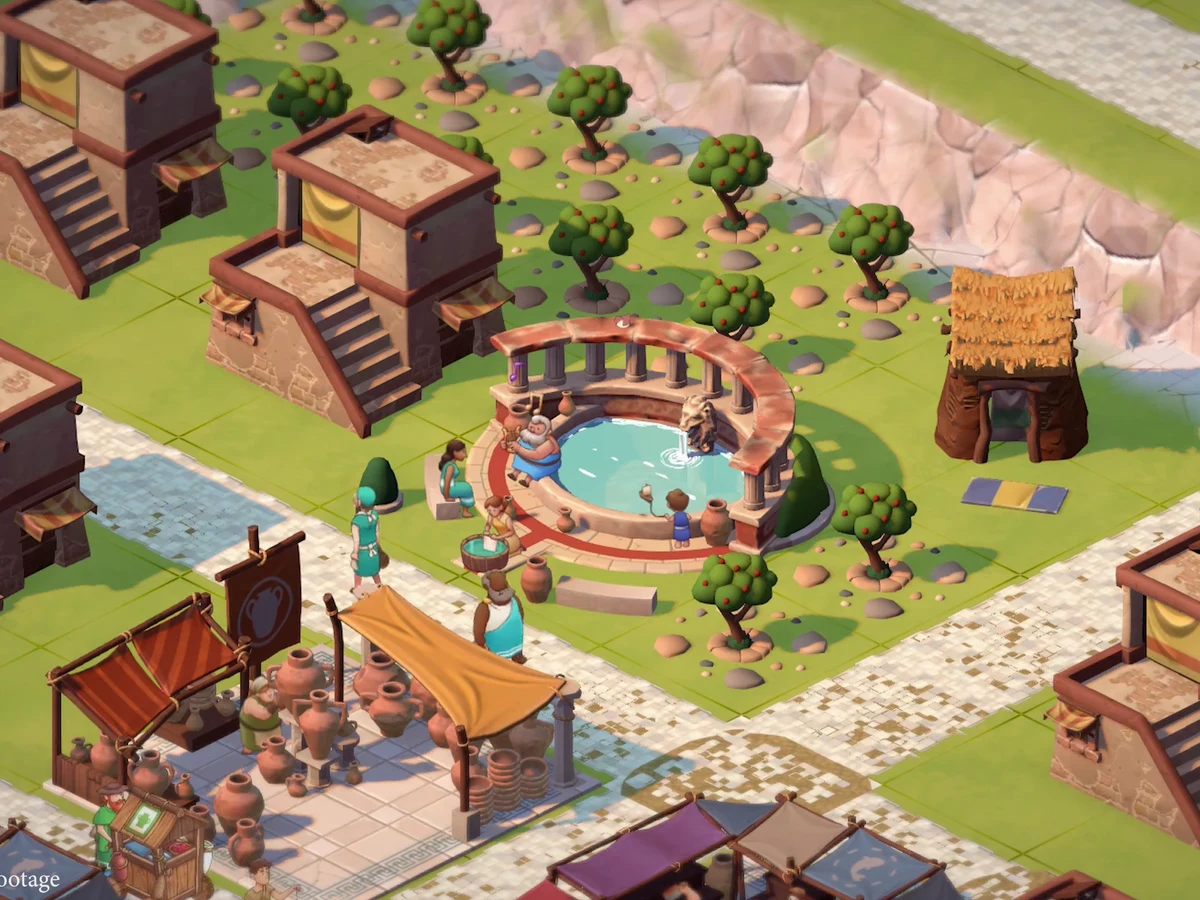
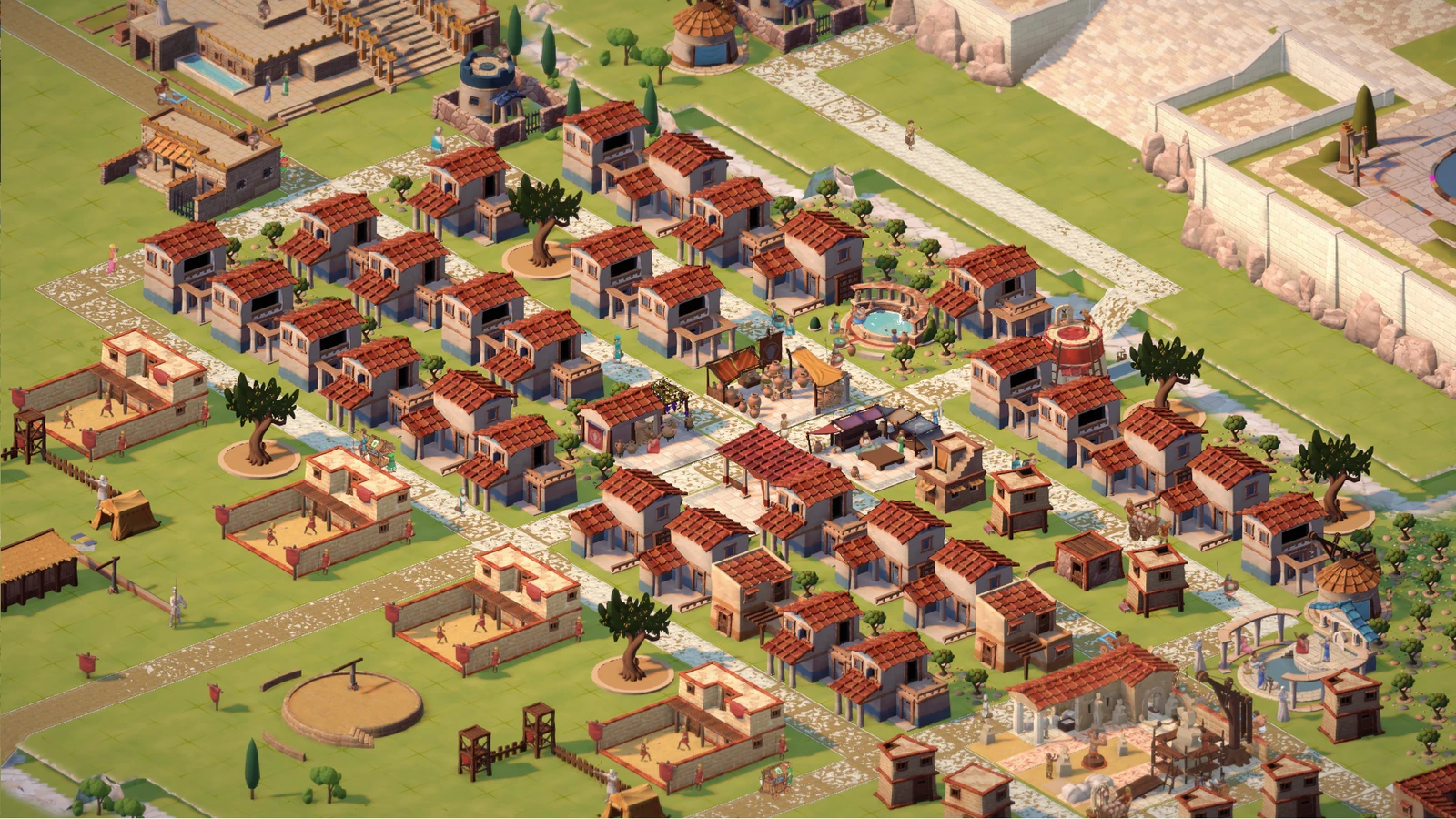
Walkers carry services into the neighbourhoods they pass. Some protect against fire, crime, disease or deteriorating buildings; others distribute essentials such as food and water. Cultural buildings send people out to spread philosophy and art. As these workers pass households, they replenish the residents' needs. A well-served district can develop and enjoy higher living standards, so a useful road network has a job to do beyond connecting attractive buildings.
Place a service building and Theos generates an initial route automatically. You can get a working patrol without first drawing every step, then edit its path whenever you want. An automatic patrol gets the service started; editing lets you bring its daily work into your own plan for the district. You can concentrate on the streets it should visit and refine the parts of its journey that need attention.
Every route has a maximum length, and workers must return to their home building. Both the outward and homeward journeys count when you plan the patrol. The route editor shows how far they can travel, giving that limit a visible form. Reaching a distant street therefore needs to fit inside a complete round trip. Once back, workers pause briefly before setting out again, keeping the service moving in a repeating cycle.
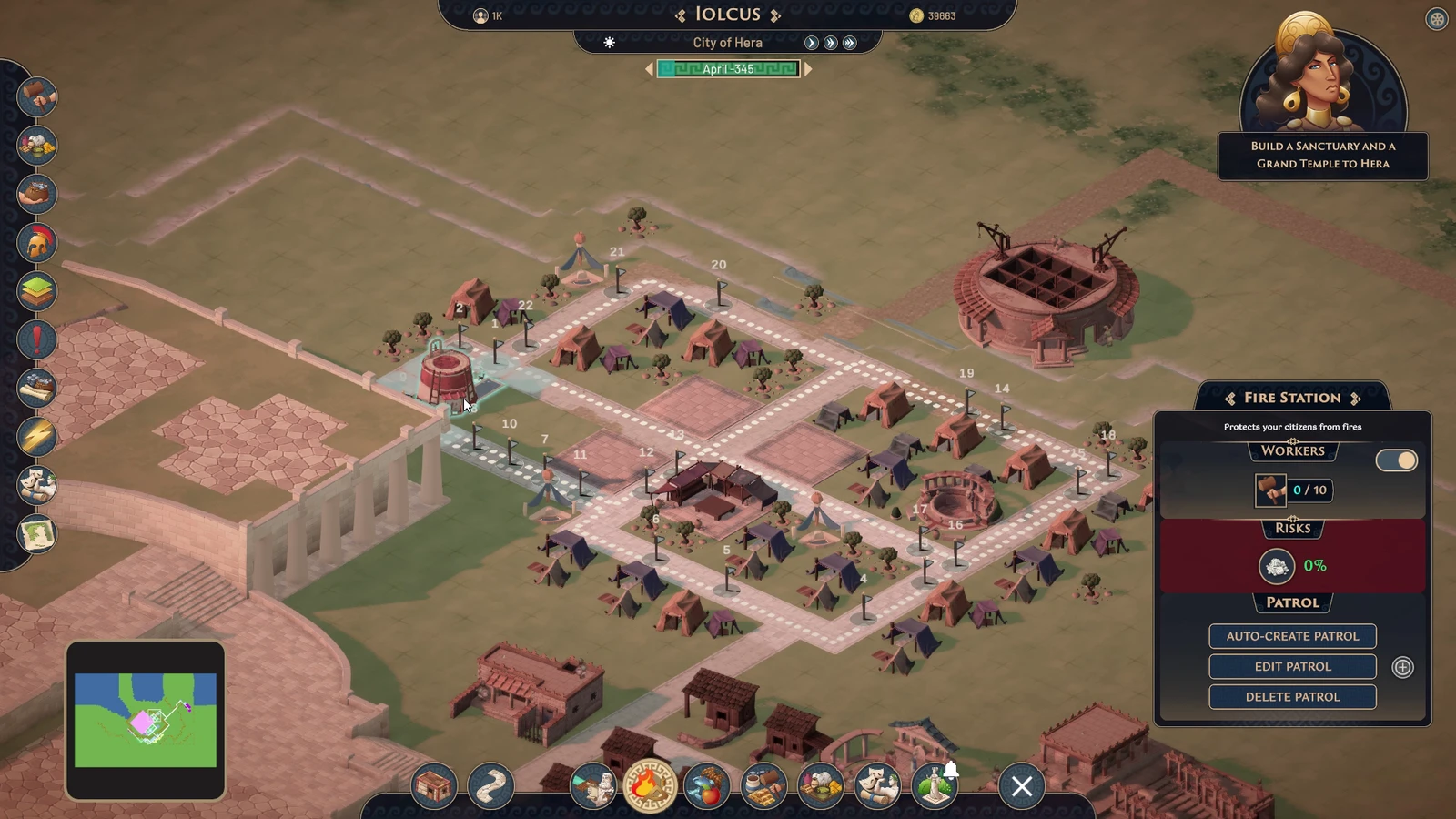
Flags let you refine the journey along the roads. Walkers travel from one flag to the next using the shortest available route between them; add more flags to steer them more precisely if that produces a path you didn't intend. This is an appealingly legible way to handle a branching street network. You choose the important points, inspect the connections, then narrow down the instruction where the worker needs clearer directions.
A neighbourhood can share the plan
A good patrol is also reusable. After you create a route for one service building, adjacent buildings cause their own Walkers to follow the same path automatically. Water carriers, firefighters and maintenance workers can use that shared arrangement without requiring an identical set of instructions drawn for each one. The position of the buildings becomes useful twice: it establishes where a service begins and helps carry a successful route across the neighbourhood's other services.
That gives grouping service buildings a practical attraction. Once you've worked out a useful circuit, placing the next service alongside the first can save another round of flag placement. It's a satisfying sort of planning, where a decision made for one part of town helps organise another. Readers drawn to this kind of arrangement can also find it in our look inside Lightyear Frontier's connected workshop, with its attention to where supplies belong.
Coverage still needs watching as the city grows. Expanding too quickly can leave districts underserved, while carefully planned routes can save workers and Drachmae otherwise spent on extra service buildings. The route limit gives that choice its shape. A longer road network adds places to reach, and the patrol must still make its way home. New housing brings another reason to revisit the circuit serving it.
When the patrol gives way to a fire
Theos marks buildings that lack a valid Walker path in the interface. A service building in that state cannot properly serve the city, so the warning gives you a specific problem to repair. Alongside the visible route limit and editable flags, that warning gives you somewhere concrete to start when a service fails to reach residents. Check the patrol, restore a valid path and get the building serving its neighbours again.
Disaster response follows a separate instruction. In Triskell's example, firefighters leave the nearest fire station and ignore ordinary patrol paths to reach a burning building as quickly as possible. Your carefully drawn daily circuit remains useful for routine coverage, while the fire determines the immediate destination. It is a good distinction for a city builder to make. Planning regular protection and responding to a particular emergency each gets an appropriate way of moving through town.
The current demo introduces the opening three missions of the Athens Adventure, with Athena and Dionysus as patron deities. In the full game's Adventure mode, buildings become available progressively as the city develops and divine requests are fulfilled. That offers a measured setting for learning how services fit together. Sandbox takes a different approach, making all buildings and cities available immediately, with randomised world events and a free choice of patron suited to the selected map's resources.
Those different starts give the same streets different demands, but the little journeys remain worth attention. Theos makes a clear invitation to the player who enjoys looking closely at a working neighbourhood: find the households a service needs to reach, give its workers a sensible circuit, and use that plan again where it helps. A returning water carrier and a firefighter taking the quickest road to trouble make a city feel organised at the scale of the people serving it.
Sources
Where this story comes from, and where you can check it.
Official sources
- Triskell Interactive / DotemuWalkers: The Lifeblood of Your Polis ↗
- Triskell Interactive / DotemuDive into Ancient Athens - The Theos: Cities of Myth Demo is Available NOW! ↗
- Triskell Interactive / DotemuAdventure and Sandbox: Two Ways to Experience Theos: Cities of Myth ↗
- Triskell Interactive / DotemuOur New Release Date Trailer is Here to Celebrate a November 2026 Launch! ↗