A wizard who can trade places with you and a mirror that shifts objects across water could belong to separate puzzle games. In Order of the Sinking Star, they do: four realms start with their own rules, then begin to intersect. Thekla says this sprawling adventure contains more than 1,000 hand-crafted puzzles, but its headline idea is what happens when those separate systems meet. Early reporting also describes routes that players can leave and revisit, which makes the scale sound navigable rather than like one enormous exam.
Four paths start with their own rules
The official Steam listing describes four worlds, each with its own characters, story and mechanics. The publisher's recent story post fills in the cast: a thief, a warrior, a wizard, a talking boat and the Queen begin in separate realms. Their journeys eventually cross as players restore mechanics and open gateways between domains. That gives the thousand-puzzle count a useful shape. The game is not presenting one thousand unrelated rooms; it is building several small rule sets that can acquire new meaning when the characters meet.
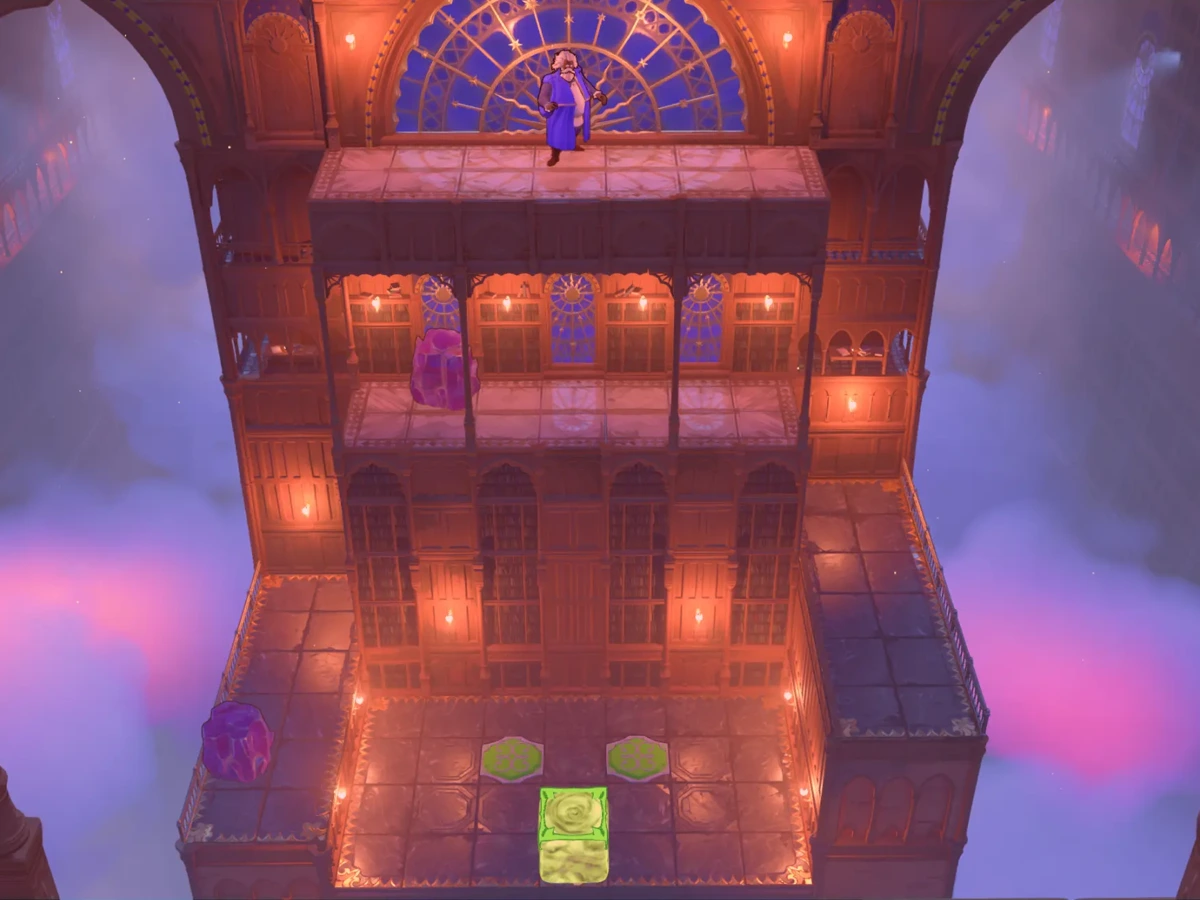
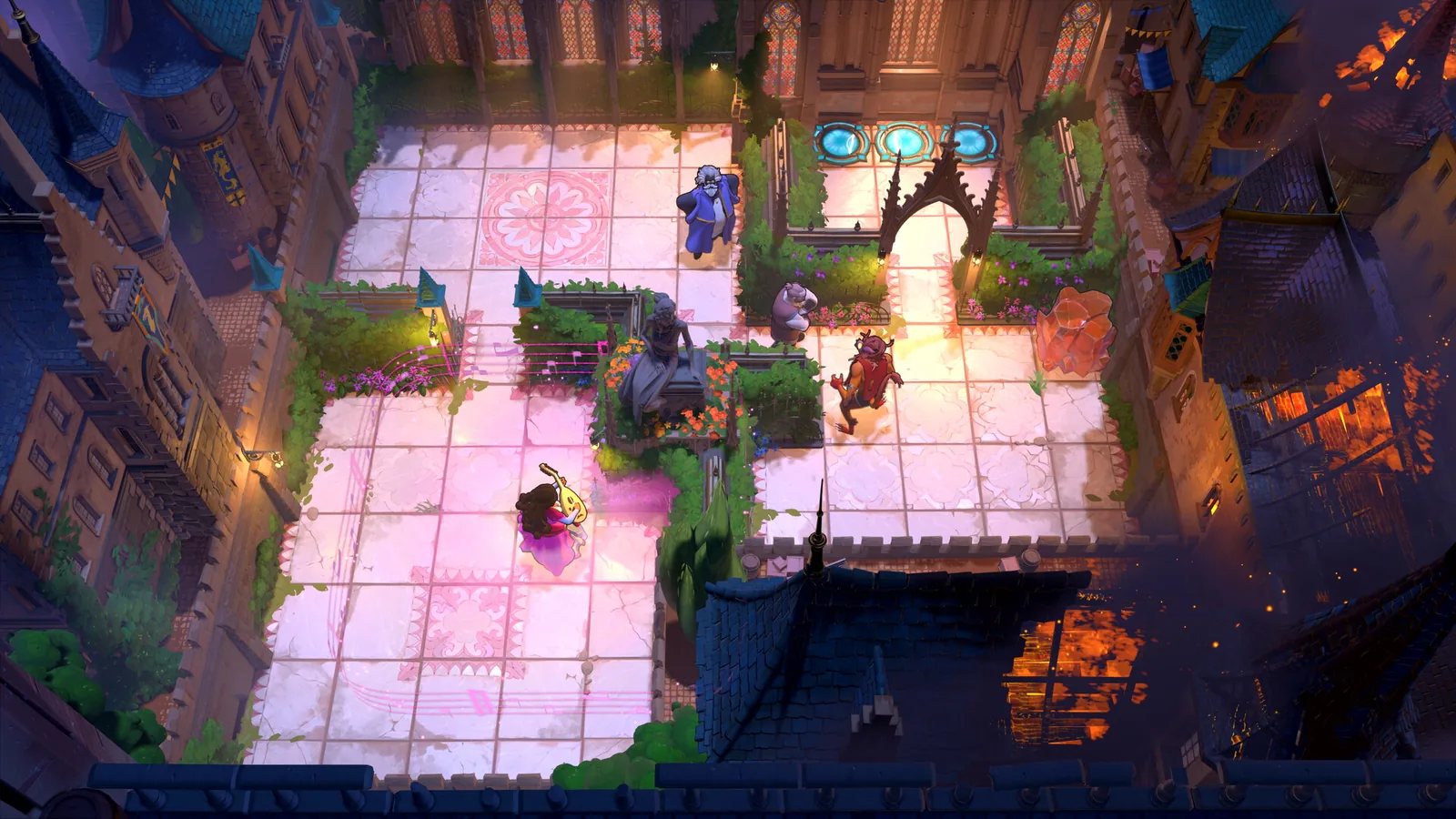
Those characters are more than narrators who happen to stand near puzzles. In an independent hands-on account, Gamereactor's Alex Hopley describes the wizard swapping places with the player, while other stages ask players to move crystals. Hopley tried the Steam Next Fest demo and a later build, with some assistance from game director Jonathan Blow. That context matters: this is reporting from a guided preview, not a claim that every route or mechanic is already clear from the public demo.
The interesting puzzles come from overlap
The developer says the worlds' mechanics will eventually intertwine. Its July overview described heroes meeting, puzzle concepts combining and systems opening new possibilities as the player explores the Overworld. That is the part that distinguishes this from a collection of themed puzzle rooms. A movement rule learned in one realm can matter somewhere else; returning to a familiar setting may bring a different problem because another character or mechanic has entered the picture. The game is asking players to carry rules between places, not simply to master each set and leave it behind.
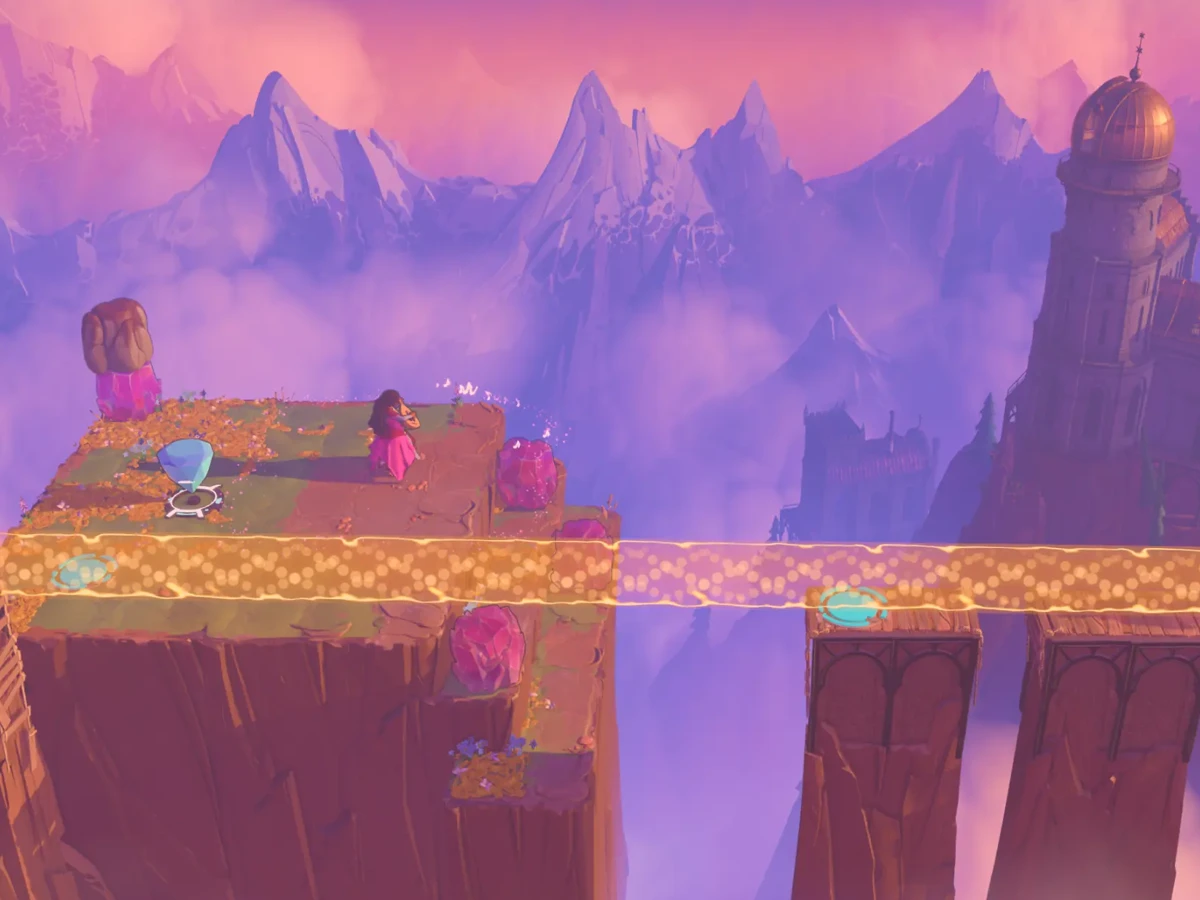
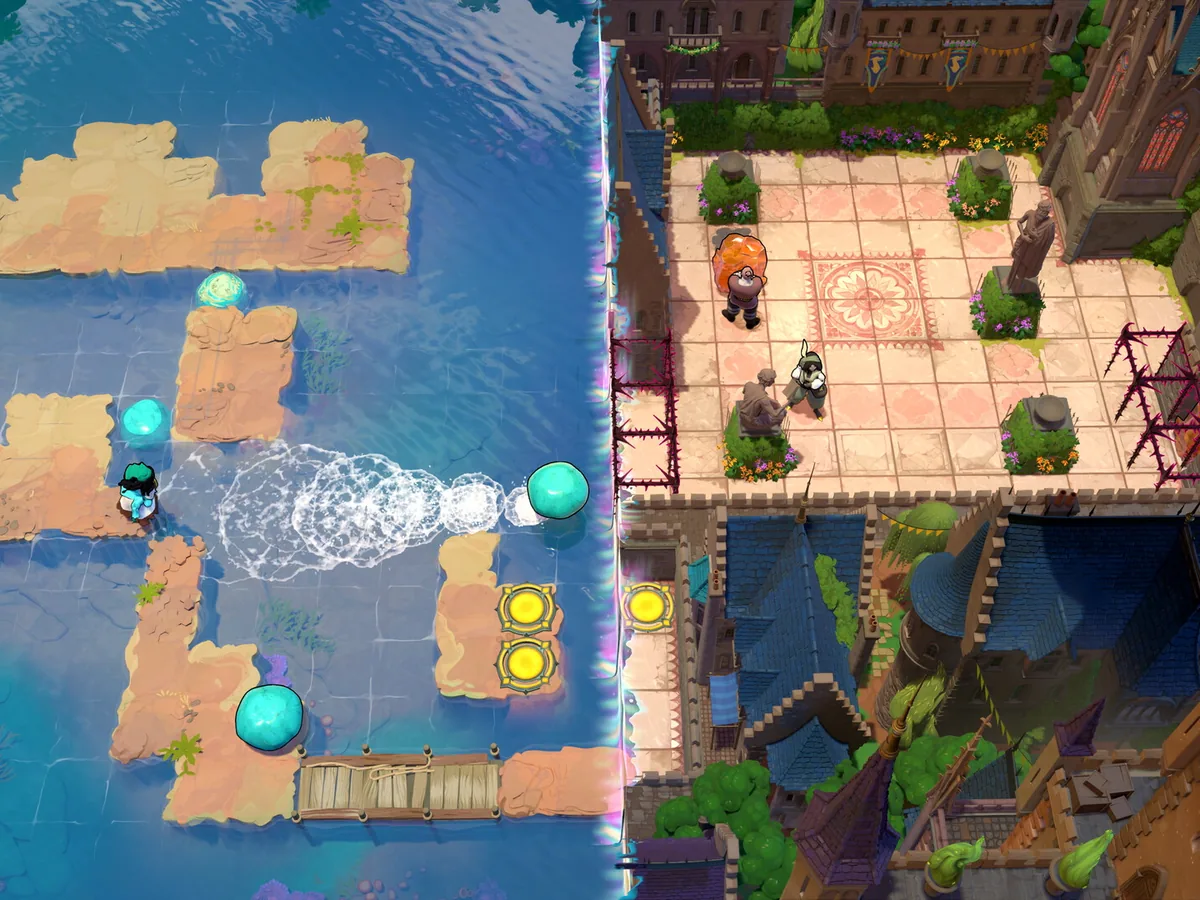
The official store page names some of the building blocks: stones tossed across water create stepping paths; Mirror Isles lets a character swap places with a reflection; grid puzzles use beams of light; and fantasy heroes have different movement and pushing rules. Those foundations are presented as parts of a larger world, not four modes sealed off from one another. It is a useful clue to the design: each route can teach a distinct verb, then ask players to recognise when those verbs can work together in an unfamiliar context.
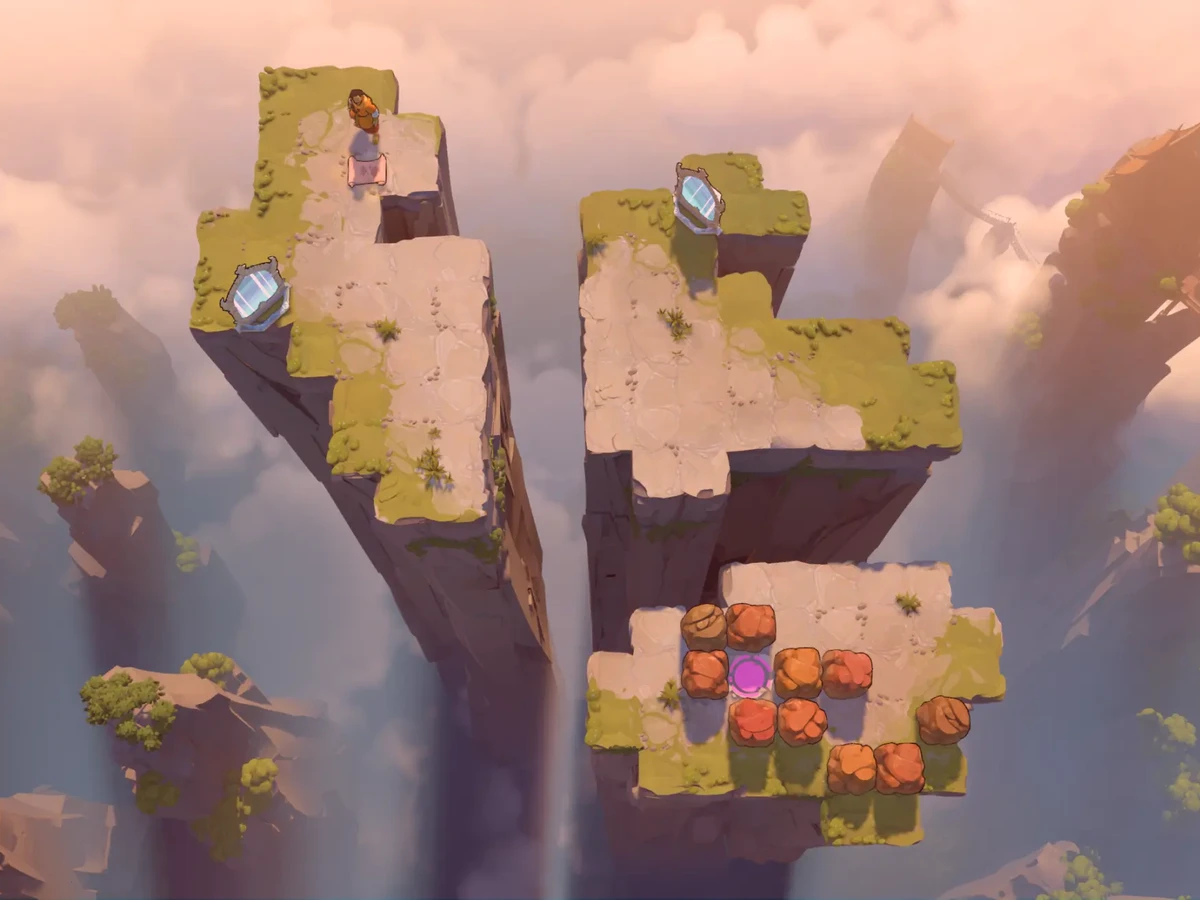
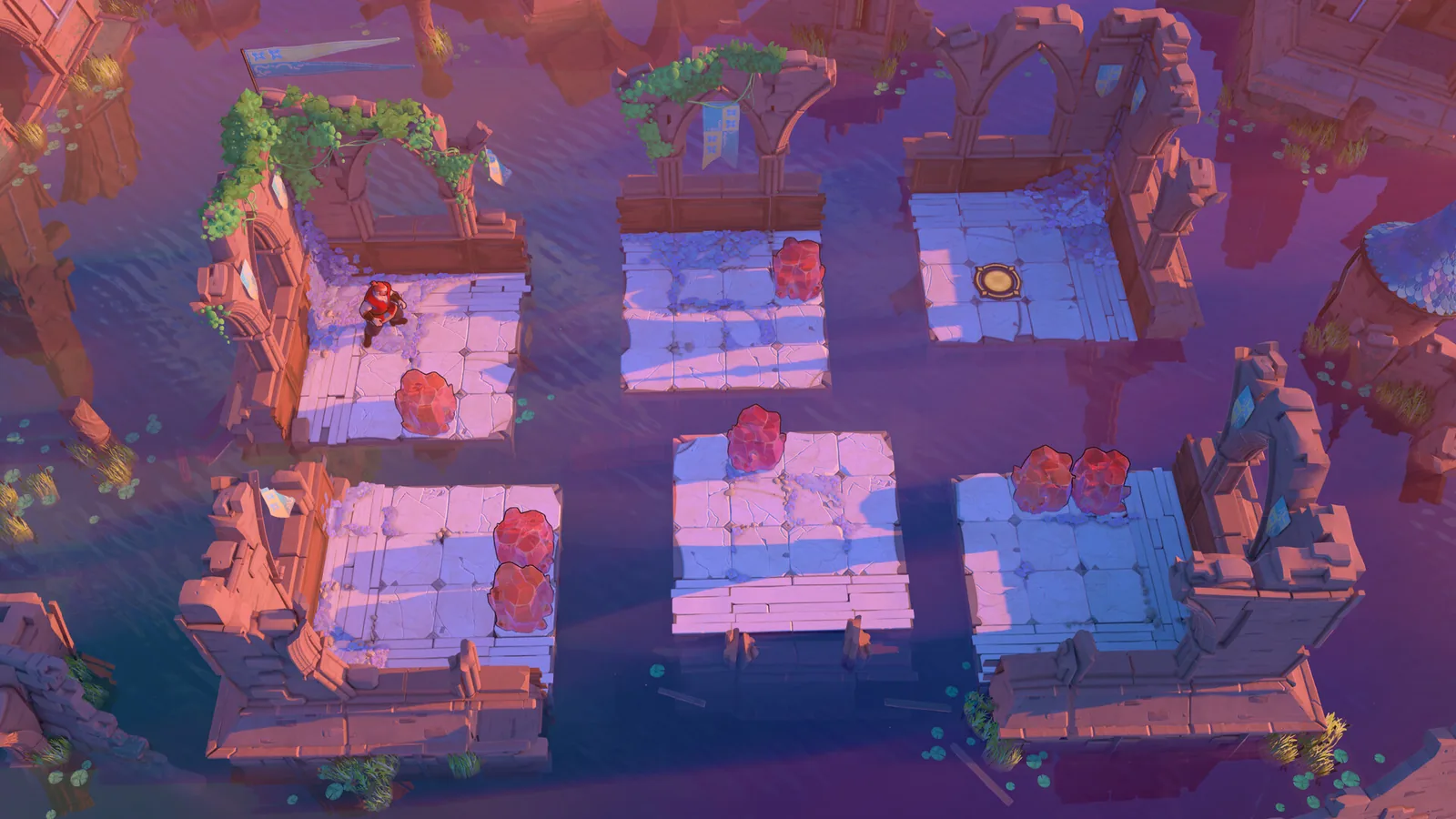
Hopley's preview offers a concrete example of that combination: the Heroes path centres on moving crystals, while the Mirrors path lets players shift objects between islands in a watery map. Together, they create a puzzle that asks the player to think across two systems at once. That is a better guide to the game's appeal than the number on the store page. For players who like learning a rule, then discovering that it has a second use elsewhere, the crossovers could keep familiar interactions from going stale.
Room to leave a puzzle unfinished
A thousand puzzles sounds like a daunting admission fee. The Steam listing calls the game a hundreds-of-hours adventure, but that does not establish how long a main route takes or how many puzzles are needed to see an ending. Hopley reports that the map opens into four main paths and that players can turn to another route when one challenge stops them. He also says, attributing the point to Blow, that none of the endings requires solving every puzzle. That makes the scale less like a single queue and more like several trails through the same world.
There is still a real trade-off. The game's strongest idea depends on later combinations being legible: if too many rules pile up at once, the connections could become harder to read than the individual puzzles. Hopley found that each path teaches mechanics in its own areas and that crossing paths gradually adds complexity, but he had not seen everything in the preview build. No public account can yet show how the full progression handles every late-game combination. For now, the evidence points to a generous structure for curious players, with an unusually large amount of material to explore.
Order of the Sinking Star is due on 8 October for PC, PlayStation 5 and Nintendo Switch 2. Its clearest audience is the player who enjoys carrying a small rule from one place into another and seeing it change. The talking boat and the Queen's mystery give those rules a story to travel with; the separate paths give players somewhere else to go when a puzzle refuses to open. A giant puzzle game is easier to approach when its world offers more than one way forward.
Sources
Where this story comes from, and where you can check it.
Official sources
- Order of the Sinking StarThe Narrative of Order of the Sinking Star: An Epic Tale to Decipher Within ↗
- Order of the Sinking StarNew Extended Overview Trailer & Platform Announcement ↗
- Order of the Sinking StarOrder of the Sinking Star Releases on October 8! ↗
- SteamOrder of the Sinking Star on Steam ↗