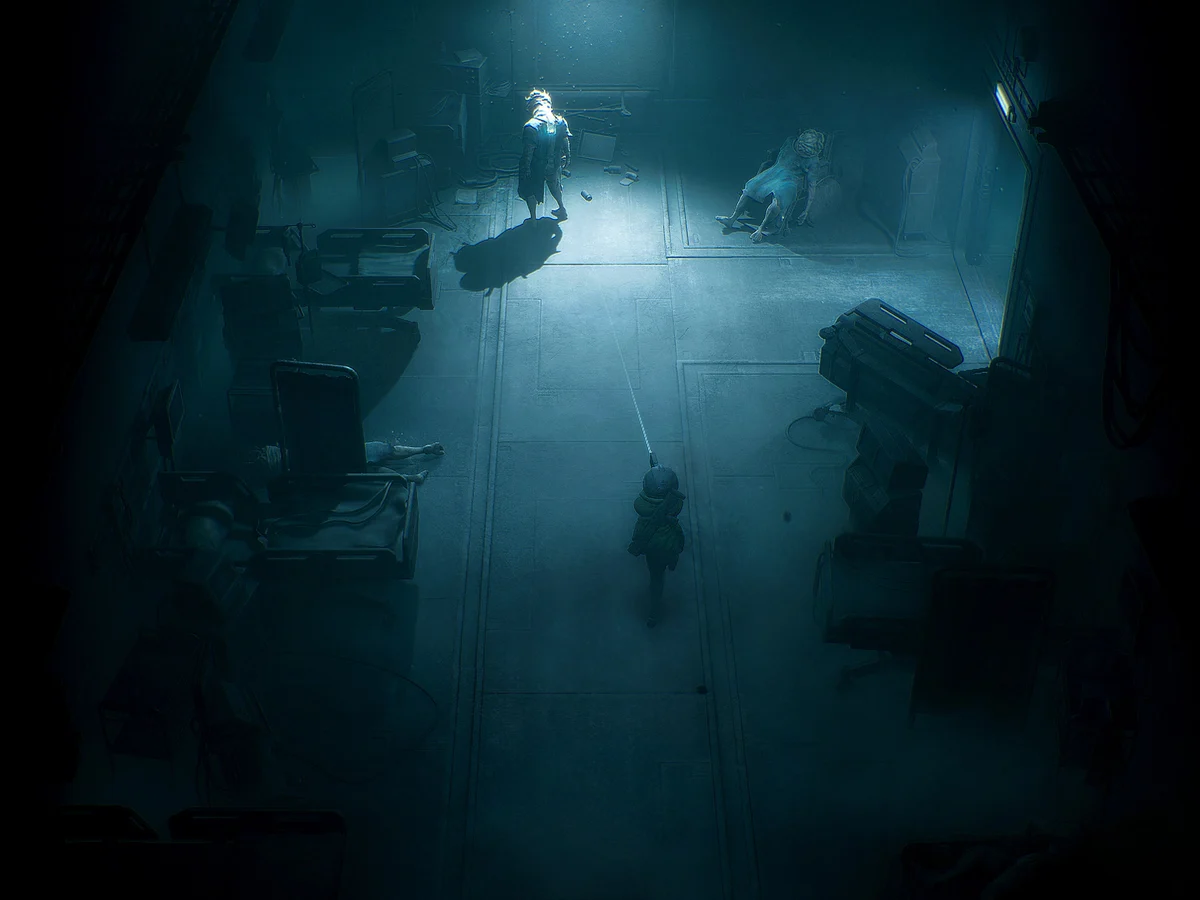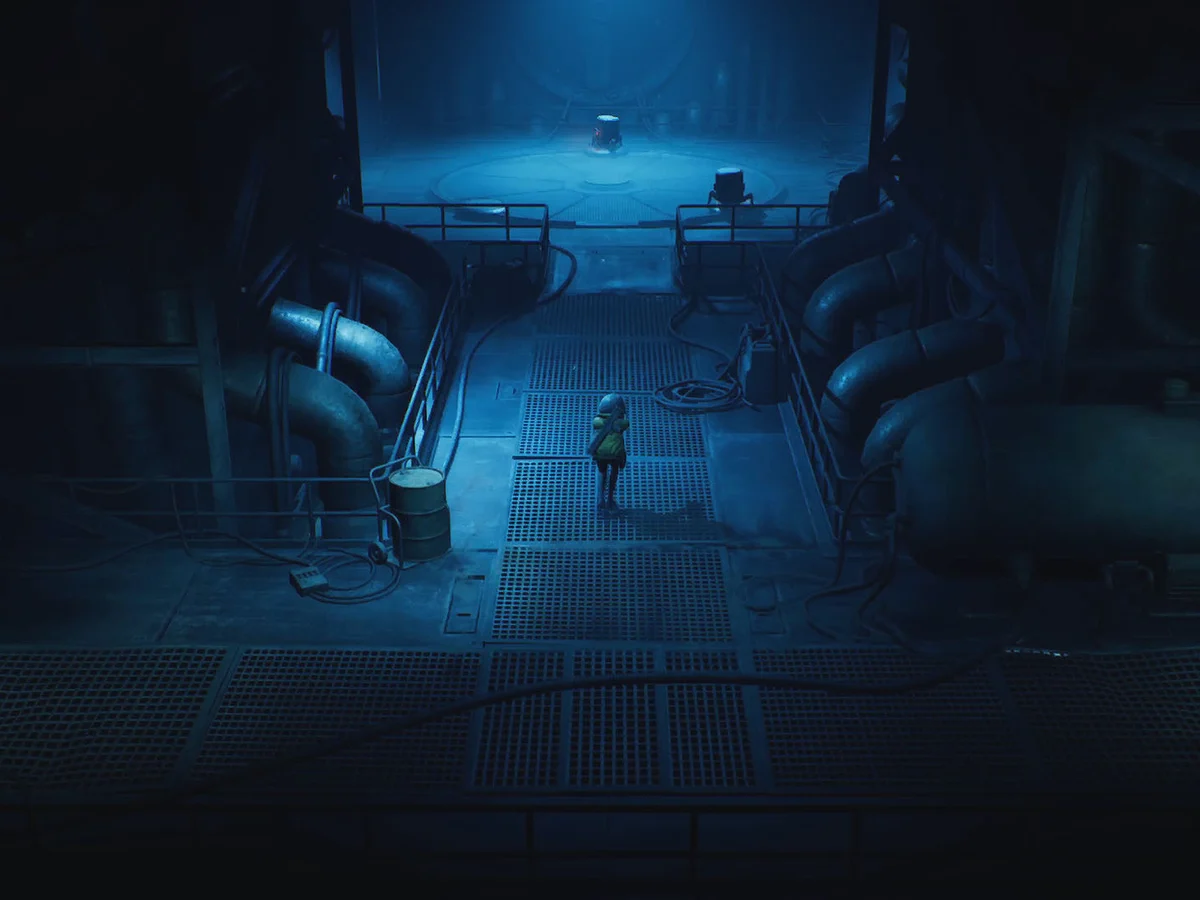
A locked door in End of Abyss isn't fully accounted for just because Cel has walked past it. Scan it and its information joins the map. That small extra job gives Section 9's underground horror an appealing habit: stop, inspect the obstruction, then leave yourself something useful to return to. Its usefulness also depends on what the player can spot in the dark.
The game launched on 1 October, with the Windows version now available through the Epic Games Store. Its official description puts the Scanner alongside newly acquired tools as the means of finding hidden areas and reopening old routes. Finished-game reviews now give that premise a more useful shape. The interesting part is the gap between recording a known obstacle and noticing the thing that will get you past it.
A door worth remembering
In his review for Bloody Disgusting, Aaron Boehm describes scanning a door to learn whether it needs a particular key or opens from the other side. Those details aren't added to the map until the scan. He enjoyed doing that work himself. It makes a blocked passage something to investigate and record, with a reason to remember it after leaving the room.
That's a good fit for Cel's job as a combat technician. An obstruction has a condition attached to it; inspecting the condition belongs beside finding the equipment to satisfy it. The map can hold the result while the player thinks about the route. The useful decision is which recorded obstacle a new tool might answer. Simply encountering the door needn't complete that little act of reconnaissance.
Section 9 co-founder Marcus Ottvall's launch-week Xbox Wire post explains how the project moved away from an action-led top-down shooter towards slower exploration and tension. His account of the art describes a worn facility, distorted scale and creatures designed around gameplay functions. That development history helps explain why examining a room has become part of the attraction. Cel is there to work out a damaged place, as well as survive its inhabitants.

The scan still needs a visible clue
There is a useful limit to the earlier demonstrations. Xbox Wire's Will Fulton saw map icons, shortcuts and locked passages in a June demo, but a developer was actively directing him. He explicitly couldn't judge the exploration rhythm. Being shown the right corridor establishes that the pieces exist; it tells us much less about finding that corridor alone. Launch reporting can follow the process past the guided introduction.
GamesRadar+'s Luke Kemp, reviewing on PS5, found the scanner useful for keycard information and tracing power lines through walls to nodes that could be shot to open doors. Yet he also found door readouts that merely said they were locked. Knowing an obstacle exists isn't always enough to plan a return. The description has to offer a usable distinction, or the map risks preserving the player's confusion along with the location.
Kemp also missed a progression-critical destructible floor because its pale colouring was hard to see. That's a different failure from lacking the right key. One asks the player to connect information they already possess; the other can leave them searching without knowing which visual clue escaped notice. His account is a PS5 review experience, rather than proof that every player or platform will hit the same snag.
Returning with an answer
Boehm's own enthusiasm for mapping survived a frustrating search for a bridge switch he had repeatedly overlooked. He eventually found it while sweeping with the scanner. The device can therefore help recover a missed detail, but his example also shows how long an overlooked control can hold up exploration. The satisfaction of charting the facility and the frustration of retracing it can occur in the same playthrough.
End of Abyss has a strong, specific idea in asking Cel to inspect the doors her map remembers. Recording an obstruction gives the return trip a purpose: there was something here, and now you may have the answer. Its early reviews place the sharpest limitation before that moment. The tool can retain a discovery; the room still has to let you make it. A bridge switch lost in the scenery can cost more direction than another locked door.
Sources
Where this story comes from, and where you can check it.
Official sources
- Xbox WireEnd of Abyss: Explore and Fight Through the Abyss' Horror ↗
- Epic Games StoreEnd of Abyss ↗
- Xbox WireEnd of Abyss: I'm the Little Nightmare, and You're Locked in Here With Me ↗