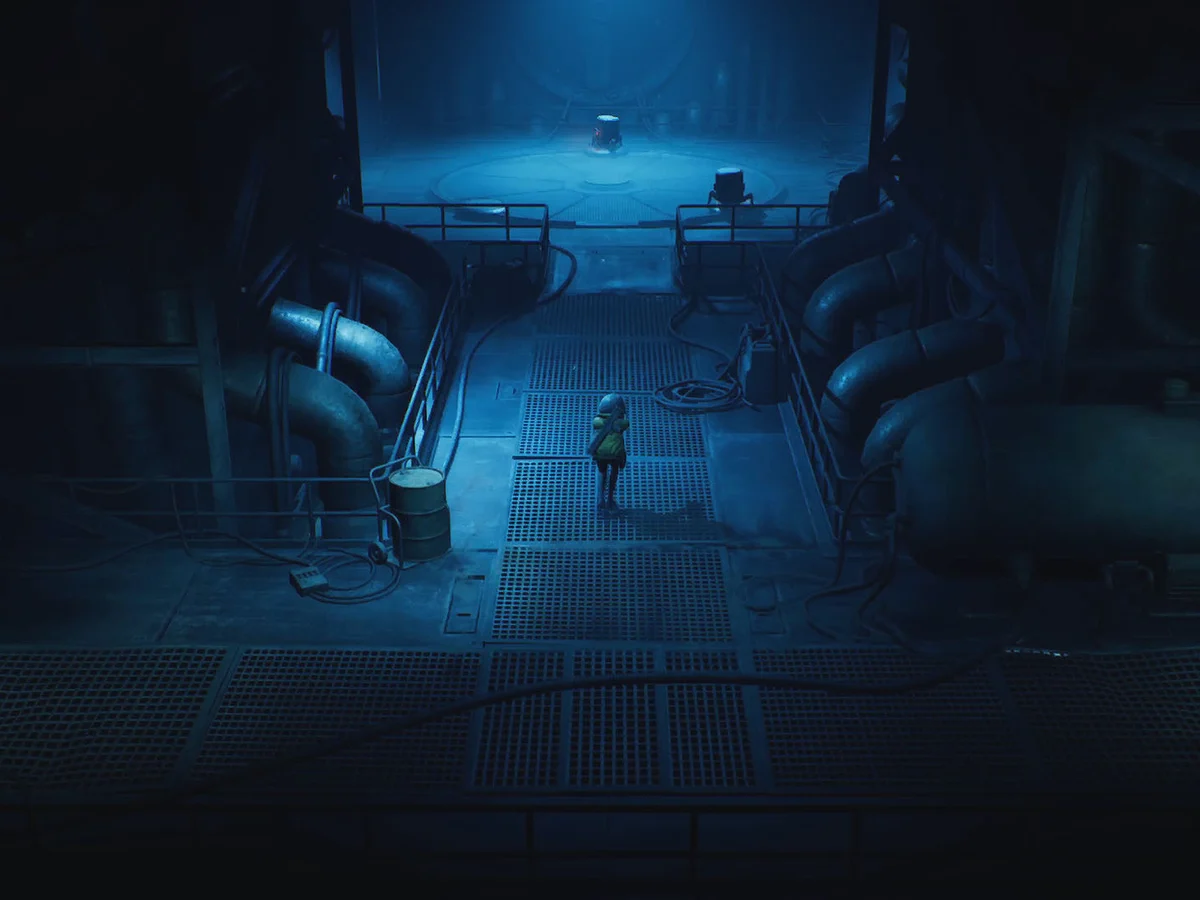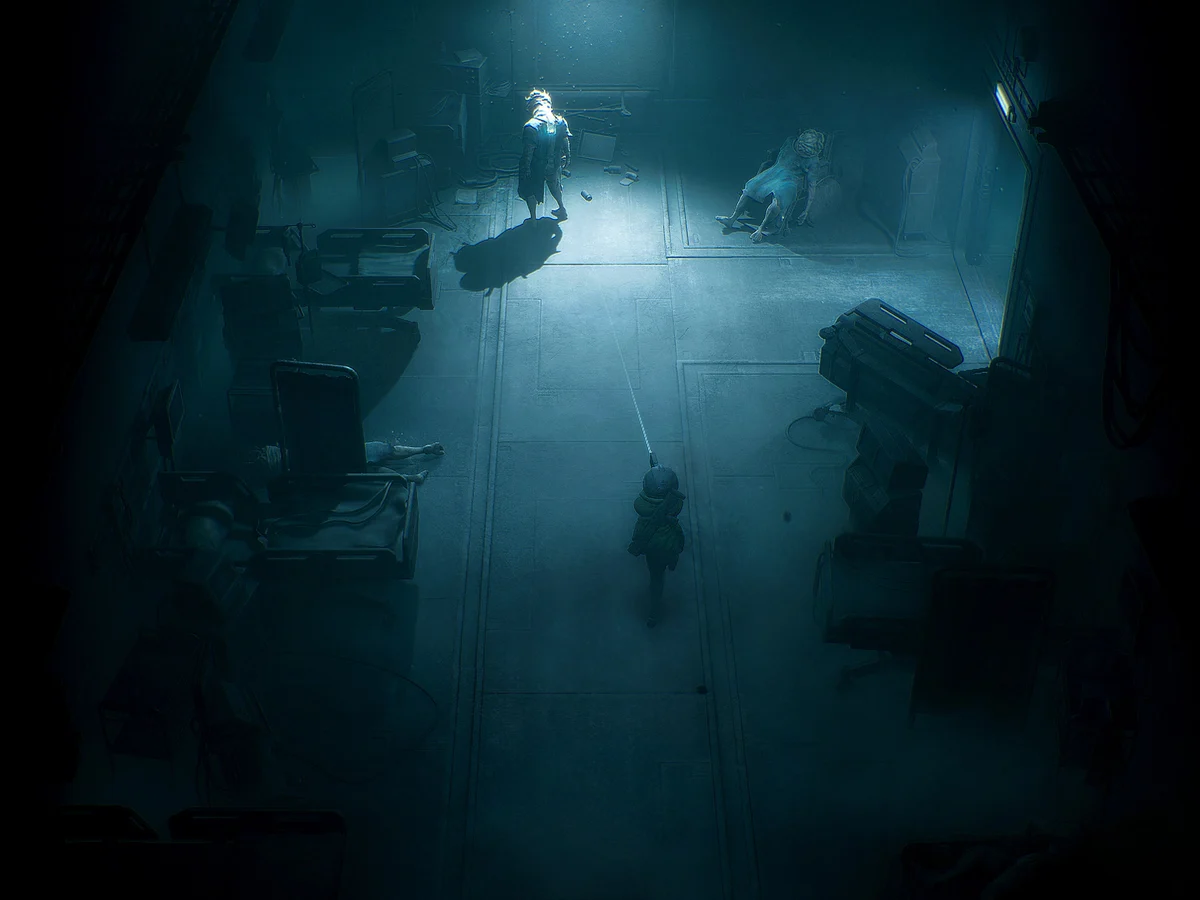
A violin bow draws across two playing cards. The thin, wobbling squeal could be a pig, a laugh or something breathing where it shouldn't. In End of Abyss, it becomes the raw material for a creature. Three days before Section 9 Interactive's horror game launches, that little sound-design trick explains more than another monster reveal would: this underground facility is built to be read by ear before it can be understood.
Sound designer and composer Tobias Lilja demonstrates the trick in Resonating Frequencies, the studio's 24 September development diary. He holds the cards together and works the bow across their edges, producing an awkward organic cry from ordinary objects. That sound can tell the player a body is nearby without showing exactly what owns it. End of Abyss already limits visibility with a distant, shifting camera and dark industrial rooms; its audio has to carry information that the picture deliberately withholds.
First work out what the gun is made of
Lilja starts each weapon with a physical question. Is it firing a projectile or some kind of plasma energy? What materials would move inside it, and what would the impact against a wall add? Plastic mechanisms can sit beside the main report; the surface receiving the shot supplies another layer. The result is not documentary realism for imaginary technology. It is a consistent object that a player can learn. A recharging pistol ought to sound different from a shotgun before the ammunition display confirms which tool Cel has raised.
That distinction has practical weight in the encounters described by independent hands-ons. Shacknews found that the plasma pistol never runs dry but does little against stronger enemies, while other weapons use crafted ammunition. Its writer also reported that monsters can surprise Cel when visibility is poor. GamesRadar describes the top-down camera pulling her away from the viewer as creatures fill narrow corridors. In that space, a recognisable firing mechanism, an impact and an enemy voice aren't decoration. They help sort a dangerous room while the player is deciding whether the expensive shot is necessary.
The approach fits a game whose combat is deliberately straightforward at the start. Section 9 co-founder Marcus Ottvall told GamesRadar that Cel begins with simple combat, then finds weapons and equipment that open intertwined areas. The official store description likewise makes the Scanner and newly unlocked tools central to returning along branching paths. Visual icons can mark a door for later. Sound does a different job in the moment: it tells you what kind of object is working, what surface it struck and whether the darkness has answered back.
The voices keep the place unknowable
End of Abyss does have speaking characters, including a cube and one of Cel's crew companions, but Lilja says they do not use English or another recognisable language. He created invented speech because an identifiable home country would make the setting feel smaller. Meaning therefore has to survive without literal dialogue. The tone of a line carries the speaker's mental state: a stoic command should sound different from a frightened plea even when the syllables cannot be translated. Processing then gives a large crew member the sense of speaking through a heavy helmet.
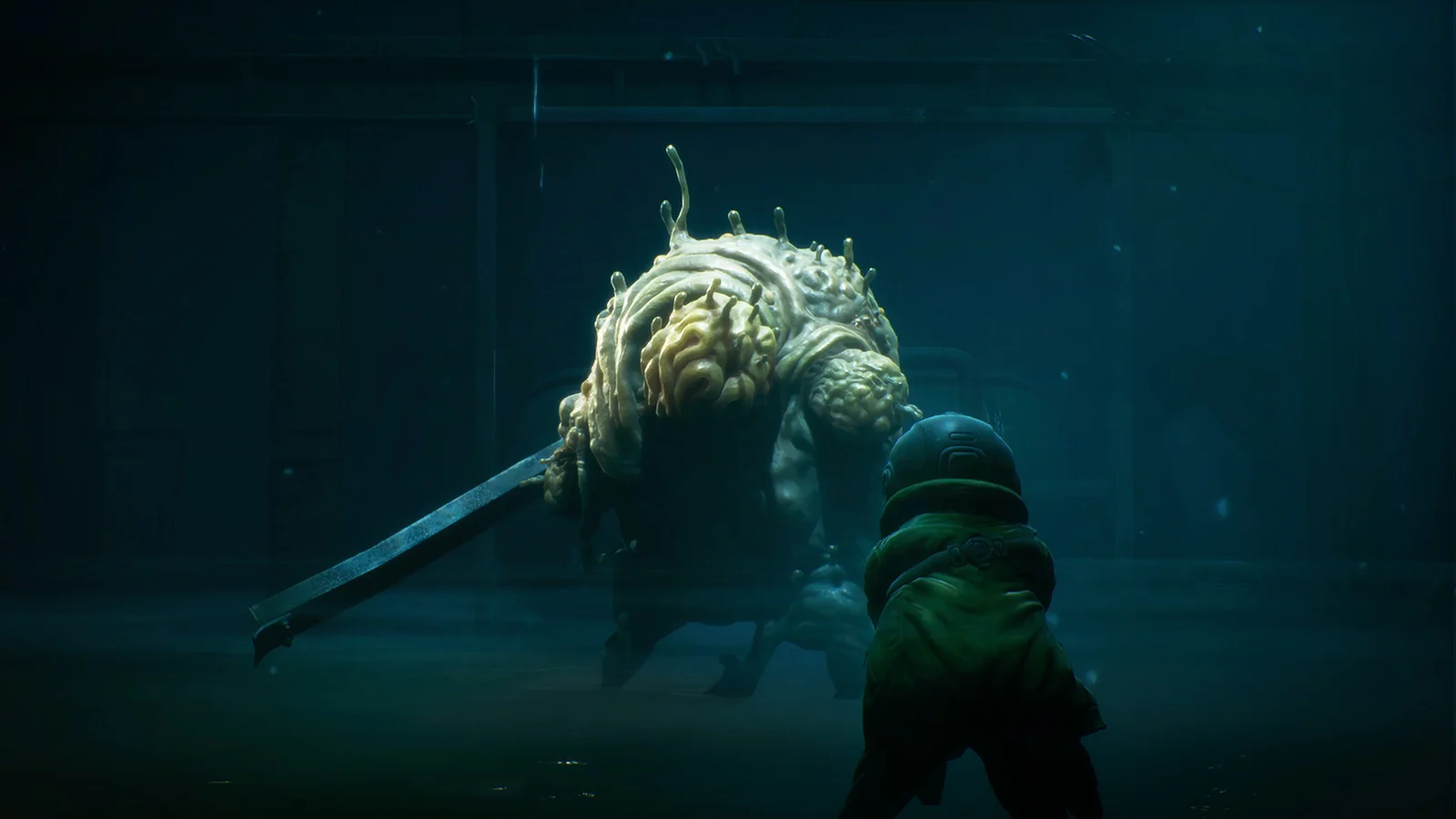
Enemy noises face the inverse problem. They must register as hostile without turning every creature into the same stock snarl. Lilja says some enemies barely make movement sounds beyond creaks, leaving their voices to carry much of their identity. The playing-card squeal is useful because it is difficult to name. Its pitch can resemble an animal, an alien organism or laughter without settling into any of them. That uncertainty suits monsters which the official material describes as not fully human, while their aggression still needs to be legible quickly enough for a dodge or shot.
GamesRadar's account gives that audio a spatial frame. The game can shift between top-down and more isometric views, making Cel look small while multi-legged creatures and smaller vermin approach through tight spaces. Its reporter also singled out distant bumps and dripping pipes. Those sounds can suggest a threat beyond the camera without proving where it is. Horror often asks you to mistrust an empty corridor; End of Abyss has the more interesting task of making that corridor useful for navigation and combat as well as frightening.
Music made from the same machinery
Lilja handles both sound effects and music, so the border between them can blur. A ventilation hum can be tuned to sit with the score rather than fighting it. Metal resonances can become notes. He demonstrates a familiar horror technique - rubbing a rubber ball against a large metal plate - then processing the ringing result into industrial music. The room is no longer waiting for a soundtrack to arrive from outside. Its fans, plates and pipes already contain one.
The score reached that point by rejecting a tempting reference. Early in development, Lilja was asked for something like Blade Runner. He found its broad, lush synthesiser pads belonged to a skyline, not to characters trapped deep underground, so the music moved towards industrial horror. That is a good refusal. End of Abyss already wears its influences openly: Section 9 has named Alien, The Thing, Akira and Ghost in the Shell, while its founders previously worked at Tarsier Studios. Another recognisable texture would risk making the facility feel borrowed.
Independent play reports support the quieter choice without settling how it holds across the full game. One hands-on heard footsteps, metal creaks, scanner beeps and wind through tunnels, with music used so sparingly that the empty space became part of the tension. Shacknews found the limited visibility and ammunition pressure made sudden creatures costly. These are early demonstrations, not evidence that every backtracked corridor stays unnerving, but they show the design pieces meeting where they should: what you hear can alter what you spend.
End of Abyss arrives on PC, PlayStation 5 and Xbox Series X|S on 1 October. Its immediate appeal is easy to photograph: a small figure under blue light, a grotesque body at the edge of the room. The sound diary offers the sharper reason to pay attention. The facility's language, weapons, monsters and score follow the same rule. Before the game explains what is down there, it wants the scrape of two cards to make you stop and listen.
Sources
Where this story comes from, and where you can check it.
Official sources
- Section 9 InteractiveResonating Frequencies | Audio & Sound Design for End of Abyss ↗
- Epic Games StoreEnd of Abyss ↗
- Xbox WireEnd of Abyss: I'm the Little Nightmare, and You're Locked in Here With Me ↗