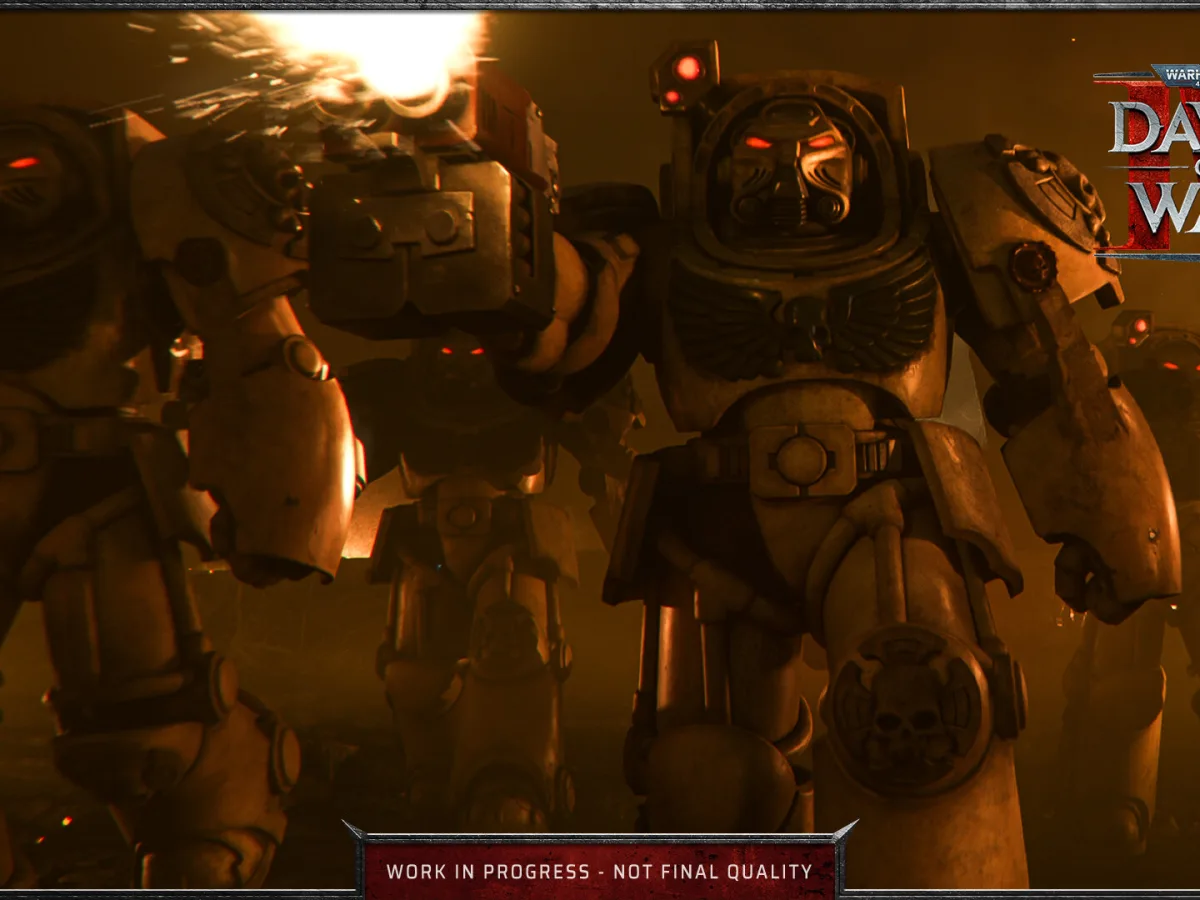
Warhammer 40,000: Dawn of War IV does not need another trailer to explain why players should watch it. Its useful promise is that four armies ought to make four different real-time strategy problems: Space Marines threatening hard-hitting bursts, Orks turning accumulated numbers into momentum, Necrons building pressure over time, and Adeptus Mechanicus defending a connected territory network. The official delay from September to 3 December gives KING Art Games extra time, but the reader benefit is more specific than a revised calendar entry. This is now a preview of whether that extra time can turn distinct-looking factions into decisions that remain distinct through a full match.
The delay has a practical purpose
Deep Silver's Steam announcement says the PC release has moved to 3 December and attributes the change to additional development time. It does not promise a new mode, a redesigned campaign or a particular technical fix, so those should not be inferred from the delay. The presently confirmed PC store page still names KING Art as developer and Deep Silver as publisher, and it continues to advertise campaign, Last Stand, Skirmish and multiplayer. That modest certainty is enough for a useful expectation: a strategy game with several modes cannot rely on a short reveal match to demonstrate how its faction systems behave once players know the maps and counters.
The scale of the stated campaign makes that test harder. The Steam page promises more than 70 campaign missions, playable alone or with a friend, alongside modes designed for repeat play. A faction feature that feels striking in a short multiplayer showcase can become repetitive across that much material if it always asks for the same opening, resource route or unit answer. The extra time is therefore meaningful only if it protects the parts players will revisit: build orders, map control, unit roles and the trade-offs that make a counterattack feel earned rather than prearranged.
Four identities need to survive contact
The visible material gives the four factions a clear starting language. The official multiplayer report frames Space Marines against Orks as a contest between forceful firepower and an Ork army that becomes dangerous if it is allowed to grow. Its second match sets Adeptus Mechanicus fortification against Necron pressure that can escalate. Those descriptions are first-party framing, not independent proof of balance, but they identify the right questions for an RTS player: can a defender create a useful line without freezing the map, and can a scaling army make progress before it simply overwhelms everything?
PC Gamer's 2025 hands-on offered more concrete reasons to follow the new faction. It described an Adeptus Mechanicus base network that improves production when buildings connect, while units and defences inside that network receive buffs; it also reported the faction could see enemy movement beneath fog of war. If that design remains in the shipped build, the faction has a real spatial identity rather than a different collection of character models. Players should still reserve judgement. The outlet played a showcase skirmish made to demonstrate the game, and a controlled slice cannot establish whether the network has enough weak points for opponents to exploit.
Watch the repeatable choices, not the scale
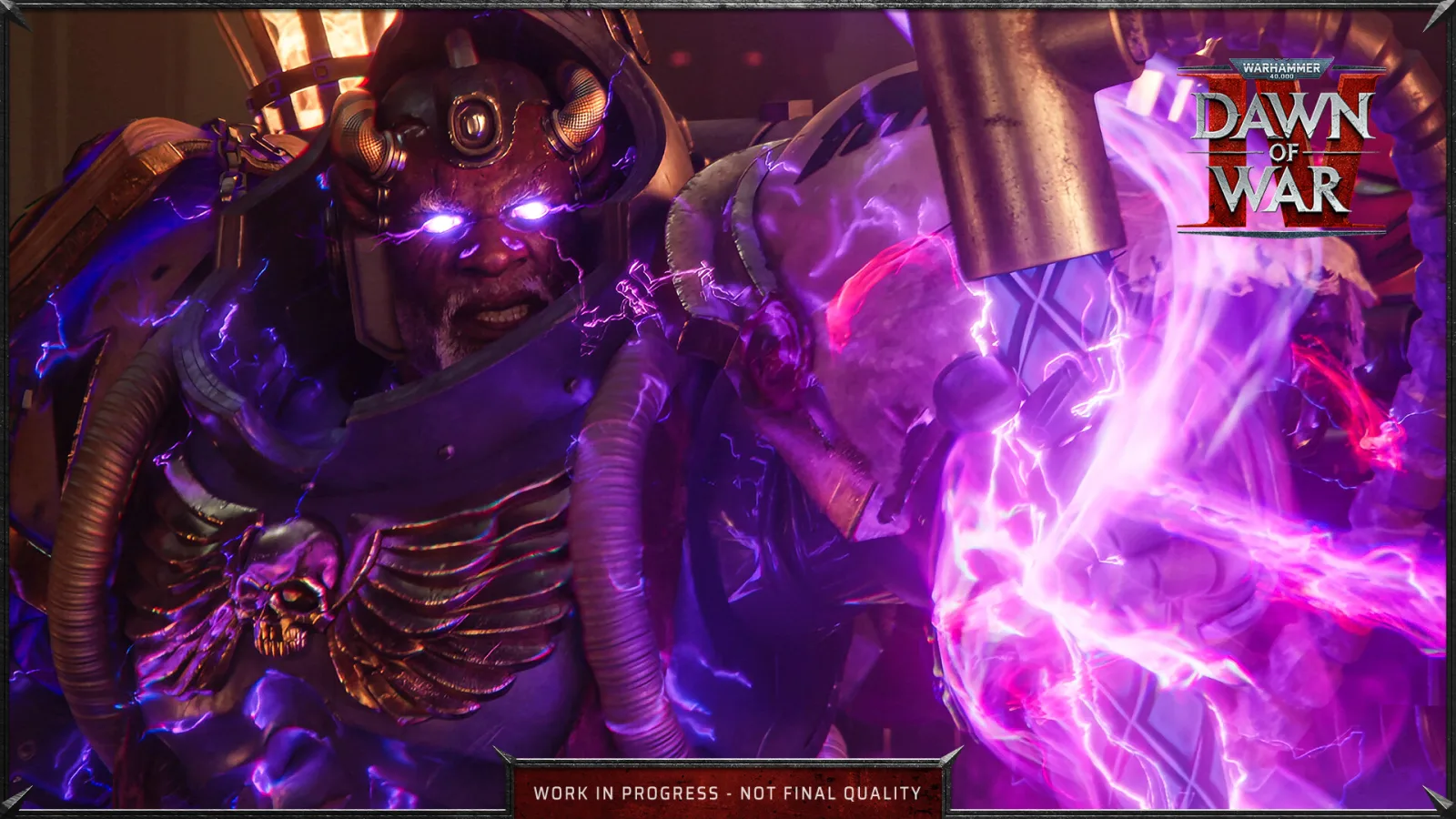
There is plenty of spectacle to sell a Warhammer RTS: large formations, armoured units and close-combat animations can all make a trailer look suitably brutal. They are not the reason to follow Dawn of War IV. The more revealing footage will show what happens after the first clash, when a Space Marine player has to decide between holding a firing line and moving to deny territory, or an Ork player must choose whether to bank a growing force or spend it before an opponent stabilises. That is where faction identity becomes a strategy rather than a slogan.
The practical reason to keep it on the radar, then, is unusually narrow and testable. KING Art has shown faction ideas that imply different relationships with space, tempo and risk, and its work on Iron Harvest gives the studio relevant RTS experience. By December, players should look for uninterrupted matches, current hands-on impressions and clear campaign footage rather than relying on faction trailers. Those are the materials that can show whether Dawn of War IV's delay made its four armies easier to understand, harder to master and fair to fight against. Until then, the release date is confirmed; the quality of those choices is not.
Who should keep it on the radar?
- Follow it for
- four faction concepts that create recognisably different questions about territory, pressure and timing in a series returning to classic RTS foundations.
- Wait for reviews if
- you need evidence that the campaign, multiplayer balance, performance and repeatable modes hold up beyond selected demonstrations.
- What remains unknown
- how the delayed build differs from earlier footage, the full campaign structure, final system requirements, online stability and the balance of each faction.
Dawn of War IV has a credible reason to be watched. Its December release needs to show that four factions are four ways to think, not four routes to the same answer.
Sources
Where this story comes from, and where you can check it.
Official sources
- Steam CommunityWarhammer 40,000: Dawn of War IV - Release Date Update ↗
- SteamWarhammer 40,000: Dawn of War IV on Steam ↗
- Warhammer CommunityWarhammer 40,000: Dawn of War IV - Orks Faction Trailer ↗