Control Resonant is worth watching because Remedy is not merely giving its 2019 shooter a bigger map and louder enemies. It is moving Dylan Faden out of the Oldest House, making his shapeshifting weapon the centre of a melee action RPG, and asking a distorted Manhattan to carry the kind of uneasy curiosity that made the first game stick. Independent hands-on reporting suggests the combat has real pace. The more revealing evidence, though, is a city with bent streets, shifting rooms and places that turn navigation into part of the fiction before 24 September.
The sequel's biggest change is not only the weapon
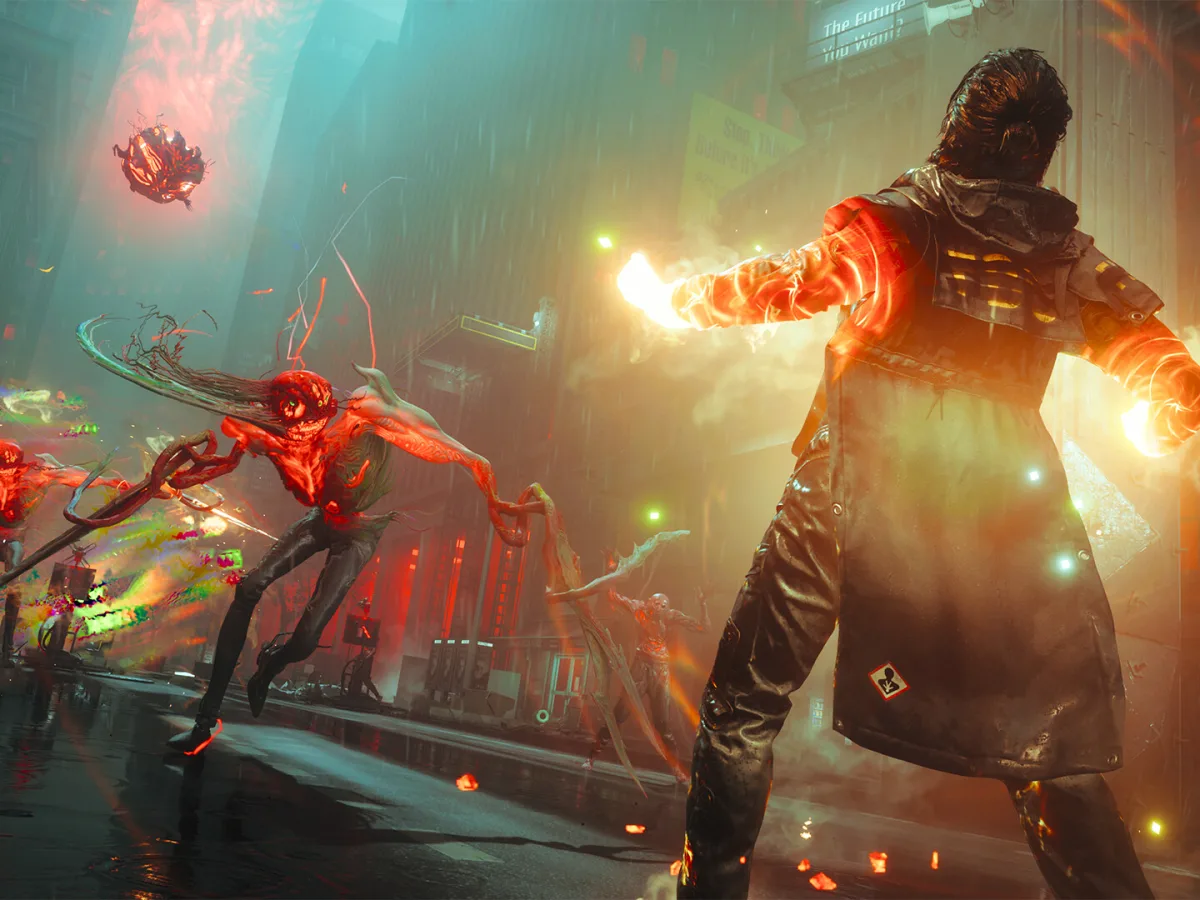
Remedy has confirmed that Dylan, Jesse Faden's brother, is Resonant's only playable character. Jesse remains part of the story, but the sequel sends Dylan into a Manhattan altered by paranatural forces rather than keeping the player inside the Federal Bureau of Control's headquarters. The studio says the campaign includes outdoor and underground biomes, unexplored dimensions, side-quests, puzzles and bosses, with some return to unseen parts of the Oldest House. That is a specific and potentially difficult expansion: Control's building could be uncanny because it was contained; a city has to stay legible while it becomes stranger.
Game Informer's three-hour hands-on describes an open-ended New York rather than an open world, with warped buildings, suspended bodies and a 90-degree drop in the street. It also reports sections built around a sinkhole of repeating apartments and a television-led maze. Those are demonstrations, not guarantees about the finished route through Manhattan, but they matter more than a trailer's scale claims. They suggest Remedy is treating space as a gameplay problem rather than a backdrop for encounters. If the final game can keep surprising players with how places behave, it has a stronger identity than an ordinary city-sized sequel.
Dylan's Aberrant changes how Control is played
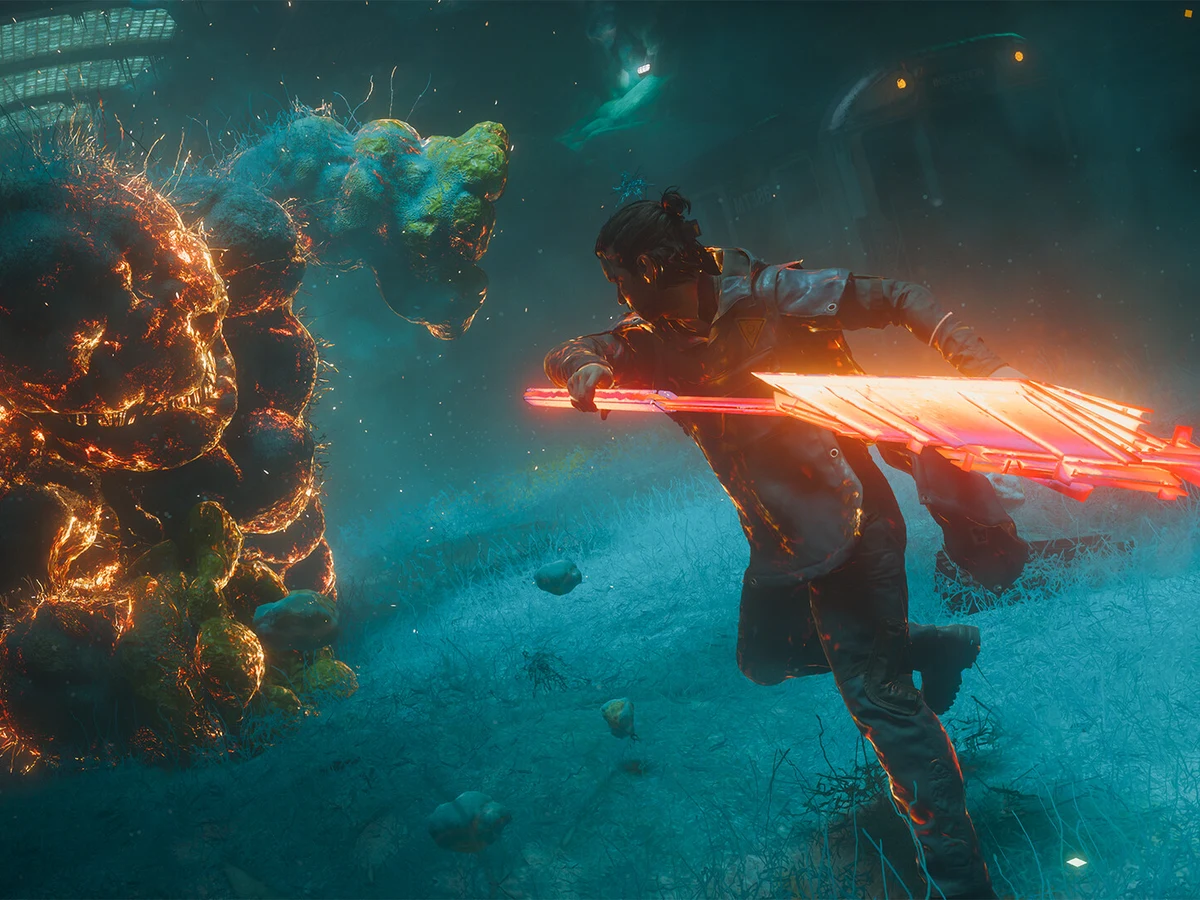
The original Control made Jesse's transforming Service Weapon and telekinesis its flexible fighting language. Resonant makes Dylan's Aberrant - described by Remedy as a shapeshifting weapon - the primary tool. Official material shows evolving abilities alongside it, while Game Informer's preview reports axe, dual-blade and scythe forms, plus dash movement, air-juggles and combat powers. The same report describes a hub called The Gap for upgrades, weapon skill trees and Artifacts. Those details establish an action-RPG structure, but they do not establish how much repetition, respec cost or build variety the full campaign will sustain.
That caveat is useful because the hands-on evidence paints an intentionally aggressive combat loop. GamesRadar reports that Dylan could not use healing items during combat in its session, instead regaining health by defeating enemies, while finishers temporarily raised his damage. It also saw dodging as essential rather than an optional flourish. The design could make each encounter more urgent than the first game's gun-and-power rhythm. It could also become tiring if the game asks for constant forward momentum across a campaign Remedy has not yet fully detailed. The finished balance, enemy variety and difficulty curve remain unverified.

What is confirmed, and what is still a question
Control Resonant is due on PC, PlayStation 5 and Xbox Series X|S on 24 September, with Remedy Entertainment both developing and publishing it. The calendar's date and leading PC category therefore match current publisher and independent reporting. A pre-release listing is not a performance test: the sources reviewed do not provide a basis to judge final console frame rates, PC optimisation or accessibility options. Remedy has announced further PC detail, but prospective players should wait for the completed specifications and technical coverage before treating early footage as a buying guide.
The campaign's reported shape also needs proportion. TechRadar's interview with lead gameplay designer Sergey Mohov relays a developer estimate of about 30 hours for the core story and about 50 for a completionist run, alongside a recap intended to let newcomers start here. That is useful context, not a promise of consistent quality across every hour. Pricing and the precise differences between editions were not confirmed in the sources reviewed for this preview. Nor can a controlled press session prove whether Manhattan's best anomalies keep arriving once the opening novelty has worn off.
Who should keep it on the radar?
- Follow it for
- a direct sequel that is putting unusual architecture and a new protagonist at the centre of its action, rather than simply recreating Control's office corridors.
- Wait for reviews if
- you need proof that its aggressive melee loop, technical performance and expanded campaign hold together beyond curated hands-on sections.
- What remains unknown
- final performance targets, accessibility options, edition differences, price and the full balance of its action-RPG systems.
Control Resonant has a clear reason to exist: it is trying to make an unstable city as expressive as the first game's impossible building. The early combat reports are encouraging, but that spatial imagination is the part most likely to separate it from a competent sequel.
Sources
Where this story comes from, and where you can check it.
Official sources
- PlayStation BlogControl Resonant launches September 24 on PS5 ↗
- Steam CommunityCONTROL Resonant announcements ↗