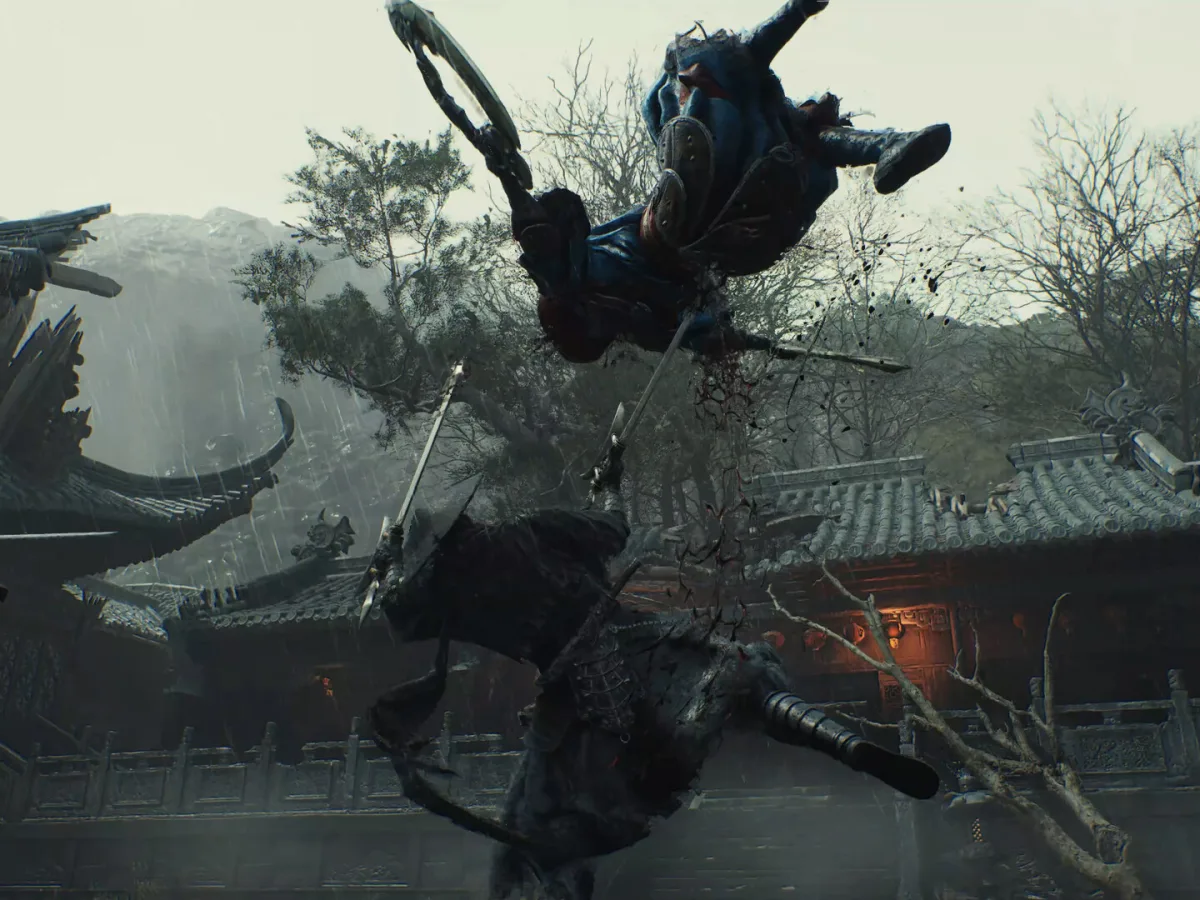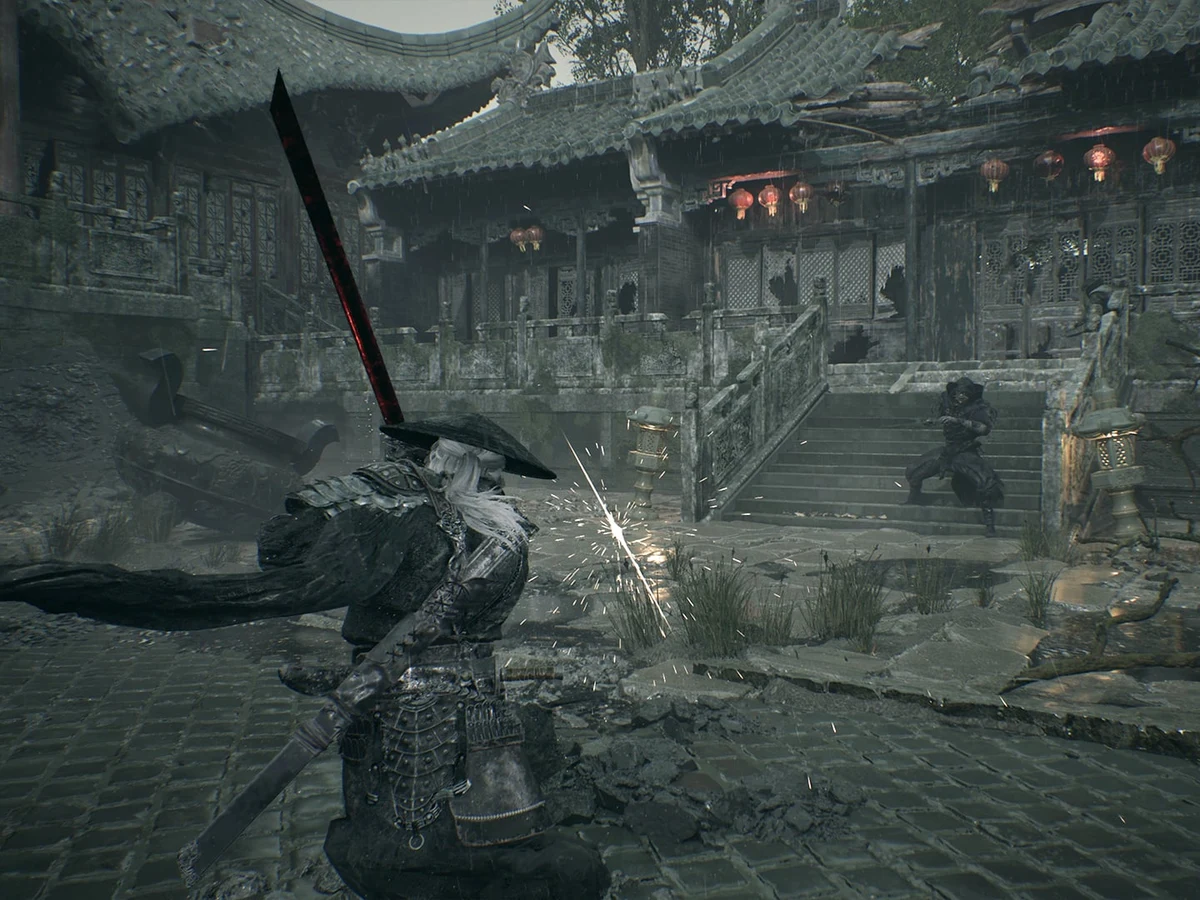
The leader of Phantom Blade Zero's Seven Stars has an unusually loyal entourage. Hurt him and his disciples give up their own health to restore his. Clear too many of them away and he spends his health bringing them back. Seven swordsmen are keeping one another in business, and Soul has to find his way through the formation before the boss fight can move on.
That arrangement is one of the most appealing encounters S-GAME has shown ahead of the game's October launch on PC and PS5. Its Year of the Snake demonstration, released on 21 January 2025, follows the Seven Stars from a coordinated ground assault into a grotesque puppet act. Older footage is useful here because it shows a complete combat sequence, rather than a trailer's collection of impressive finishing moves.
The release listings currently disagree by a day: S-GAME's website and director's letter give 29 October, while Steam displays 28 October. Whichever date applies to a player's storefront, the approaching release is a good reason to revisit this particular fight. It offers a concrete way into the game's martial arts spectacle: watch who controls the group, then watch what happens when that control changes hands.
Seven bodies, one dwindling reserve
S-GAME's accompanying press explanation calls the leader Decree and describes him as the formation's heart. The seven begin in the positions of the Big Dipper, with the leader occupying the key position. Their shared problem for Soul is both spatial and numerical. Several bodies can threaten him at once, but the health transferred between them stays within the group. Healing Decree does not manufacture a fresh reserve.
The developer says the disciples coordinate through a group AI, rather than behaving as seven separate opponents. In that context, a recovered leader's health is less discouraging than it first looks. Soul's damage has still cost the formation something. The fight can replenish the person the player needs to defeat without undoing all the work that brought him there. It is a neat way to keep the central opponent involved while giving his followers a practical role.
The choreography has consequences for where the player looks, too. S-GAME describes coordinated strikes from multiple directions alongside individual attacks when a disciple gets close. A swordsman can belong to the formation and still be dangerous at Soul's elbow. Simply watching Decree would miss part of the encounter; treating every disciple as an isolated duel would miss the group attack. The attraction is learning to see the arrangement as a whole.
The man in charge becomes the puppet
Then the relationship reverses. In the second phase, three disciples take elevated positions and manipulate the leader with red threads. S-GAME's official post describes him suspended in the air, his movements becoming erratic. The same followers who supported him now move his body. A familiar boss-phase transition becomes a nasty little story about the hierarchy the player has just fought through.
The studio's breakdown also describes pendulum-like swings across the arena. The grounded formation has become a moving target, changing the rhythm of pursuit. That is a more interesting escalation than adding another swordsman to the crowd. A body travelling on threads can leave the space where an attack was aimed, and the developer explicitly warns that reckless chasing can lead to ineffective attacks. The player has to stop assuming that closing the distance is always productive.
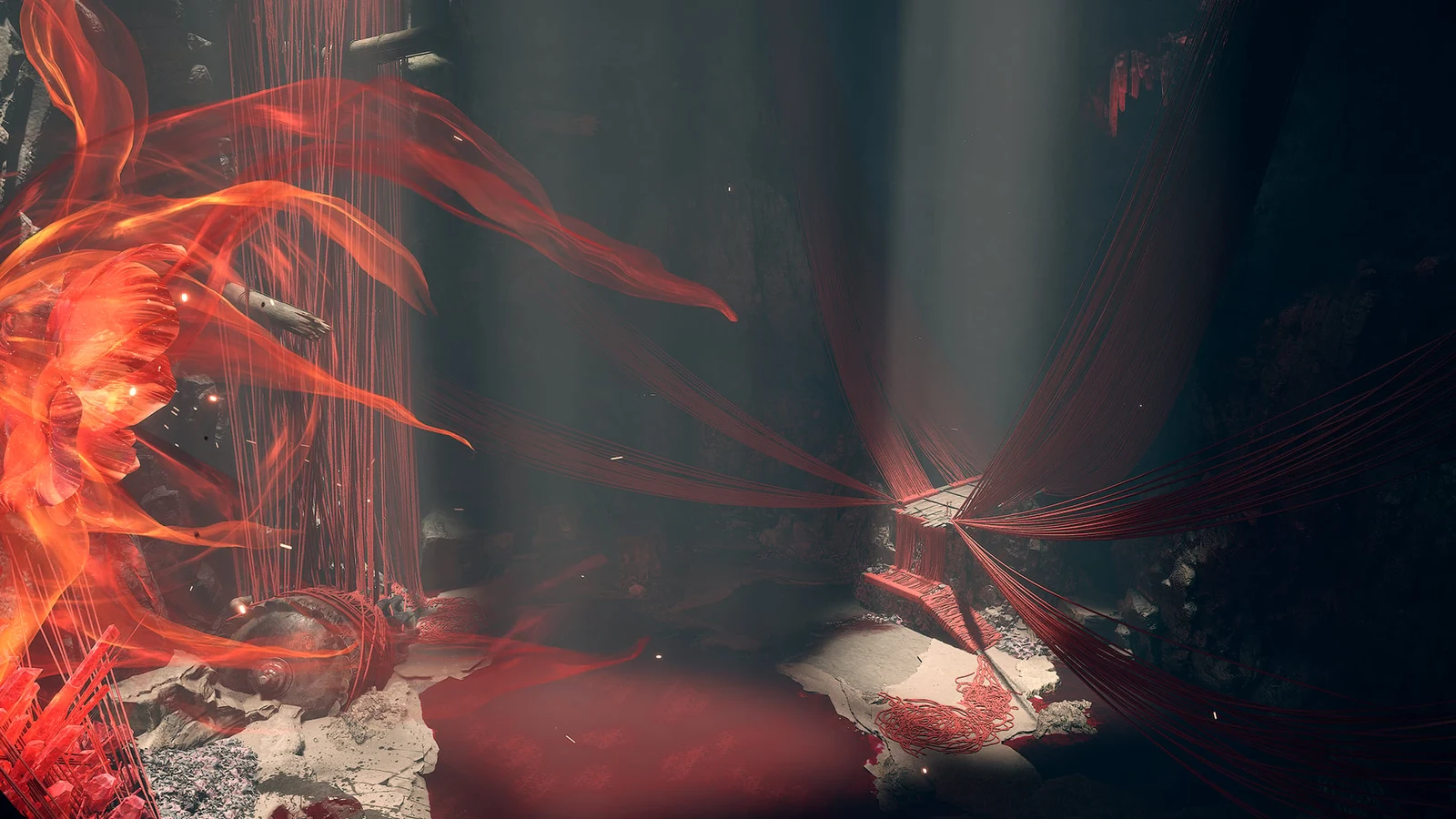
Independent hands-on accounts show this was more than a one-off promotional sequence. TechRadar's Sarah Thwaites reached the Chief Disciple of the Seven Stars in a demo and described the second phase's marionette movement, accompanied by a percussive rock soundtrack. GamesRadar+'s Alessandro Fillari also encountered the boss, reporting that a perfect dodge could send Soul into the air to land on the attackers' weapons. Those are their play sessions, but they help establish that the elaborate staging belongs to a playable encounter.
A stunt with a player inside it
That weapon-top landing is a particularly good expression of the appeal. The enemy formation supplies the threatening image and, through the dodge, the platform for Soul's reply. The swordsmen do not need to stop looking dangerous for the protagonist to look absurdly capable. The pleasure is in the connection between the incoming assault and the evasive stunt: the move makes sense because of what the opponents were doing.
S-GAME says several martial artists performed motion capture for the Seven Stars battle under veteran action choreographers. The formation gives that work a clear subject. Bodies act together, divide their attacks and eventually suspend another fighter between them. There is something delightfully excessive about putting so much coordinated movement into one encounter, especially when the reversal makes the second half immediately recognisable without an explanation of the wider plot.
None of this establishes how every boss in the finished game will play, or whether the final version will preserve every rule in the early breakdown. The footage and preview accounts support a narrower enthusiasm. Seven Stars has a distinctive opening arrangement, a shared resource that explains its apparent recovery, and a second phase that changes both its movement and its pecking order. The leader who seemed to command everything ends up dangling from his disciples' threads. That is a reversal worth seeing through, sword in hand.
Sources
Where this story comes from, and where you can check it.
Official sources
- S-GAMEPhantom Blade Zero Year of The Snake Trailer Introduction ↗
- S-GAMEPhantom Blade Zero | 2025 Year of the Snake Trailer ↗
- S-GAMEA Letter From Creative Director ↗
- S-GAMEPhantom Blade Zero Pre-Orders Now Available ↗
- SteamPre-purchase Phantom Blade Zero on Steam ↗