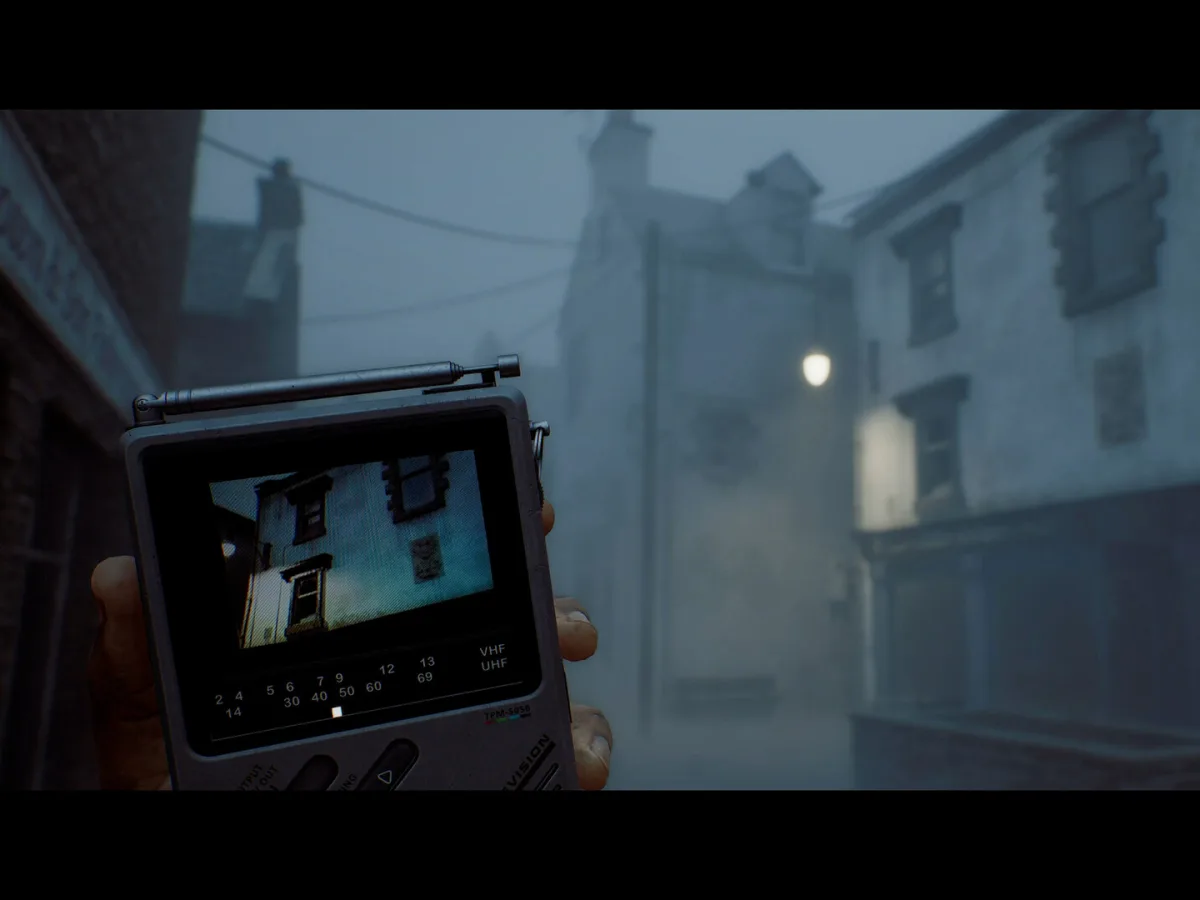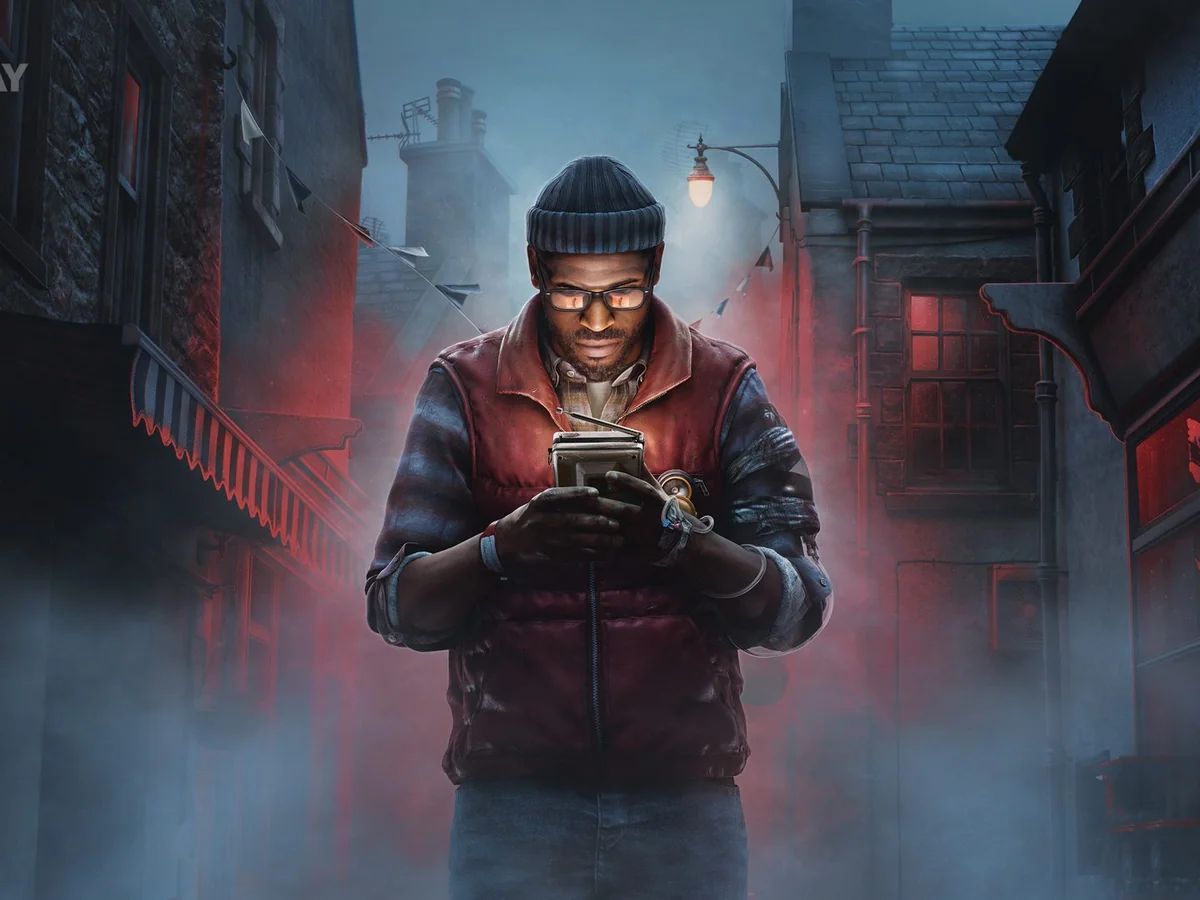
In SILENT HILL: Townfall, getting through a locked door can mean finding the keys someone left with a friend. A printer can supply instructions for a machine; even a household electricity top-up card has a place. These are small, stubbornly ordinary problems for a town full of monsters. Now that the game has reached PC and PlayStation 5, its most revealing trick may be how much of St. Amelia's horror is built from the way its residents lived.
Screen Burn Interactive's Scottish setting was visible before release, but finished-game accounts give its domestic details a job beyond atmosphere. Push Square describes entering homes that still look occupied, searching drawers for supplies and clues, and following a practical errand from one address to another. The Guardian reports puzzles involving emails, floppy disks and scraps of paper. Townfall asks you to look closely at a community before its larger tragedy can make sense.
A home is more than a hiding place
St. Amelia's empty houses do not read like generic loot containers in Push Square's account. Furniture and household objects remain in place, and looking for a useful item can feel like intruding on somebody who has only stepped out. That impression makes a simple search do two jobs. Simon needs the contents of a drawer, but the arrangement of a room also gives him a fragment of its owner's life. A clue belongs to a person and an address rather than floating beside a conspicuous puzzle lock.
The magazine's examples are wonderfully unglamorous. A set of keys has been left with a friend. A computer can help fix a valve. A cassette tape turns up in a garage. None requires the island to stop being strange; each gives the player a plausible reason to enter another space and pay attention to its contents. Screen Burn's writer and director Jon McKellan said in a PlayStation Blog post that the team designed puzzles alongside the story, tying their setups and solutions to the town's inhabitants. The released examples give that design claim something tangible.
Old technology slows the answer down
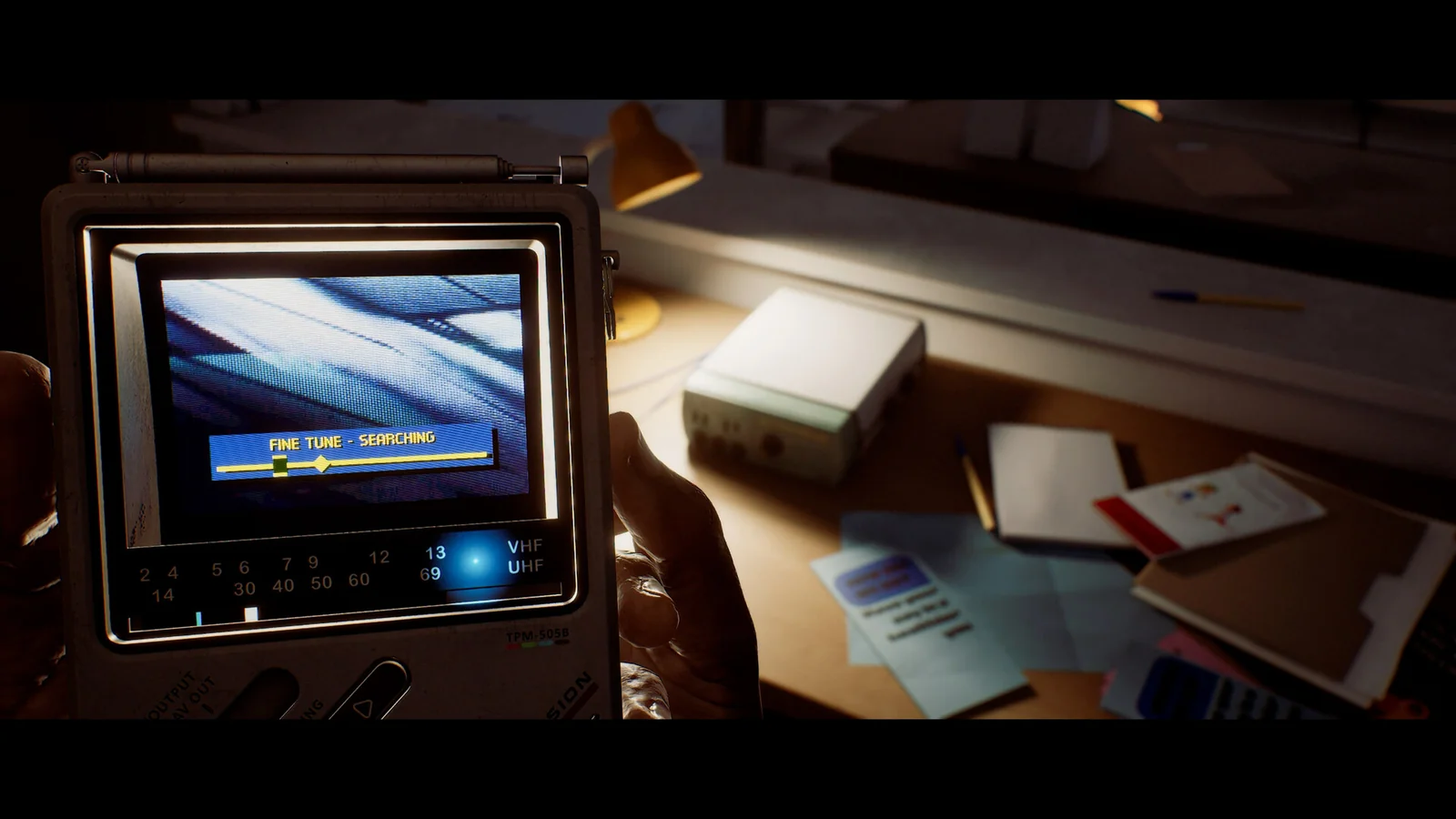
Townfall is set in 1996, and its machines demand a more physical kind of attention than a modern phone interface would. Push Square found floppy disks holding essential data and printers issuing paper instructions; it also singled out the local detail of electricity top-up cards. The Guardian describes reading emails, inserting disks and collecting written fragments to reach key codes. These are not just decorations that establish a decade. They make information something Simon must find, carry and use in a particular place.
Even saving follows the same logic in The Guardian's finished-game account. Simon finds a telephone, picks up the receiver and dials a number. Pulling out the map likewise happens within the world instead of pausing it. These gestures keep the player's attention on the town's objects, whether the immediate aim is progress or orientation. The effect is especially apt for a horror game: reading one more screen or checking one more piece of paper takes time while the surrounding room still exists.
That design can frustrate as well as absorb. The Guardian says a late puzzle based on industrial symbols became obtuse enough to break its momentum. Push Square is warmer on the everyday riddles, while acknowledging that the Otherworld grows more eccentric. Those responses are useful together. Grounding a puzzle in a convincing place gives the search meaning; it does not guarantee that every clue communicates its answer clearly.
Whose town is this?
The story's interest in St. Amelia's residents also changes the scale of its horror. The Guardian's review describes an island shaped by poverty, an absent landowning class and an energy company promising prosperity. Its writer found the townspeople, rather than just the playable characters, at the heart of the finished story. A memorial stands in the town centre. Without spelling out the plot's revelations, those details explain why a forgotten note or a lived-in kitchen can carry more weight than an abstract riddle.
There is a tension worth keeping. Simon is an outsider searching other people's homes and records for answers; the player learns through that intrusion. Townfall does not need every cupboard to contain a dramatic secret. The smaller discoveries establish the everyday world that the fog has interrupted, so the more disturbing material has a real place to damage. This is an editorial reading of the documented locations and puzzles, not a claim about what every player will feel.
Konami confirmed the full game launched on PC and PS5 on 24 September. At this early point, it is too soon to call its approach a lasting template for Silent Hill, and two reviews cannot settle how every puzzle lands. They do show a distinctive finished design: the route through St. Amelia runs through borrowed keys, ageing office equipment and homes whose owners seem recently absent. Townfall is at its most interesting when solving a problem also means learning whose problem it was.
Sources
Where this story comes from, and where you can check it.
Official sources
- PlayStation BlogSilent Hill: Townfall launches September 24 on PS5 ↗
- Konami Digital EntertainmentSILENT HILL: Townfall Releases Today ↗