A cyberpunk city is usually where you pass through trouble at speed. You chase someone through a wet alley, steal a secret from a tower, then leave the neon behind when the credits roll. Nivalis Nights has a much stranger ambition for its future metropolis: it wants you to remember which restaurant needs more staff, whether you bought enough ingredients, and which neighbour you promised to see. Out on Steam since 29 September, it brings you into its familiar city at a noodle stand rather than behind the wheel of a delivery car.
That makes the pitch easier to understand than its grab bag of activities first suggests. Nivalis Nights is a single-player life sim built around hospitality businesses, relationships, homes, fishing and exploration. The official Steam listing says players can buy or grow ingredients, unlock recipes, hire staff and expand from ramen bars into restaurants and nightclubs. It also lets you leave the shift behind for a boat trip, a home renovation or a chess tournament. The point is not to tick every cosy-game box. The game is trying to make those ordinary decisions the way a player learns what a huge, rain-soaked city feels like from the inside.
A noodle stand is a useful place to begin
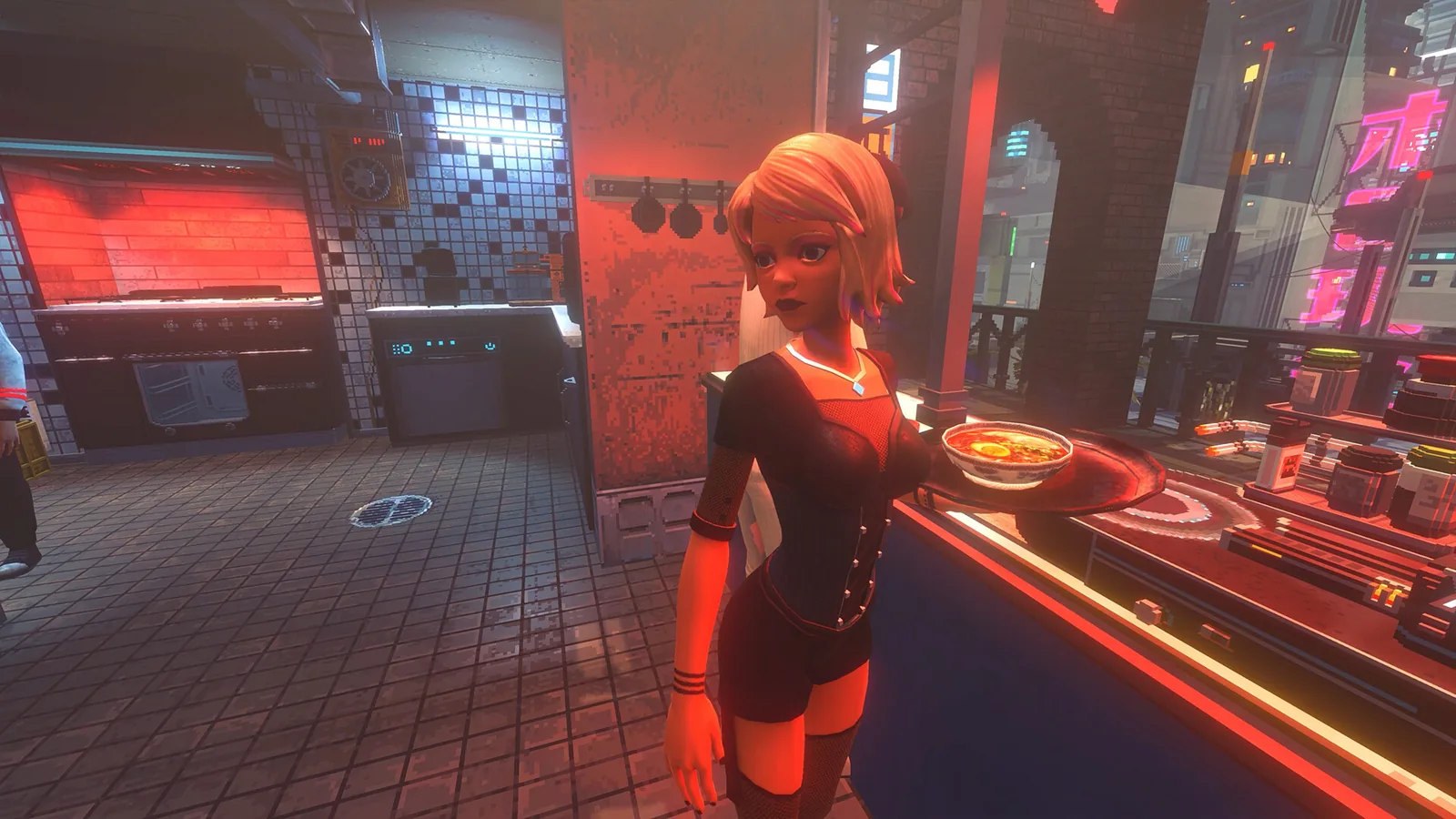
The food business is where the most concrete systems meet. ION LANDS has shown a loop of sourcing ingredients, preparing dishes, opening a venue, managing it and then deciding what to do with the money and time earned. Its August update goes further: dishes sit across meat, fish, seafood, salads, sandwiches, pizza, soups, desserts, snacks and drinks, while recipes, equipment and a venue's clientele matter. That is enough detail to suggest a proper management game rather than a decorative cafe attached to a sightseeing tour.
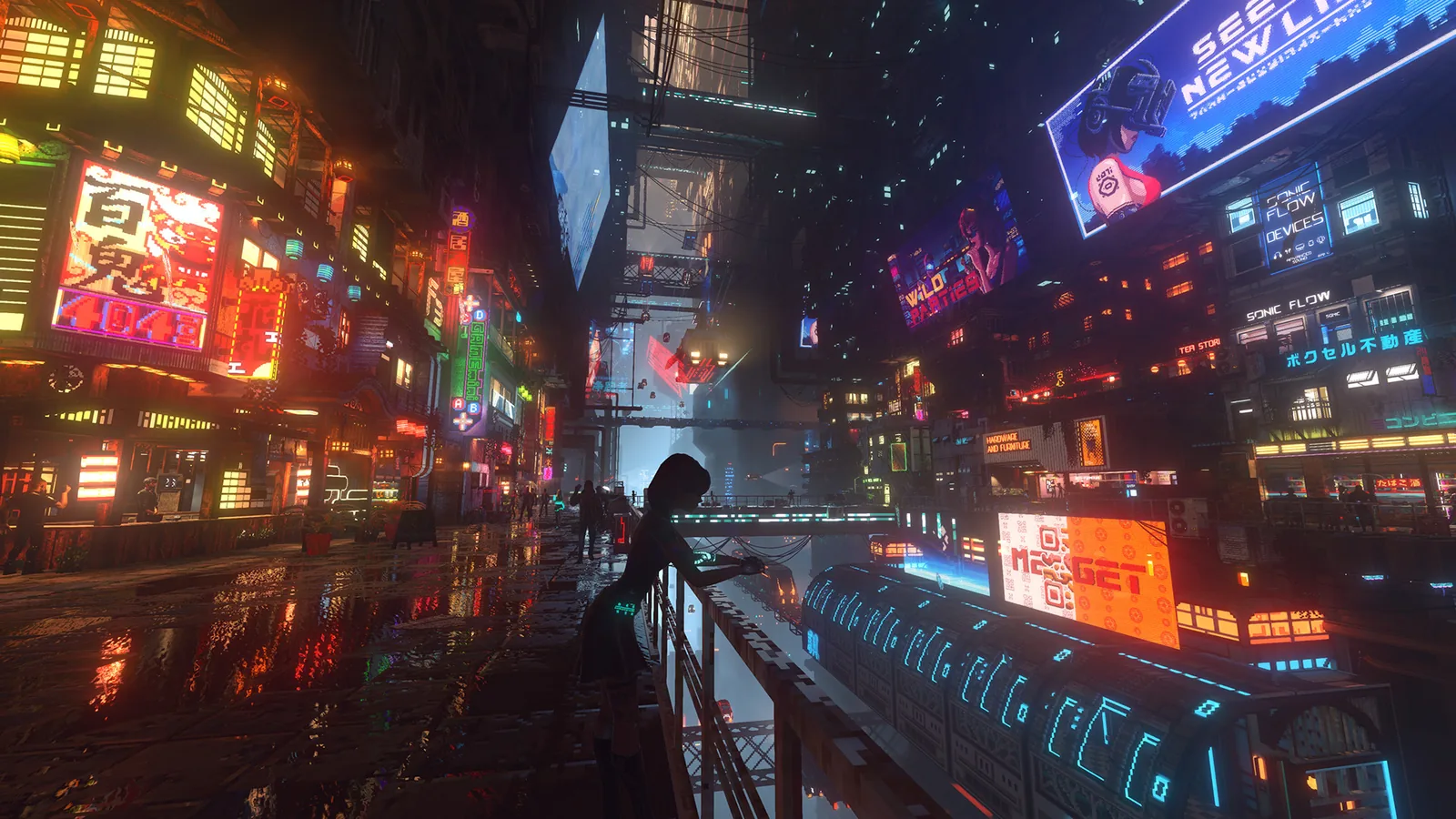
It is also why the cyberpunk setting has a chance to feel more than cosmetic. The central problem is not saving the city from above; it is making a place in it without being swallowed by its scale. ION LANDS' earlier game made Nivalis a place to travel through; this one is about putting down roots. It still sells the wonder and danger of an enormous voxel city, but a shift at a ramen bar gives its streets a practical destination. You are not merely admiring the lights from a hovercar window. You need customers to walk through the door.
The city is not only a backdrop
ION LANDS is careful to connect the home life to the business rather than present it as an unrelated second game. Players can buy and decorate apartments and houses, take on quests, build relationships and visit other districts by boat. Curfew and sabotage add an edge: the Steam description says players can avoid security systems to target a competitor, with the warning that retaliation can come back at their own business. There is a serial killer and CorpSec pressure in the game's setup too, so expect some evenings to go wrong.
That mixture will suit a particular kind of player. Someone looking for a tightly designed restaurant sim may find the time spent fishing, decorating and following stories distracting. Equally, a fan of ION LANDS' earlier courier game hoping for another nocturnal driving story will be meeting the city at a much slower pace. Nivalis Nights looks best for the player who enjoys a game when its errands start to build a sense of belonging: a boat trip can supply the kitchen, a room can become your refuge, and a regular customer can become part of a story.
Making all that density legible
A living city is a demanding promise, and ION LANDS has at least explained some of the technical work behind it. In a May development update, the studio said its Ghost system separates simulated characters from their visual representations so it can track thousands of NPC schedules without trying to render everyone at full cost. It also described persistence across more than 10,000 objects, district-transition object pooling, and changes to light probes, furniture, vegetation, rain and snow. A game about routine needs that kind of infrastructure far more than it needs a beautiful street corner.
Nivalis Nights launched on Steam on 29 September, after a long development that included a rename from Nivalis. It's a Windows game, and it asks a lot. The minimum is Windows 10, 16GB of RAM, a GTX 1660 Super, RX 6600 or Arc A750 with 6GB of VRAM, and 42GB on an SSD, for 1080p at 30fps on the very low preset. The recommended spec, for 1440p at 60fps on high, steps up to Windows 11 and an RTX 4070 or RX 7800 XT with at least 12GB of VRAM. Check your graphics card before you buy.
A city worth lingering in
Nivalis Nights does not need to promise that every apartment, recipe and conversation will turn its city into a second life. The more appealing claim is smaller and more distinctive: it has made a place where the mundane has a home. The noodle stand matters because it is not a prelude to the real game; it is the lens through which restaurants, relationships, weather, curfew and a tower-sized city begin to connect. If that balance holds, Nivalis' old skyline will finally be a place to linger after the engine stops.
Sources
Where this story comes from, and where you can check it.
Official sources
- Nivalis NightsA New Name and a Release Date ↗
- SteamNivalis Nights ↗
- Nivalis NightsMay 2026 Development Update: Optimization ↗