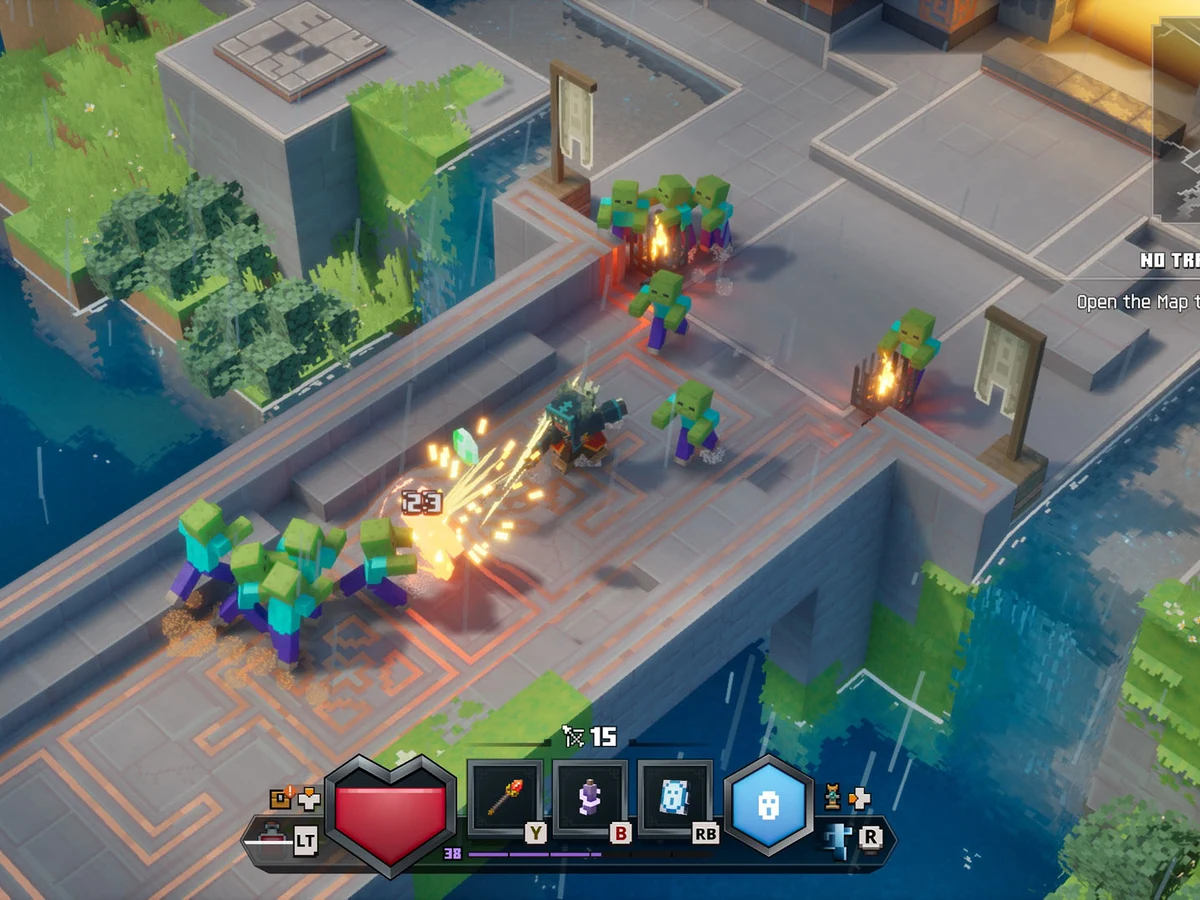
Find an enchantment book in Minecraft Dungeons II and you've found something more useful than a lucky sword. Its effect joins your personal library, ready for the Enchantsmith to apply to your equipment. That's a lovely change for anyone who enjoys assembling a character: an interesting discovery becomes something you can deliberately work with.
Mojang and Double Eleven's sequel launched on 29 September, with the PC release available on Steam. The new Sift dimension gets the spectacular reveal, but the equipment menus deserve a closer look. The game's expanded armour, enchantments and ways of inspecting them let you spend longer shaping a build. Early reviewers also show why giving players more things to adjust doesn't automatically mean they'll spend less time rummaging through their bags.
A book is worth keeping
Mojang's systems breakdown describes books being added to a personal enchantment library, with the Enchantsmith applying an effect to a gear slot of your choice. Enchantments can then be upgraded over time. You still need to find the books, so discovery hasn't disappeared; the change is what happens afterwards. Once an effect enters that library, planning a combination has a firmer starting point than hoping the right enchantment arrives attached to the right piece of loot.
Xbox Wire's August demonstration separated the two jobs. The Blacksmith could raise an item's power to the highest level available to the character and reroll an in-built buff; the Enchantsmith handled enchantments. Improving power and choosing an effect address different reasons to change a loadout. That demonstration explains the two smiths' roles, though it doesn't establish launch upgrade prices.
Xbox Wire editor Joe Skrebels spotted a particularly tempting chain in that demo: more frequent dodge rolls, arrows fired when rolling, and fire added to arrows. He presented the last part as a possible combination, rather than a measured finished build. It's an appealing use for a movement that usually gets you out of trouble.
Twelve slots, two sorts of player
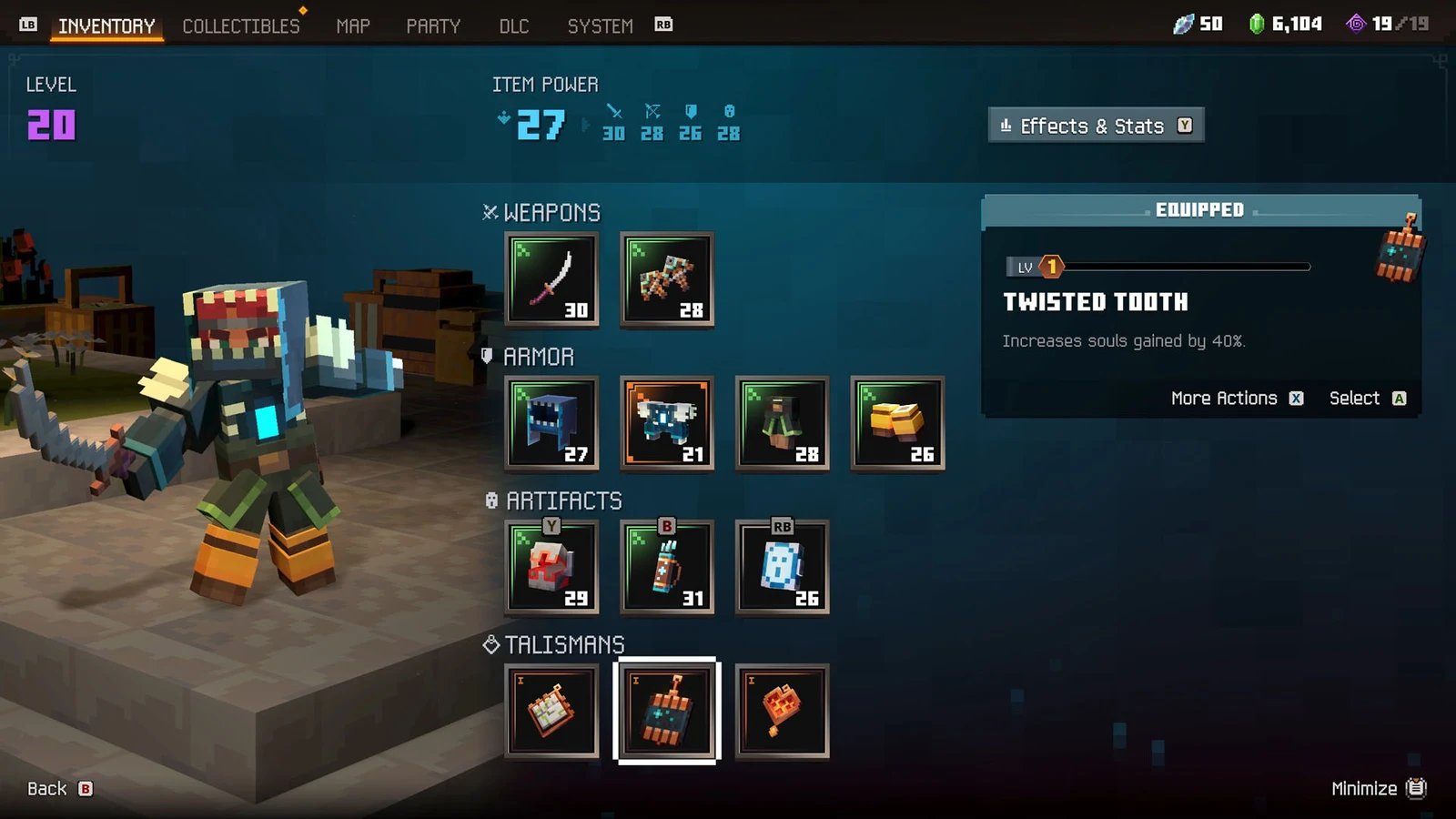
TheSixthAxis's launch review confirms the increase from six equipment slots to twelve, including four separate armour pieces and talismans alongside weapons and artifacts. More slots give combinations more places to live, but also more places for an unfamiliar bonus to hide. The point of a build is what those pieces do together. Knowing that a helmet is stronger doesn't, by itself, tell you whether it improves the particular character you've been putting together.
Xbox Wire's demonstration also showed a combined list of effects from weapons, armour and talismans. A larger inventory needs a place to inspect those bonuses without mentally adding every tooltip. The library helps you choose an effect; the overview helps you understand the collection you've equipped. Neither screen needs to make the choice for you, just provide the information.
On the Official Xbox Podcast, Mojang's Laura de Llorens described two very different approaches within the development team. She equips whatever looks amusing and gets moving; the game director scrutinises the numbers and abilities. Her account gives the stat screens a useful purpose beyond advertising extra depth. They exist alongside the ability to dress a hero in something you like and head out. Those are both plausible ways to enjoy the same pile of equipment.
That balance is worth preserving. An enchantment library is interesting because it gives a curious player somewhere to take an idea, rather than requiring every member of a party to arrive with one. A player who wants to investigate dodge-roll effects can inspect the numbers. Their friend can enjoy a new hat. There is no need to turn that difference into a dispute about who is playing properly, or assume that a larger equipment screen requires everyone to become an accountant.
The party doesn't have to queue
The shared screen has its own practical complication: several people may want to inspect their discoveries at once. Dom Leighton's review for TheSixthAxis, tested on PS5 and Xbox Series S, describes individual gear overlays that players can open simultaneously. He praises the end of taking turns to tailor loadouts, while warning that the action continues around a player who becomes absorbed in a new piece of armour. The shortcut changes whose screen space the inventory occupies; it doesn't make browsing safe.
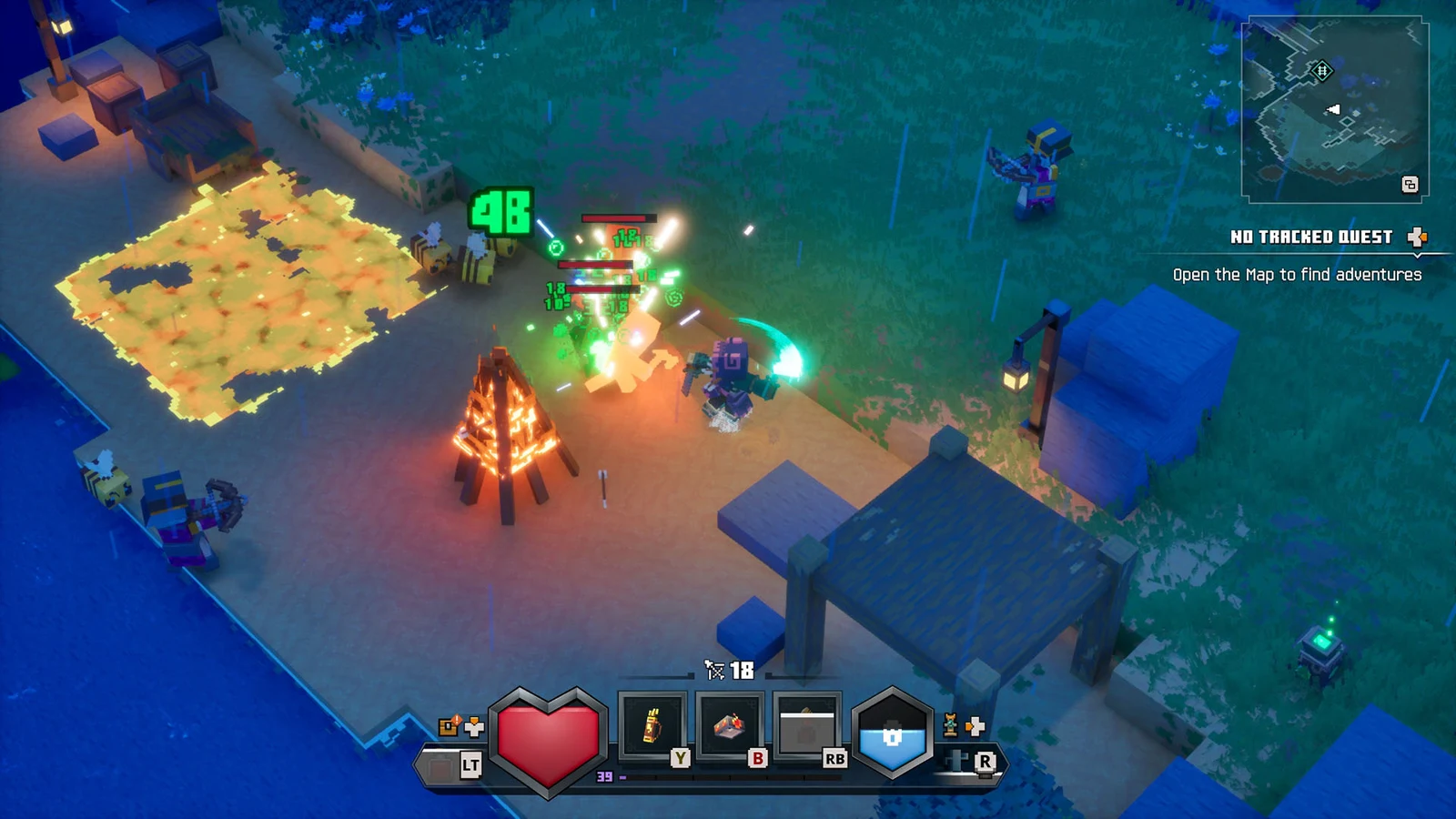
GamesRadar+'s Justin Towell had a different response to the same convenience in his Xbox Series X review. He still enjoyed taking turns with the full screen because sharing a good equipment find was part of co-op's fun. He also found that the volume of loot meant frequent returns to the menus, sometimes soon after an extensive round of upgrades. These are attributed console experiences, rather than PC performance tests, but they expose the same useful complication: faster access and fewer decisions aren't the same thing.
Dungeons II's equipment changes are appealing precisely because there is something worth stopping to discuss. The library gives an enchantment a place in a longer plan; the extra slots give that plan more room; individual inventories let a party decide how much of the inspection to share. A fresh drop can still interrupt the adventure. Now the more interesting conversation is whether it belongs alongside the effects you've already chosen, and what you want those effects to do next.
Sources
Where this story comes from, and where you can check it.
Official sources
- Minecraft.netMinecraft Dungeons II is live ↗
- SteamMinecraft Dungeons II store page ↗
- Minecraft.netNew gameplay systems in Minecraft Dungeons II ↗
- Xbox WireMinecraft Dungeons II: The New Features Being Shown at gamescom 2026 ↗
- Xbox WireMinecraft Dungeons II: The Sift, New Mechanics, Better Exploration, and More | Official Xbox Podcast ↗