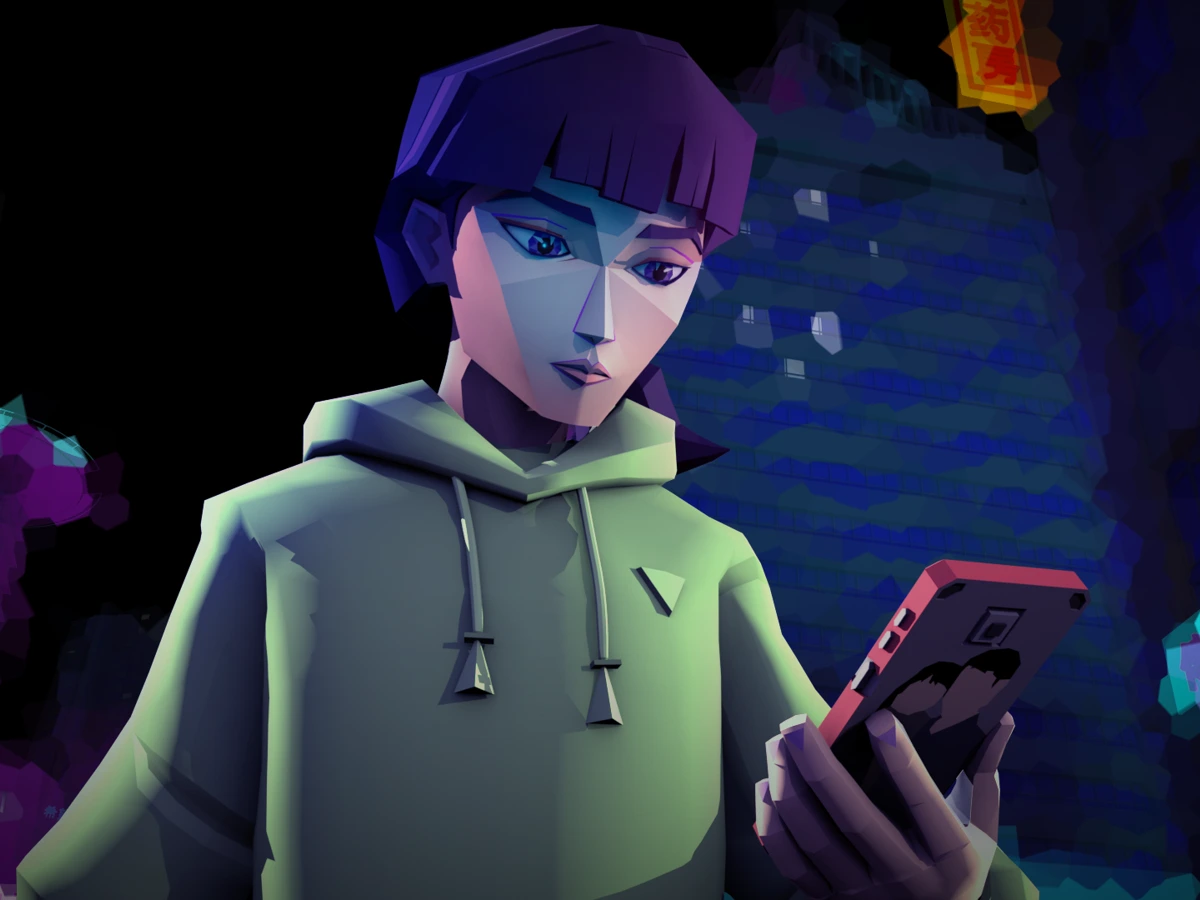
Try joining two unrelated clues in Hope in the City and Hope Song has something to say about the pairing. She can crack a joke or give you a little nudge towards another line of thought. Either way, you get to hear what a 17-year-old art student makes of your theory as she searches Shenyang for her missing parents.
What you get from a wrong guess
In an early prototype, an unrelated pair always got the same reply. Once you'd seen it, you knew what the game thought of all the other pairings that led nowhere. Creative director Judith Cheung found that repetition dull during development. The writers gave each combination its own response, including the ones that leave the case exactly where it was.
The distinction is easiest to see in what you take away from a pairing. A productive connection gives you an insight you can build on, and a breakthrough can open a new place to visit or a question to ask. An unsuccessful connection can leave you with a remark about the two observations you picked. Sometimes that remark is a hint. Sometimes the reward is just hearing Hope be funny.
You can put any two thoughts together, which gives the writers room to show how Hope reacts to ideas outside the route through the case. A generic reply only tells you to pick again. An authored reply gives Hope a chance to react to the actual thought you had. That makes stray guesses part of how you get to know her, even when they get you nowhere near her parents.
A thought she can keep to herself
Hope has to decide what to ask the people she meets, some of whom are reluctant to get involved. On paper she can entertain a connection before she's ready to bring it up with anyone. The game gives her those two places to use a clue. You can privately see what she makes of a pairing, then bring what you've learnt to a conversation.
Our look at Hope's sketchbook before launch covered how observations from rooms and conversations turn into leads. The replies to unsuccessful guesses give the same notebook a more private purpose. Hope can be curious, flippant or tentative on the page while the people outside it are still deciding how much they'll tell her.
Cheung's team refined the interface and the clues after playtesters struggled with some connections the developers expected them to spot. There's a good reason to work on both the clue and the reply. A clearer clue helps you find the right pairing, while a reply written for the wrong one makes a detour worth reading. In a game about paying attention to what Hope sees, there's something to learn from the way she thinks with it, too.
Sources
Where this story comes from, and where you can check it.
Official sources
- Xbox WireHope in the City: Why This Detective Uses a Sketchbook Instead of a Badge ↗
- Lofty Sky Games / NAGA PublishingHope's story is yours to uncover: out now! ↗