Guild Wars 3 is making an unusual promise for a modern MMO: fewer bodies in the biggest open-world fights. ArenaNet has told reporting from Gamescom that a large combat scene will usually top out at about 20 players, a deliberate contrast with the hundred-player boss events associated with Guild Wars 2. That can sound like a reduction in ambition. It is better understood as a design decision about attention. The sequel wants movement, position and co-operation to be readable enough that a player can act on them, rather than merely admire them through a storm of effects.
Less spectacle, more legibility
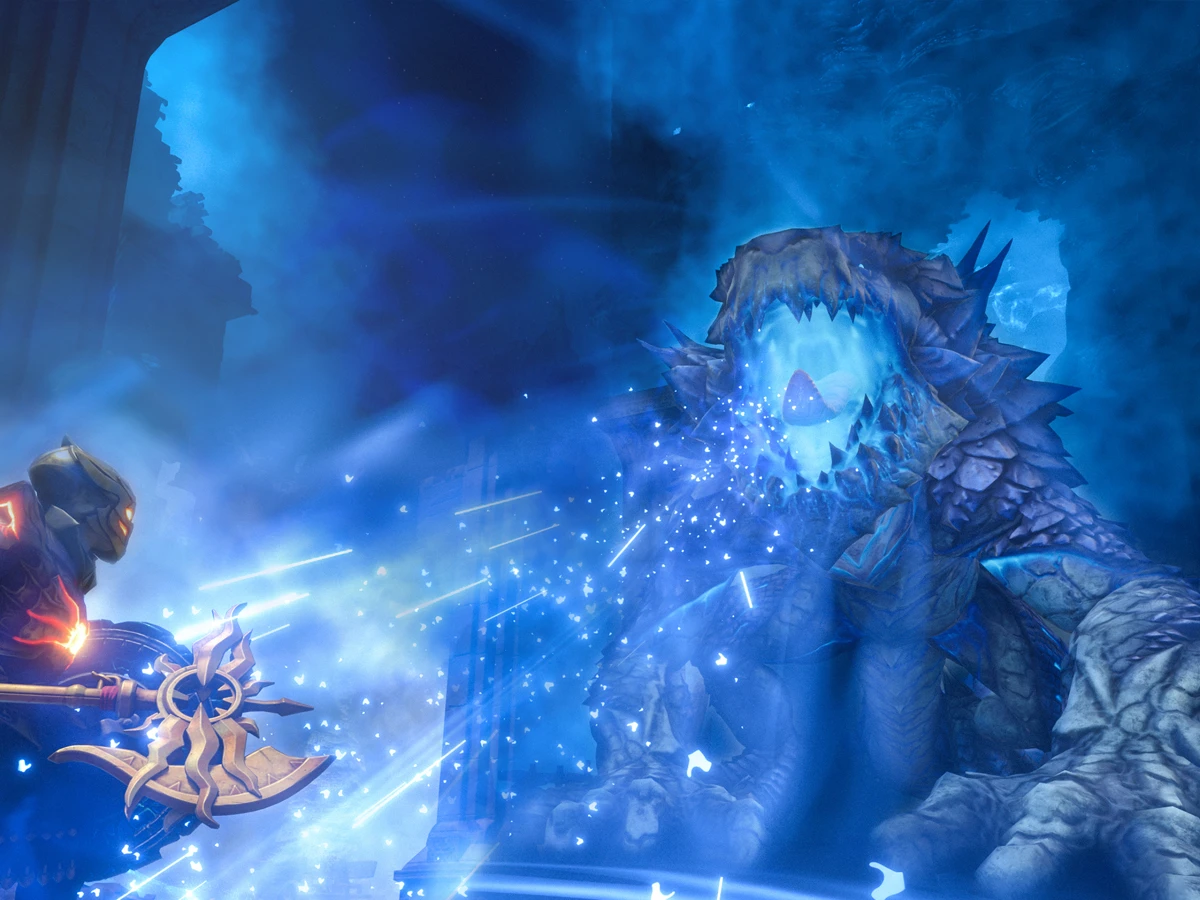
Large public events create a convincing sense of a living world, but they can also turn good systems into visual noise. PC Gamer's Gamescom report quotes game director Colin Johanson describing a point at which action becomes spectacle rather than something players can understand. That is a useful diagnosis. In a crowded encounter, a knockback, a rescue or a well-timed interruption may happen, yet its cause and value are often lost beneath other players' skills. Limiting active combat groups is not automatically more social, but it gives individual choices a chance to be seen and answered.
There is a real trade-off. Guild Wars 2's huge world bosses are memorable partly because they let strangers make an event out of shared chaos. A smaller ceiling could make a new player worry that Orr feels quieter, or that the game is asking them to form a party before they can participate. ArenaNet needs open-world arrival and departure to stay frictionless. The reported aim is not isolation: players will still encounter one another in the world. The test is whether those chance meetings become meaningful co-operation instead of a thinner version of a mass rally.
Momentum turns terrain into input
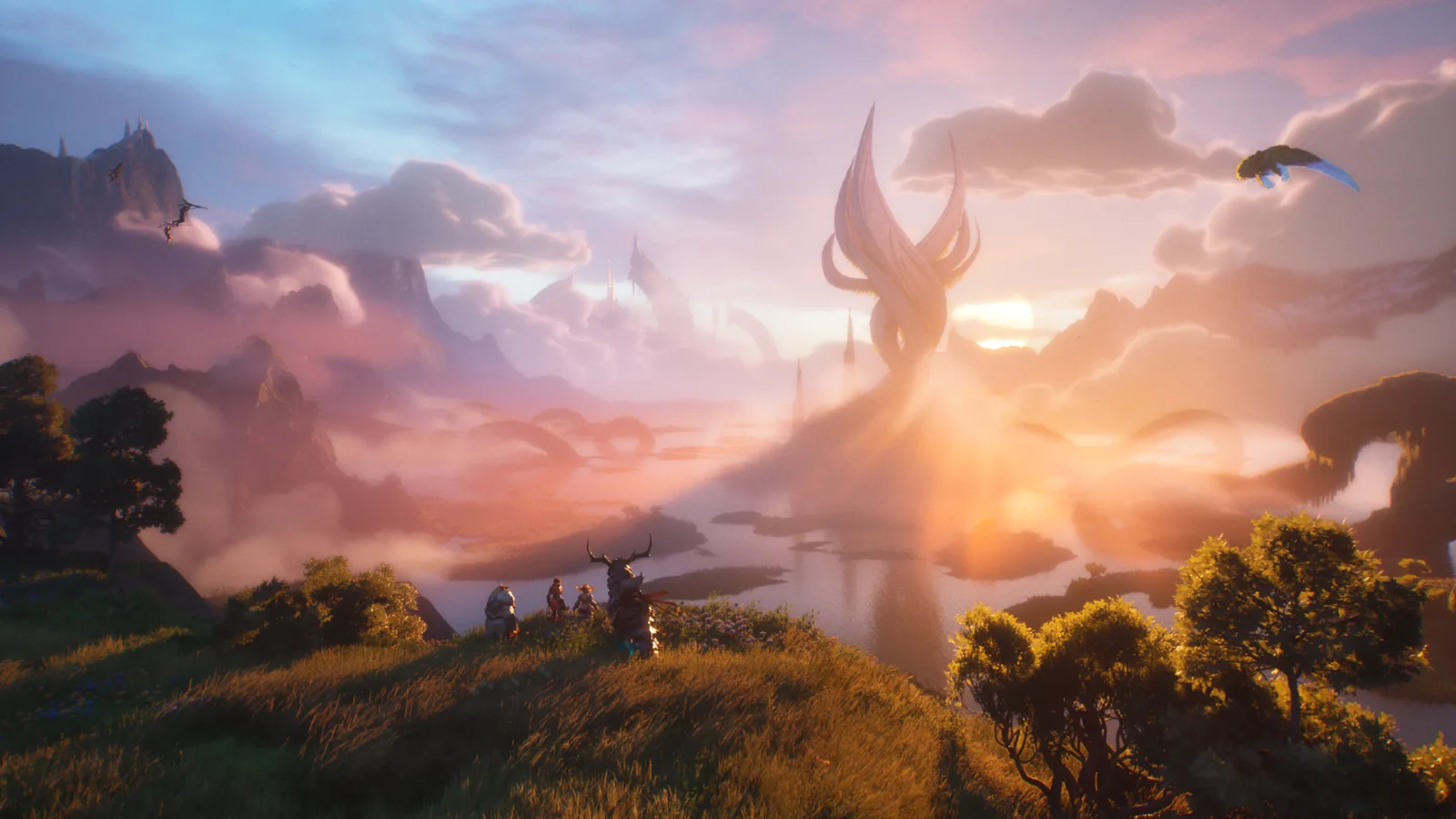
The scale decision matters because Guild Wars 3 is tying travel to combat. The official site describes a momentum system that carries speed between gliding, riding, leaping and wall-running, while independent previews describe aerial attacks that gain force from that movement. This is more ambitious than adding a traversal trick to an existing hotbar. A ledge, a clear run-up or a wall can become part of an encounter's tactical grammar. The player should be asking not only which skill is off cooldown, but where an attack can begin and where it will leave them.
That promise also explains why fidelity is not simply a graphics concern. If a gliding descent flows into a drop attack, allies must be able to anticipate the arrival, enemies must react clearly, and the player must understand why the hit did or did not carry weight. GamesRadar's hands-off report describes wall-running, mantling and sliding alongside this momentum, not as separate activities but as a continuous physical language. That continuity will feel far more valuable in a scene a player can parse than in one where twenty spell effects compete with every landing.
Builds need a place in the new pace
There is a risk in celebrating physicality too early. An MMO cannot live on impressive movement alone; its build choices need to remain legible without becoming homework. The public material says combat will combine strategic skill use, positioning and movement with Guild Wars-style build-making. PC Gamer reported one practical example from the demo: fire-enhanced attacks can burn away enemy webs that slow a group. That is encouraging because it makes a build choice alter an immediate shared problem, rather than simply adding another damage multiplier to a personal rotation.
Multiplayer combinations could make the same principle stronger. One reported sequence uses an ally's shield as a springboard, while another class can reportedly create a vortex that launches companions into aerial attacks. These ideas only work if players can recognise the invitation and have enough room to respond. They also need alternatives. A game where every encounter has one prescribed launch sequence will replace button-heavy routine with acrobatic routine. The more durable version lets a group solve the same space differently: use the height, control the enemy, burn the hazard, or build around another opening.
The smaller MMO still needs surprise
That is why the 20-player figure is a useful intention, not a finished answer. Small-scale encounters can be precise, but they can also become overly rehearsed if their spaces, roles and solutions are too fixed. Guild Wars 3 needs the unscripted feeling that makes an open world worth sharing: another player appearing over a ridge, a dangerous route becoming useful, or a messy rescue creating a new plan. Readability should help players improvise. It should not make every fight feel like a carefully fenced arena wearing a larger map as scenery.
There is time to find that balance. ArenaNet's site currently points to betas in autumn 2027, leaving many central questions unanswered, including how its PvP and long-term progression will work. The current reporting is from hands-off demonstrations, so it cannot yet prove that the momentum system feels dependable under real network pressure. Still, the premise is coherent. Rather than chasing scale for its own sake, Guild Wars 3 is trying to make the physical relationship between player, ally and terrain matter. For an MMO, that may be a more ambitious form of spectacle.
Sources
Where this story comes from, and where you can check it.
Official sources
- Guild Wars 3Guild Wars 3 official site ↗
- ArenaNetGuild Wars 3 press kit ↗
Independent reporting
- PC GamerGuild Wars 3's approach to combat and movement is like nothing I've ever seen in an MMO before ↗
- PC GamerGuild Wars 3 is a lot smaller scale than Guild Wars 2 because of the new approach to combat and movement ↗
- GamesRadar+With wall-running and surprisingly weighty combat, Guild Wars 3 is aiming high ↗