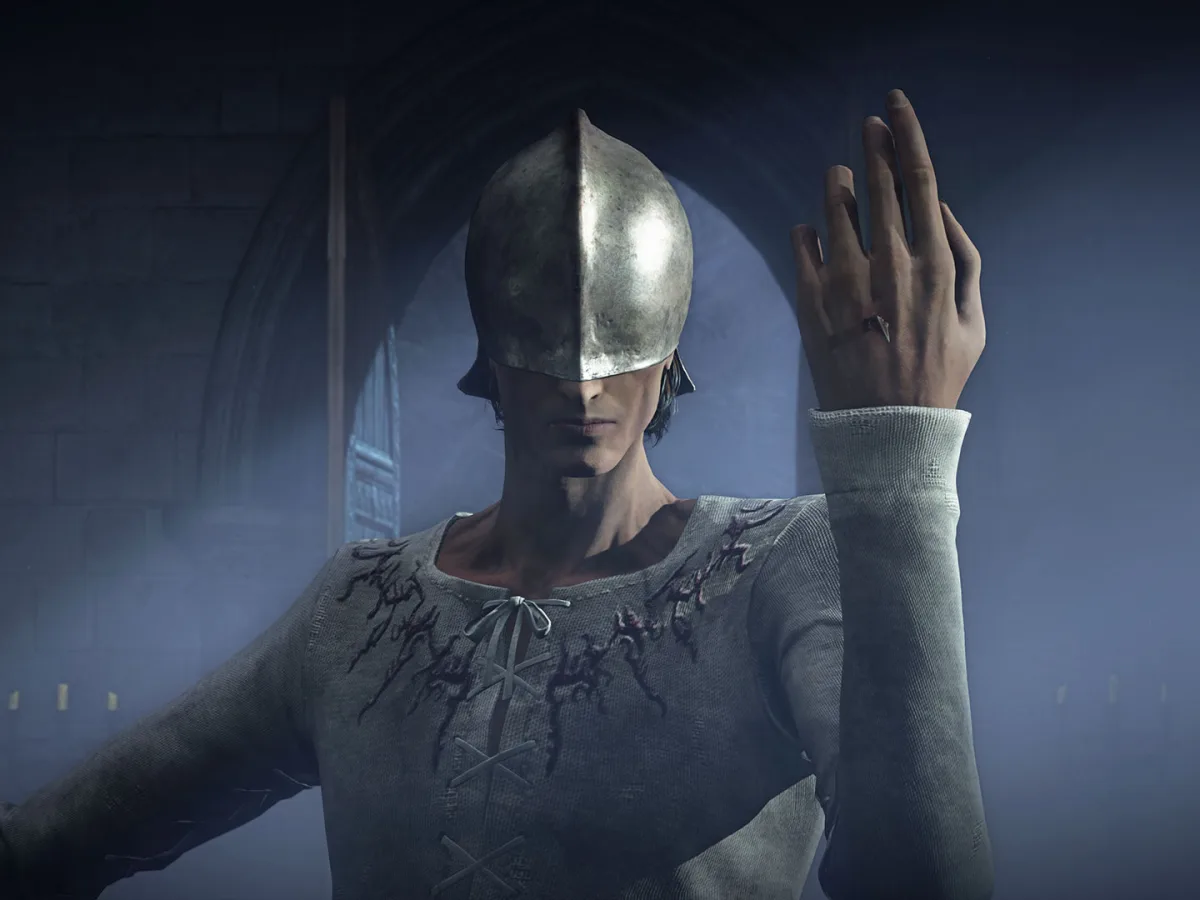
Another Bloodsworn is within reach, but the obvious attack may be the wrong move. The Duskbloods puts up to eight players into a battle for First Blood, and Nintendo says they can form temporary alliances as well as rivalries. That makes a nearby player more than a target: they may be a useful distraction, an escort through a dangerous encounter or someone who will turn on you the moment a Ritual Site becomes valuable. The recent network test has not settled whether those choices will hold together at launch, but it has made one player-facing question clear: when is an ally worth more than a kill?
A fight can be the wrong move
Nintendo's official description is unusually direct about the tension. Bloodsworn compete for First Blood in online battles of up to eight players, while being able to make short-lived alliances and bitter rivalries. That is not a conventional team assignment and it is not a pure free-for-all either. The rules give players an incentive to read the immediate situation: who has a useful ability, who is carrying momentum, who can help remove a hostile creature, and who becomes dangerous if left alone. A game can say that its battles are unpredictable; this system gives that unpredictability a concrete social cause.
Shacknews' hands-on preview describes the network-test Dusk Battle as a PvP contest that is not only about killing other players. Its account of the Lowanro City test map and its changing objectives matters because it puts the official alliance language under pressure. If points and match phases reward more than direct eliminations, a player who sees every stranger as an immediate duel has less information and fewer options than a player who can delay the fight. That does not make trust safe. It gives trust a tactical price, which is more interesting than treating cooperation as a friendly-menu choice.
A temporary ally needs a legible purpose
The promising part is that a temporary alliance does not have to mean friendliness. Nintendo Life's network-test impressions say that players can avoid one another outside the timed Ritual Sites in phases two and three, and that joining up can be more useful than taking a fight. That is a specific situation rather than a vague promise of emergent play. Two Bloodsworn can preserve resources while an enemy threatens them both, then separate before the next score-changing moment. The design asks players to judge intent from movement, timing and risk, not simply from the colour of a permanent team marker.
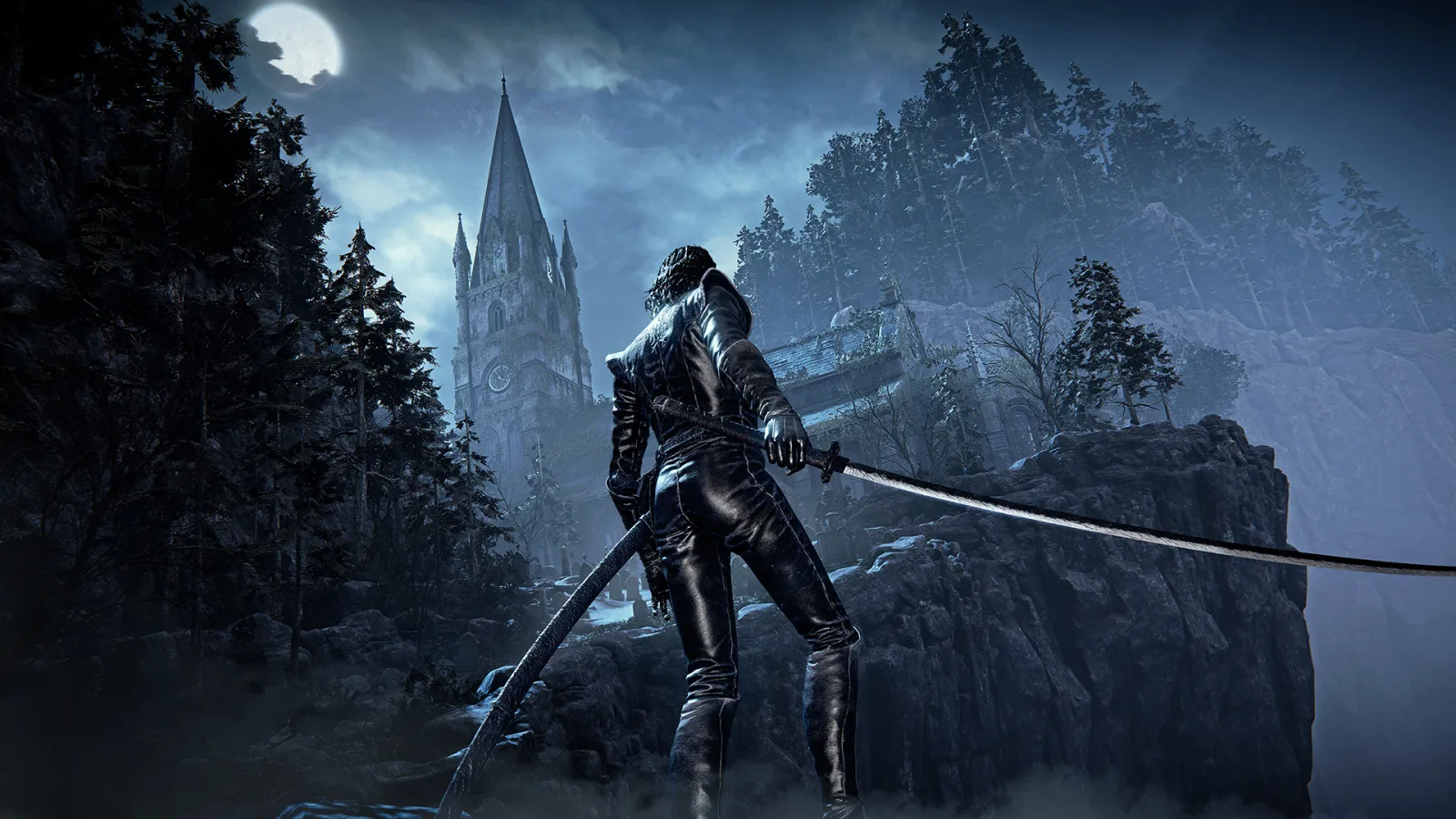
That only works if the game communicates enough without turning each encounter into a rulebook. A player should be able to understand why a Ritual Site is worth contesting, what a nearby Bloodsworn can gain by helping, and when an alliance has ended. The test's unusual roster is useful here. Nintendo Life highlights the contrast between individual Bloodsworn and the Kin they can choose, while Shacknews describes characters with distinct weapons and abilities. Those differences could make cooperation readable: a mobile player and a ranged one may have a practical reason to share space for a minute.
The test showed the risk as clearly as the promise
The network test also supplied the necessary caveat. Nintendo Life reports disrupted sessions and disconnections, while PC Gamer found the limited test build difficult to parse and its input lag troublesome. Neither account proves the released game will have the same problems. A network test exists to expose exactly this kind of weakness. But temporary alliances are unusually dependent on reliability: a delayed input, an unreadable signal or a dropped player can make a deliberate betrayal look like a technical failure. FromSoftware cannot rely on its combat reputation to make that distinction feel fair.
There are limits to what the test can establish beyond networking. VGC reports that its build used set loadouts, with more player customisation intended for the final game. That means the eventual relationship between character choice, equipment and alliance-making remains unproven. So does the question of whether matches remain inviting after the early novelty of unfamiliar systems wears off. The test offered a small map and a restricted slice of the roster; it cannot show how the meta will develop once skilled players recognise every signal and exploit every hesitation. Those are reasons to watch, not grounds to assume a finished balance.
Who should watch The Duskbloods?
- Follow it for
- a multiplayer game where choosing not to attack can be an active tactical decision rather than dead time between duels.
- Wait for reviews if
- you need proof that its online stability, tutorial design and late-match objectives can make those choices readable under pressure.
- What remains unknown
- its release date, full customisation, map variety, final roster balance and whether the network-test problems are resolved.
The Duskbloods has a strong player-facing idea because it turns suspicion into a resource. Its best matches should make an alliance feel useful before making it feel unsafe. If players can understand that tradeoff in the moment, First Blood will be a consequence of sharper choices, not only sharper weapons.
Sources
Where this story comes from, and where you can check it.
Official sources
- NintendoThe Duskbloods ↗
- The Duskbloods Official SiteNetwork Test Version Gameplay Guide ↗
Independent reporting
- ShacknewsThe Duskbloods builds a new gaming experience dripping with FromSoftware DNA ↗
- Nintendo LifeFirst Impressions: Network Issues Aside, The Duskbloods Could Wind Up Being Really Special ↗
- Video Games ChronicleHere's what's missing from The Duskbloods network test ↗
- PC GamerMy FOMO over The Duskbloods not coming to PC evaporated once I actually played it ↗