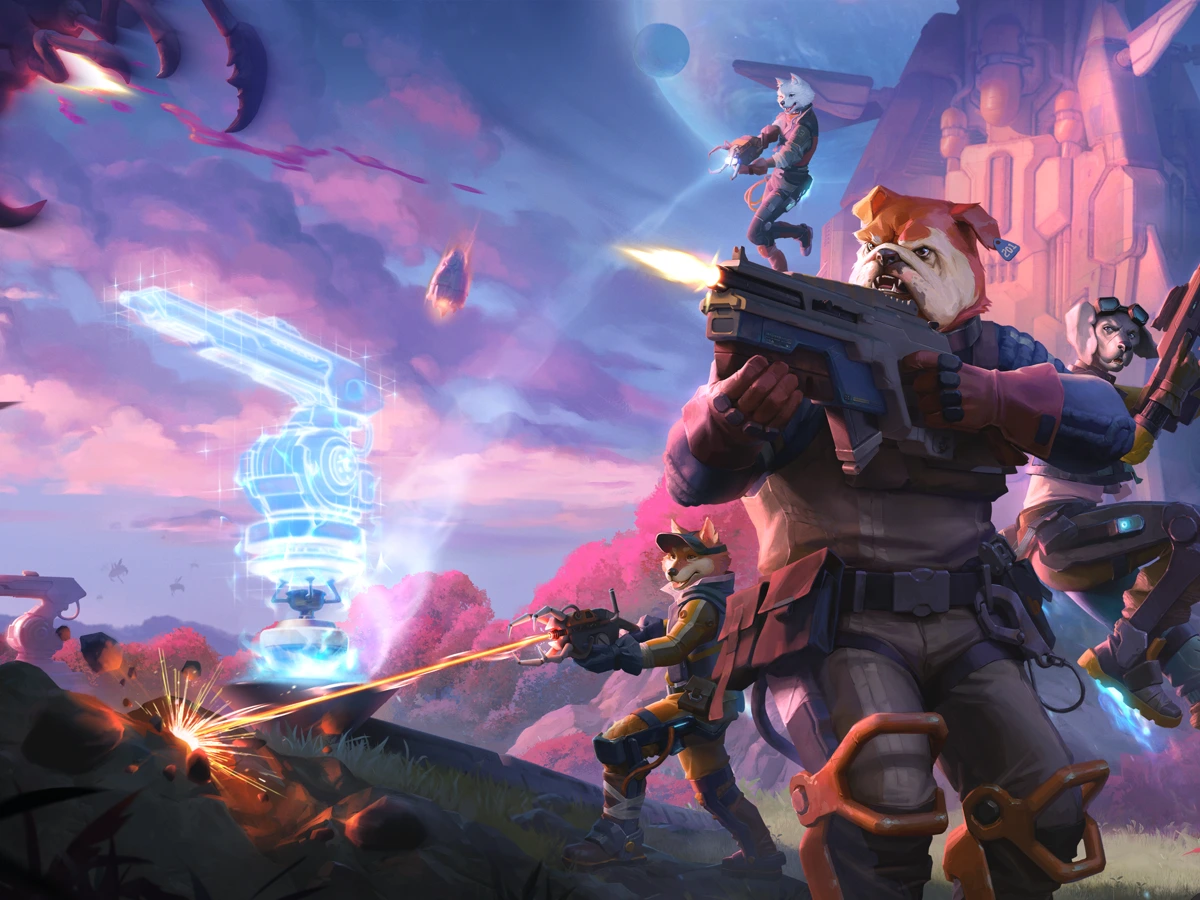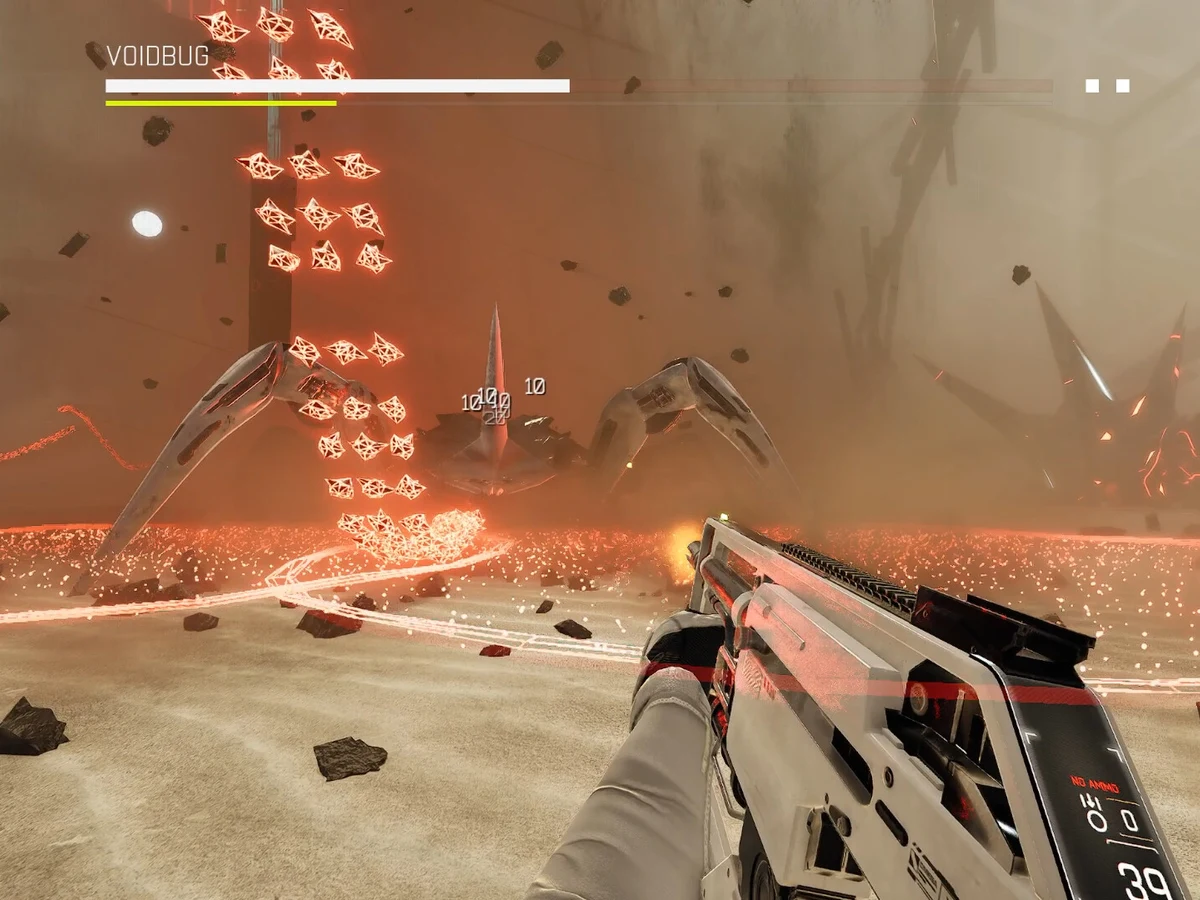
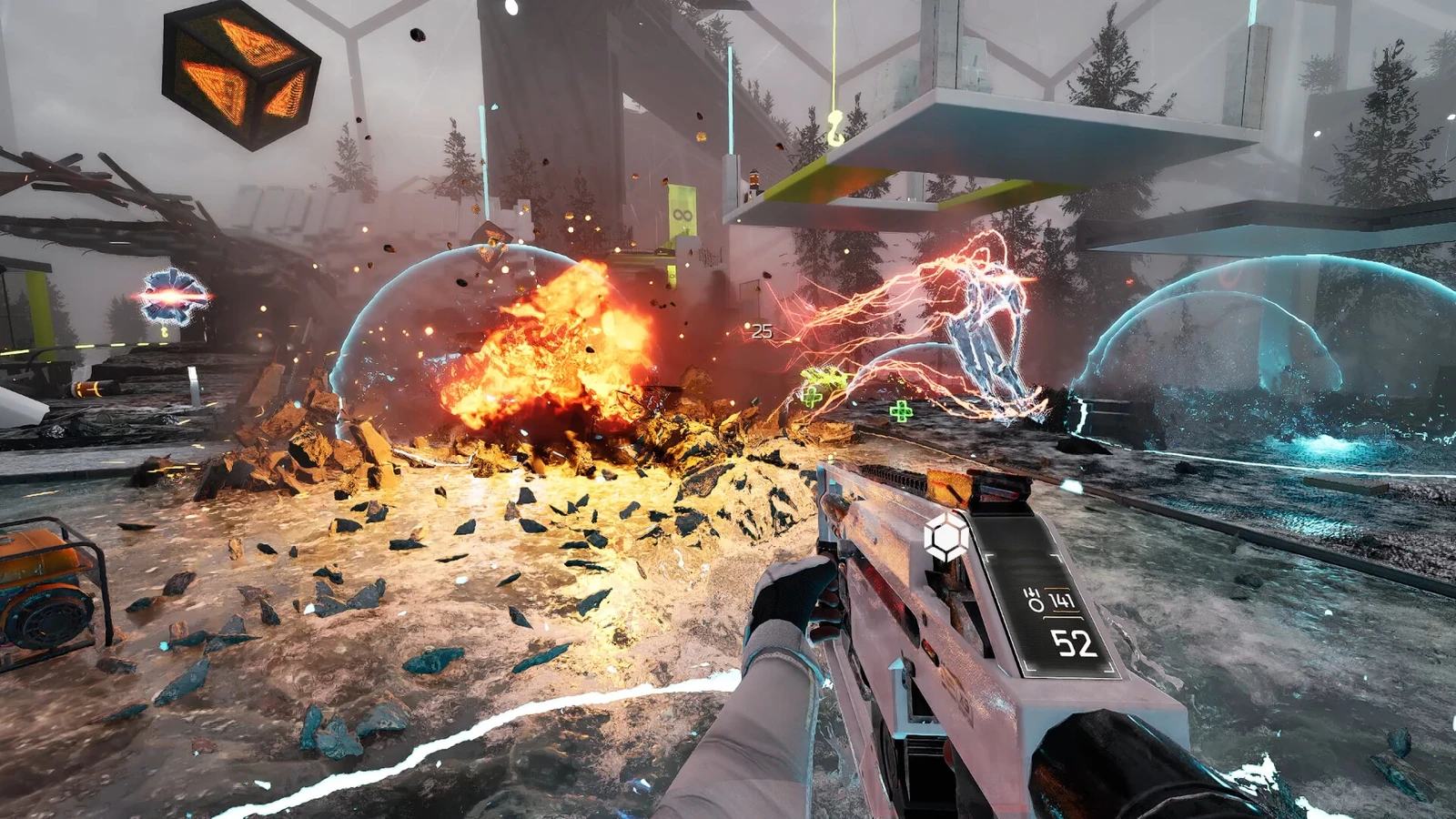
The boss in VOID/BREAKER can supply the rubble you throw back at it. Developer Daniel Stubbington changed the fights so boss attacks release debris for the gravity tether, keeping your attention on the machine trying to kill you. Hunting around the arena for something to smash was getting in the way.
Playstack's 1 October announcement sets the PC game's full 1.0 release for 4 November. There's a free Steam demo, with progress carrying into the full game, but the more revealing reason to revisit this shooter is already in its Early Access updates. Across spring and summer, Stubbington has been working on where its destruction fits: how you find rubble, what you do with it, and how a build can reward the throw.
A room full of ammunition
VOID/BREAKER's Steam description puts collapsing structures alongside shooting as a means of survival. This is a single-player roguelite about escaping a hostile AI's cycle of fights, deaths and fresh attempts. Its environments offer things to break as well as routes through the gunfire. A wall coming apart belongs to the combat while the enemy is still standing.
Rogueliker's KinixReviews explains the attraction in a March hands-on account: falling pieces can stun enemies, and killing stunned foes supplies healing and ammunition. The reviewer also describes opponents chasing the player onto buildings. There's a reason to break the room while moving through it. Waiting somewhere high for trouble to go away doesn't sound like much of an escape plan.
The same report found the debris-filled action satisfying but sometimes difficult to read. That is a useful complication for a shooter whose scenery has a combat role. Once a piece of the environment becomes something you can use, spotting it matters. A spectacular collapse and a usable object are different pleasures, and VOID/BREAKER is trying to accommodate both in a very busy arena.
Keep watching the boss
Boss fights exposed a more specific problem. In the 7 June Ascension update, Stubbington said the pillars used to obtain destruction chunks pulled attention away from the boss. His replacement has attacks release tetherable debris directly, with improved visibility for pieces that can be hurled back. The appealing change is the source of the object: it now comes from the threat you're already watching.
That follows smaller adjustments in April's Recalibration update. Rocks in boss arenas gained a stronger pull towards the player and better visibility through surfaces. Dropped loot received a screen indicator too. These aren't all the same fix. One helps a resource reach you, another helps you locate it, and June changes where boss debris originates. Together, they describe a practical effort to make useful objects easier to find amid the effects.
KinixReviews had criticised the bosses in March for making less of environmental destruction than the ordinary arenas, as well as feeling lengthy across three phases. June's change addresses part of that criticism in a concrete way. It isn't evidence that every boss now feels better: the earlier account predates the update. But it identifies a sensible direction, with the boss helping sustain the game's distinctive throwing action instead of distracting from it.
What happens after the throw
The rubble has a place in build-making as well. April introduced Zeus Strike, which calls lightning onto enemies hit by gravity-tethered objects. Sharp Debris gives destruction fragments a chance to apply Laceration; stacks of that effect increase the melee damage an enemy takes. These are documented mod effects, rather than a claim about an unbeatable combination. They offer separate reasons to care about the object and the enemy it hits.
April also changed melee damage to scale with enemy health, setting a minimum while leaving room for builds to increase it further. Laceration therefore belongs to a broader attempt to keep hitting enemies useful later in a run. Sharp Debris is a chance to apply it, not a guarantee that every fragment prepares a powerful punch. Zeus Strike has a different effect. The attraction is having those distinct possibilities attached to something you throw.
Playstack's June post on PlayStation.Blog explains the surrounding weapon grid: modules occupy space and can interact with their neighbours, while some expand the grid itself. Its examples include freezing an enemy and guaranteeing a critical hit against a frozen target. That is another attraction alongside the immediate mess of a firefight. You get to arrange the effects that will accompany it, with positioning inside a menu carrying consequences outside it.
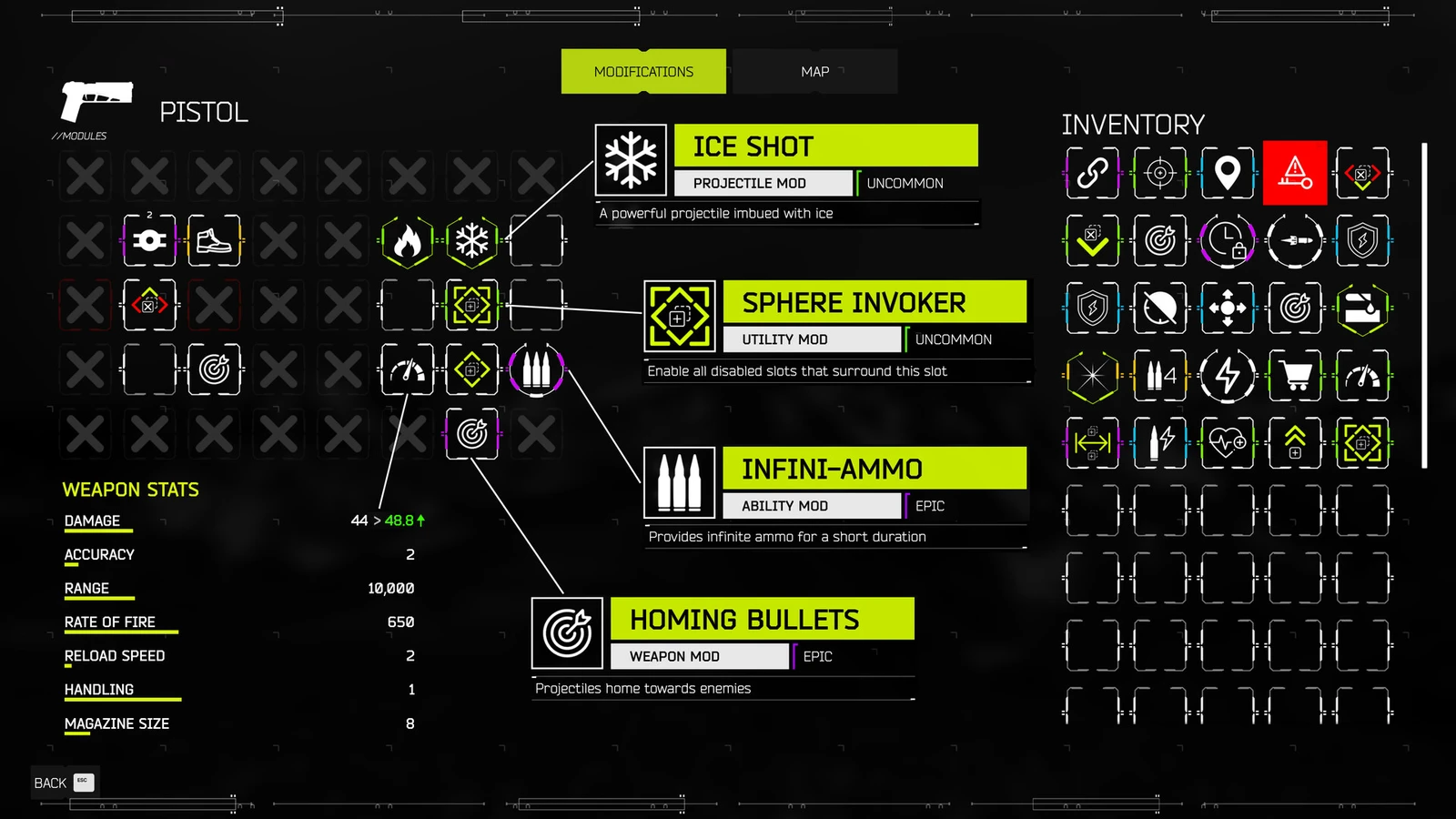
The appeal is in that connection between the arena and the build. A broken structure has already become a source of combat objects; individual mods can give those objects further effects. The boss-debris change brings the same tool into clearer relation with the enemy's attacks. As VOID/BREAKER approaches its full release, that's a particular pleasure worth following: keeping an eye on the boss also means watching for something you can throw back.
Sources
Where this story comes from, and where you can check it.
Official sources
- Steam CommunityVOID/BREAKER - ASCENSION MAJOR UPDATE IS OUT NOW ↗
- Steam CommunityRECALIBRATION UPDATE IS LIVE ↗
- Steam CommunityVOID/BREAKER 1.0 Available Nov 4! ↗
- PlayStation.BlogHow roguelite shooter Void/Breaker's destruction combat uses PS5 features ↗
- SteamVOID/BREAKER ↗