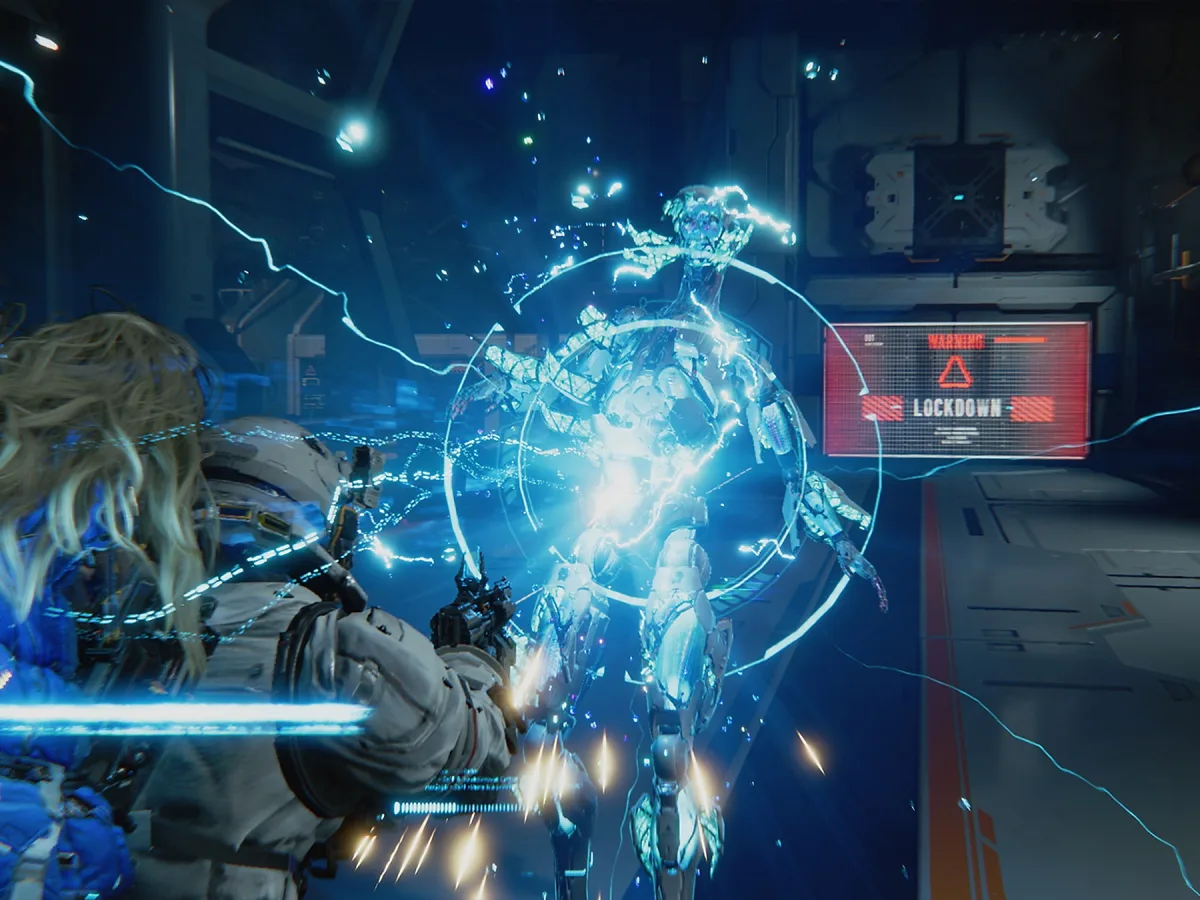
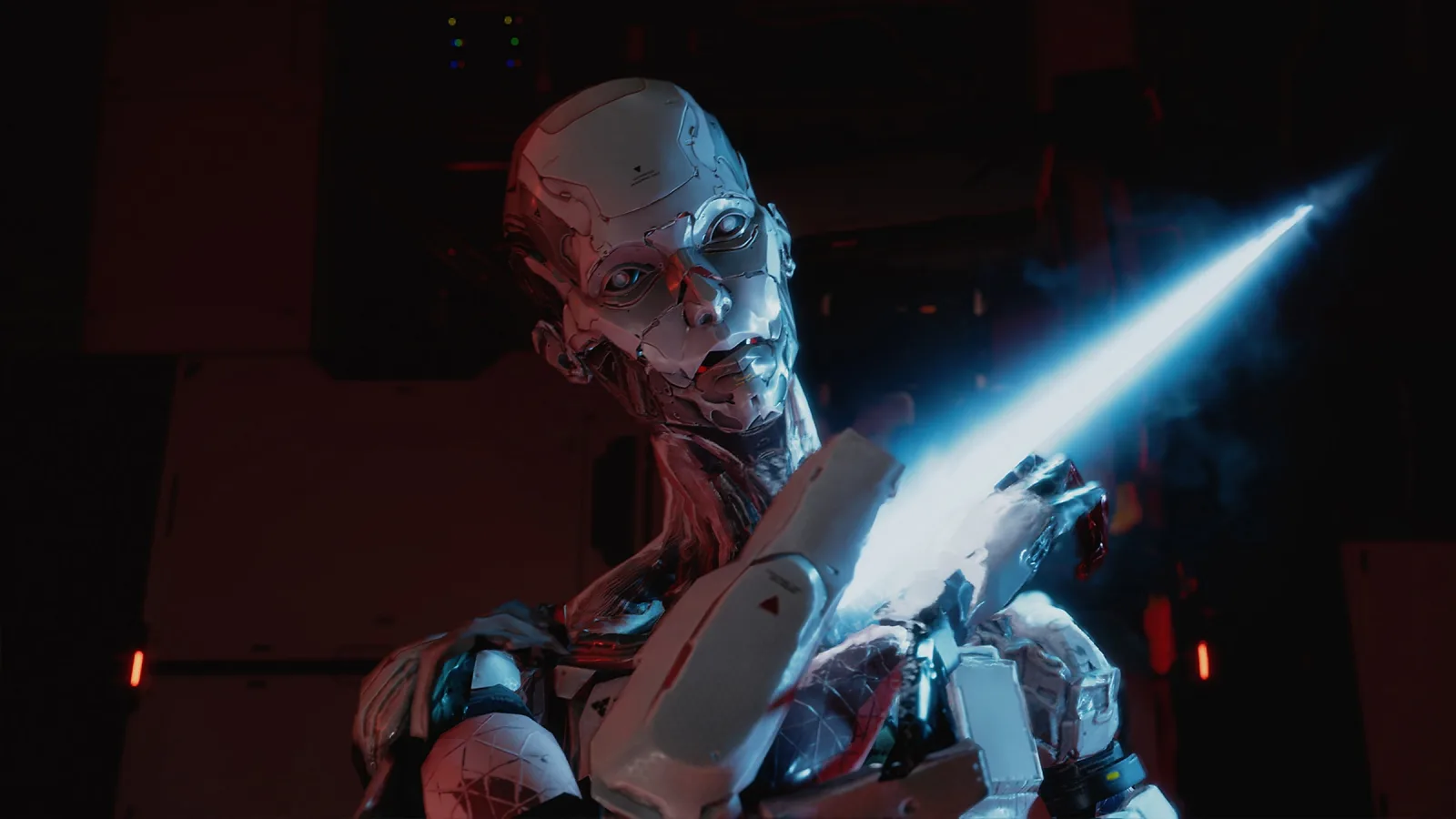
A robot in Pragmata is not ready to be shot simply because it has stepped into Hugh's crosshairs. Diana has to open its armour first. Aim at the target and a small grid appears at the edge of the screen; trace a route to its exit, then use the short window you have made to fire. It is a simple sequence until another bot starts swinging, a projectile heads your way, or the safe path through the grid offers a tempting detour. Capcom's lunar action adventure, released on 17 April for PC, PlayStation 5 and Xbox Series X|S, gets its particular energy from refusing to let those jobs happen one after the other.
One enemy, two jobs
Most third-person shooters give aiming and planning a tidy division of labour. You find cover, choose a weapon, scan the arena and then pull the trigger. Pragmata keeps rearranging that sequence. PlayStation's official description says Diana exposes enemy weaknesses so Hugh can attack, while GamesRadar's breakdown explains that the player guides a cursor across a grid to reach a green EXE node. The hack is not a quick button press before the real combat starts. It is the moment that decides whether the gun in Hugh's hands will do meaningful damage at all.
That makes the screen feel usefully crowded rather than merely busy. The reticle stays on an enemy, the grid asks for face-button inputs, and the rest of the arena continues to make demands. PC Gamer's review identifies tunnel vision as the danger: stare at the hacking interface and an incoming attack can slip past you; ignore it and the bullets lose their bite. The tension comes from a concrete trade-off. A player who wants a clean hack has to keep enough attention on the robot's movements to avoid turning their own concentration into an opening.
The relationship also gives Diana a job that is more legible than the usual companion perk. In a January preview, Pragmata director Yonghee Cho told Game Informer that the team wanted a buddy-action experience with two distinct characters controlled through one pad. That idea is visible in every encounter. Hugh is not waiting for a non-player sidekick to perform a cool-down ability, and Diana is not a floating excuse for a scanner mode. The player is borrowing both of their specialities at once, which makes their partnership a rule of the fight rather than a decorative story beat.
A longer route can be a better shot
The grid would be a novelty if the green exit were its only meaningful destination. It is more interesting because the route can collect extra nodes on the way. PC Gamer reports effects including greater damage, armour shredding, friendly fire and immobilisation, while GamesRadar describes blue nodes extending the time an enemy stays exposed and increasing damage. In other words, the shortest path is not always the best path. The player has to judge whether a more profitable route is worth the extra beat of danger, and that judgement changes with the enemy, weapon and space around them.
That is where Pragmata's combat finds a surprisingly tactical rhythm without putting the player into a menu. A large enemy with a broad hacking board invites a longer plan, but it also leaves more room for something to interrupt that plan. PC Gamer notes that some robots block parts of the interface with shields, while certain weapons can change the hacking problem itself: sticky bombs reduce the board, and a decoy can draw attention away. The equipment is not just a collection of different firing sounds. It changes the speed and risk of the thought that comes before the shot.
There is an important complication here. Windows Central found the system could become messy in the middle of a large fight, which is the cost of building tension from split attention. That friction is not automatically a flaw; a mechanic about keeping two tasks alive should occasionally make the player feel stretched. But it does set a limit on the feature's appeal. Players who want a shooter to offer one clean line of thought at a time may find the interface intrusive. Pragmata is more persuasive when it lets pressure sharpen a decision than when it simply makes the player wrestle the display.
Why it feels like a partnership
The cleverest thing about the arrangement is that success has a visible handover. Diana creates the weakness, Hugh spends it, and the player has to turn the first action into the second before the opportunity closes. That is different from a companion who occasionally supplies an automatic stun or a damage bonus. The hack never removes the need to shoot well; it raises the stakes of shooting well at the right moment. When an enemy is exposed, the player knows exactly why it happened and exactly what they risk losing by hesitating.
Pragmata carries that division outside combat as well. PlayStation says Hugh uses suit thrusters to cross the lunar facility while Diana hacks security systems to open routes. The environmental version is quieter, but it helps the combat make sense. The game keeps returning to the same premise: one character can reach a place or land a hit, while the other can make that action possible. It is a far more convincing use of a two-person cast than repeatedly cutting away to a companion's animation, because both roles are present in the player's own decisions.
That does not make every fight graceful, nor does it need to. The point is the lovely awkwardness of being asked to trace a route, stay mobile and recognise the value of the opening you have created. Pragmata turns the small pause before a shot into a live piece of action. Its robots are not simply targets with armour bars. They are little problems that keep moving while you solve them, and the answer only counts if you can still pull the trigger.
Sources
Where this story comes from, and where you can check it.
Official sources
- PlayStationPragmata - PS5 Games ↗
Independent reporting
- Game InformerPragmata Preview: Digital Diana ↗
- GamesRadar+How Pragmata hacking works ↗
- PC GamerPragmata review ↗
- Windows CentralPragmata Review - A game that separates itself from humanity ↗