A role-playing game does not become generous simply by becoming enormous. What matters is whether it lets a player decide when they have had enough. Fable's reported plan for a 15-to-20-hour main story, another 15-to-20 hours of quests and exploration, and open-ended life systems is encouraging because it separates a satisfying ending from a lasting hobby. The new game is not promising that every player must become a landlord, employer and local curiosity. It is promising that Albion can still be somewhere worth returning to after a clean finish.
A complete story, not a rehearsal
Associate game director Will Kennedy told a Gamescom Q&A, reported by GamesRadar+, that the mainline quest should take around 15 to 20 hours, with a similar amount of side and open-world material. That is a deliberate scale in a genre where the word RPG increasingly implies a map to clear for months. It also resembles the earlier Fable games, whose brisk campaigns made the consequences of a choice feel personal rather than merely statistical. A player could see a story through without feeling that the credits had interrupted an unfinished syllabus.
The number is not a guarantee of pace or quality. A short main route can still be padded, while a longer one can earn every detour. But Fable's distinction is more useful than a claim of limitless content. It suggests that the campaign has an intended shape of its own, with optionality outside it rather than compulsory sprawl within it. For players who want a sharp comic-fantasy adventure, that is a reason to pay attention. For players who want to settle into a world, it establishes a point from which lingering becomes genuinely elective.
Where the extra time is supposed to go
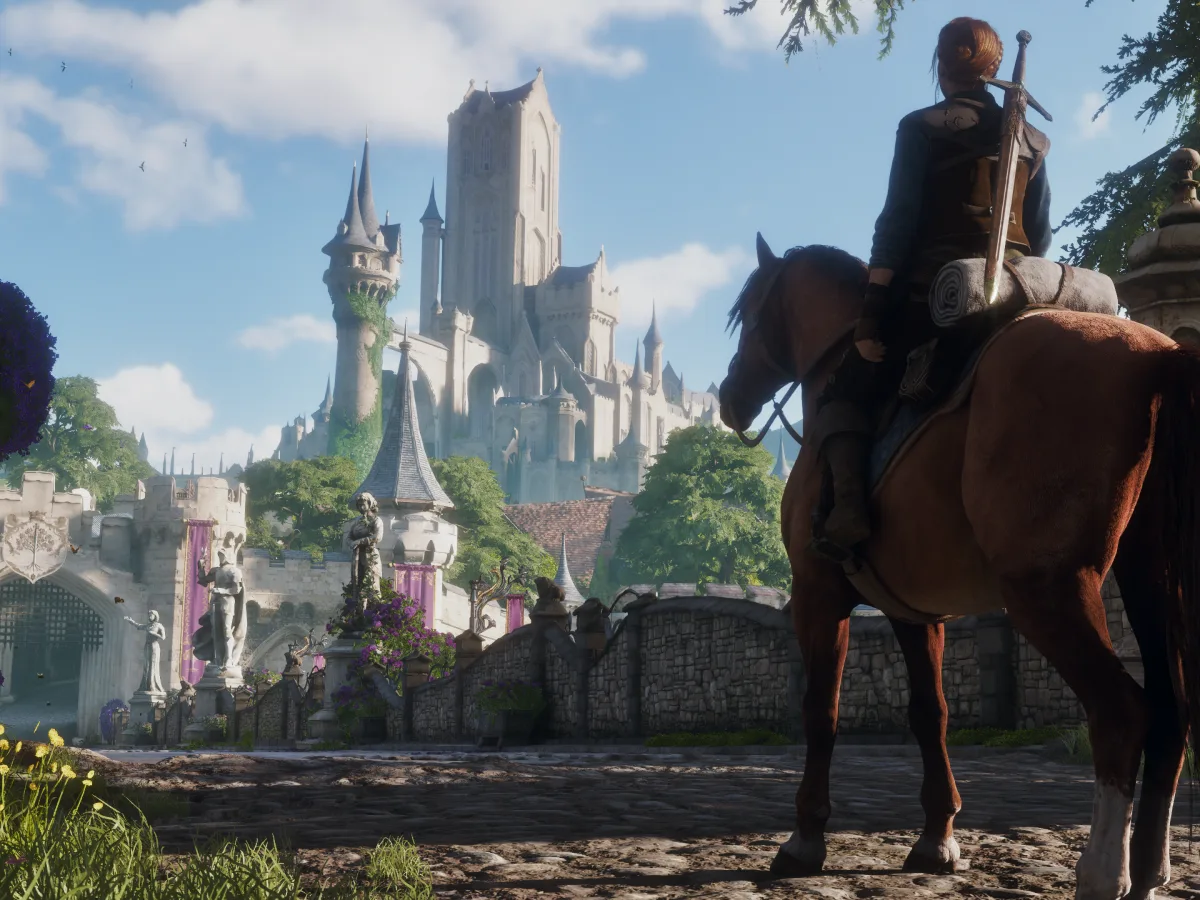
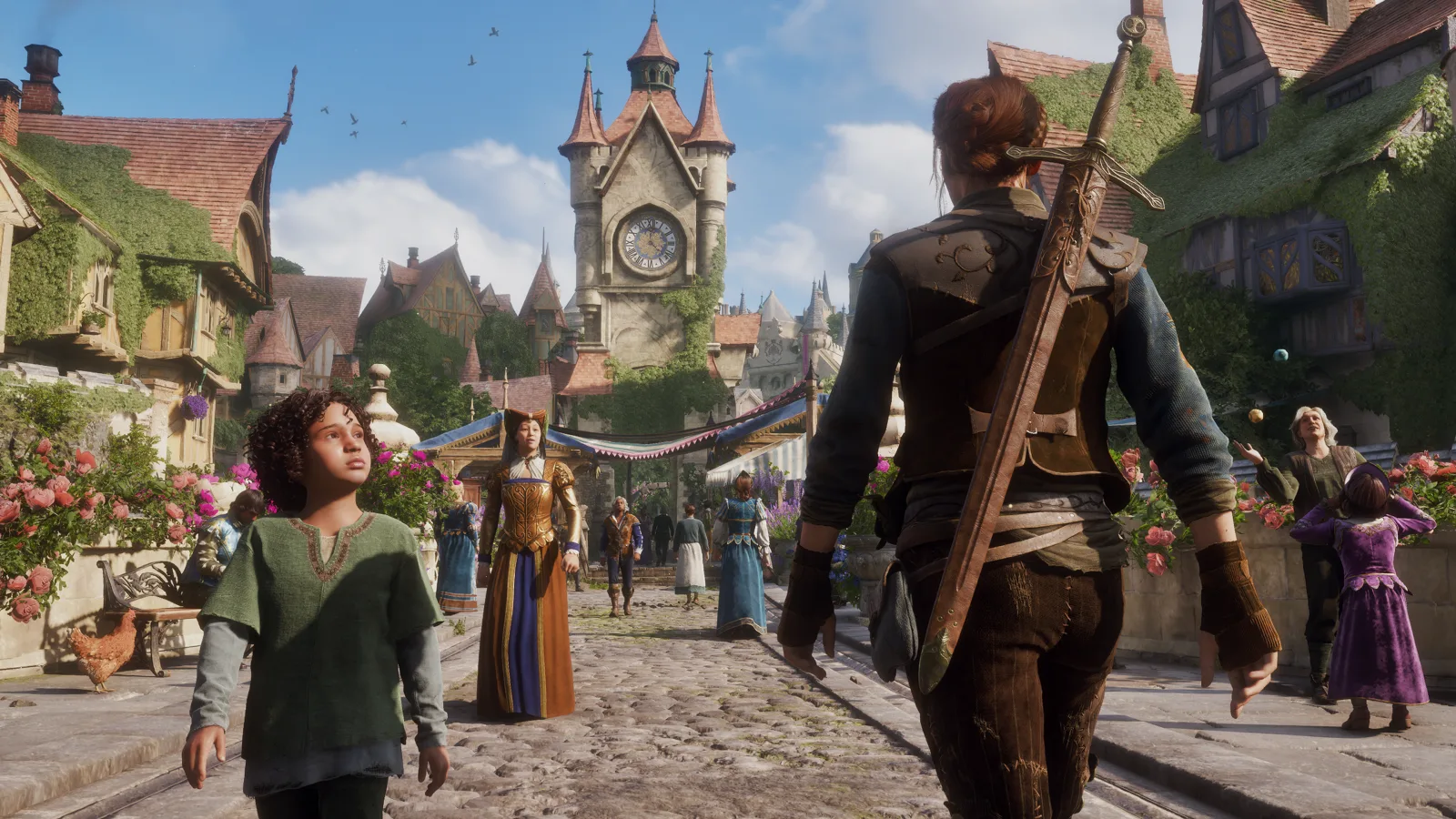
Recent official gameplay material gives that promise a concrete setting. Xbox Wire says players can enter every building in Bowerstone and buy every house, while the game's public site shows the city as more than a distant skyline. That does not tell us how satisfying ownership will be, yet it signals a different kind of side activity from a collectible trail. A house can become a place to decorate, an investment or simply a landmark a player recognises. The important question is not how many buildings exist but whether they acquire a meaning through use.
GamesRadar+'s reporting on a discussion with game director Ralph Fulton makes the systems sound more entwined than a shop menu. The reported example has wages affecting a worker's happiness, reputation and possibly output; traits may make one employee a stronger fit than another. Those are familiar simulation levers, but Fable's old appeal was always its willingness to let a foolish decision become part of a character. If the new economy produces stories about an overconfident landlord or a town that remembers a miser, then the life-sim layer can extend role-play instead of replacing it with optimisation.
A sandbox still needs resistance
There is a less flattering possibility. Property, family routines and businesses can turn a fantasy town into an administrative dashboard, especially if their best rewards are so efficient that they pull attention away from quests. The strongest version of a life sim is not an endless stream of chores with medieval wallpaper. It needs enough uncertainty that a wage cut, an unfamiliar tenant or a peculiar reputation creates a social complication rather than a solved equation. Without that friction, unlimited playtime can mean only unlimited maintenance.
Fulton has said that reputation can hold contradictory descriptions at once, rather than moving a character along a single good-or-evil line. That is a promising answer to the problem, if it survives the full game. Being charming and cruel should invite a different response from being reliably virtuous or openly greedy, not just a different icon beside a health bar. Yet the available material is still a selection of demonstrations and developer explanations. It cannot show how often a system remembers a decision, how it handles failure, or whether its humour remains funny after the tenth business transaction.
The pleasure of a stopping point
That uncertainty is why the announced campaign length matters more than the word limitless. A defined adventure gives Playground Games something to pace and players something to complete. It also protects the quieter pleasures of Albion from becoming an obligation before the plot may continue. Someone can finish the story, leave satisfied and never purchase a bakery. Someone else can use the same ending as permission to learn a town's routines, collect property and see how far a strange reputation travels. Neither approach should be treated as the more serious way to play.
Fable is due on 23 February 2027 for PC, PlayStation 5 and Xbox Series X|S. Xbox Wire also lists Game Pass and Play Anywhere for the Xbox editions. There is plenty that a showcase cannot settle about its combat, quest writing or simulation depth. Still, its division of time is a useful design statement. In an RPG market that often treats endurance as a feature by itself, a compact story with optional afterlife may be the more ambitious promise: Albion does not need to trap players there forever to make them want to visit again.
Sources
Where this story comes from, and where you can check it.
Official sources
Independent reporting
- GamesRadar+Fable is 15-20 hours long, Xbox confirms, but you can literally play it forever if you treat it more like a life sim than an RPG ↗
- GamesRadar+Getting down to business with Fable's game director: You can transform the economic future ↗
- Windows CentralI went hands-on with Fable at Gamescom, and this reboot finally feels like it has a clear identity ↗