When a time-loop game sends you back to the beginning, the usual question is what knowledge you can carry in your head. Rivage gives that familiar idea a more physical inconvenience. Miranda is alone on the A.R.E.S. research station, its crew missing after a space anomaly, and the station's power supply eventually runs dry. PC Gamer's account of the game explains that the blackout resets the loop. That makes power more than a timer on the screen: it is the thing that turns an empty station into a place where every detour has a cost.
Power is the clock, not a death screen
That distinction gives Rivage a useful identity among games about repetition. The public material does not present Miranda as fighting her way through a hostile ship or retrying a combat encounter. Instead, Raw Fury describes loop-based puzzles on a station orbiting the potential colony world of VESTA, while the developer's Steam page centres exploration, logic and a missing-crew mystery. The loop is therefore a structure for testing an idea, finding a clue and deciding what deserves the next stretch of available energy. A locked door can be a puzzle, but it can also become a reason to plan a route differently.
PC Gamer reported that the reset is tied to the station running out of power, with an arcade machine involved in beginning another cycle. That is the most intriguing confirmed detail because it makes the loop's restart point deliberately odd rather than merely functional. Rivage has not explained every rule of that machine, and it should not be mistaken for proof of how every puzzle will unfold. Yet the broad shape is clear: the game is asking players to investigate a place under a resource limit, then return to it with a better sense of where attention belongs.
The point is not to solve the same puzzle twice
Time loops can make a clever answer feel oddly administrative when a game asks you to repeat it just to reach the next discovery. Rivage's announced answer is the K9 System. Raw Fury says it allows Miranda to carry knowledge forward with each reset, and the Steam store page says she can log discoveries and retain certain puzzle solutions. That last word matters. The pitch is not that every action becomes permanent; it is that selected progress can survive long enough for the next investigation to be about what the previous run revealed.
This is a promising arrangement for players who enjoy puzzles but have little patience for ceremonial retracing. The official descriptions name gravity, magnetism and time among the forces involved in Rivage's environmental challenges, alongside repaired systems and altered mechanisms. What remains unknown is how generous the retention will be, which solutions stay fixed, and whether the game can make a reset feel like a fresh line of enquiry rather than a queue for a door already opened. The demo is no longer a safe guide here: Exnilo and Raw Fury removed it in August after reworking UI, voice lines, narrative hints and puzzles for the full release.
A station worth reading, not just escaping
The science-fiction premise sounds comfortably familiar on paper: a lone researcher wakes on a station, discovers that its crew has vanished and starts looking through the things they left behind. Rivage's material leans into that familiarity instead of pretending it has invented the abandoned-space-station story. Journals, personal logs and encrypted messages are named as the route into the crew's relationships and the fate of A.R.E.S. The more distinctive promise is that these fragments sit beside practical puzzles, so an object, a room or a half-understood system can potentially carry both story and use.
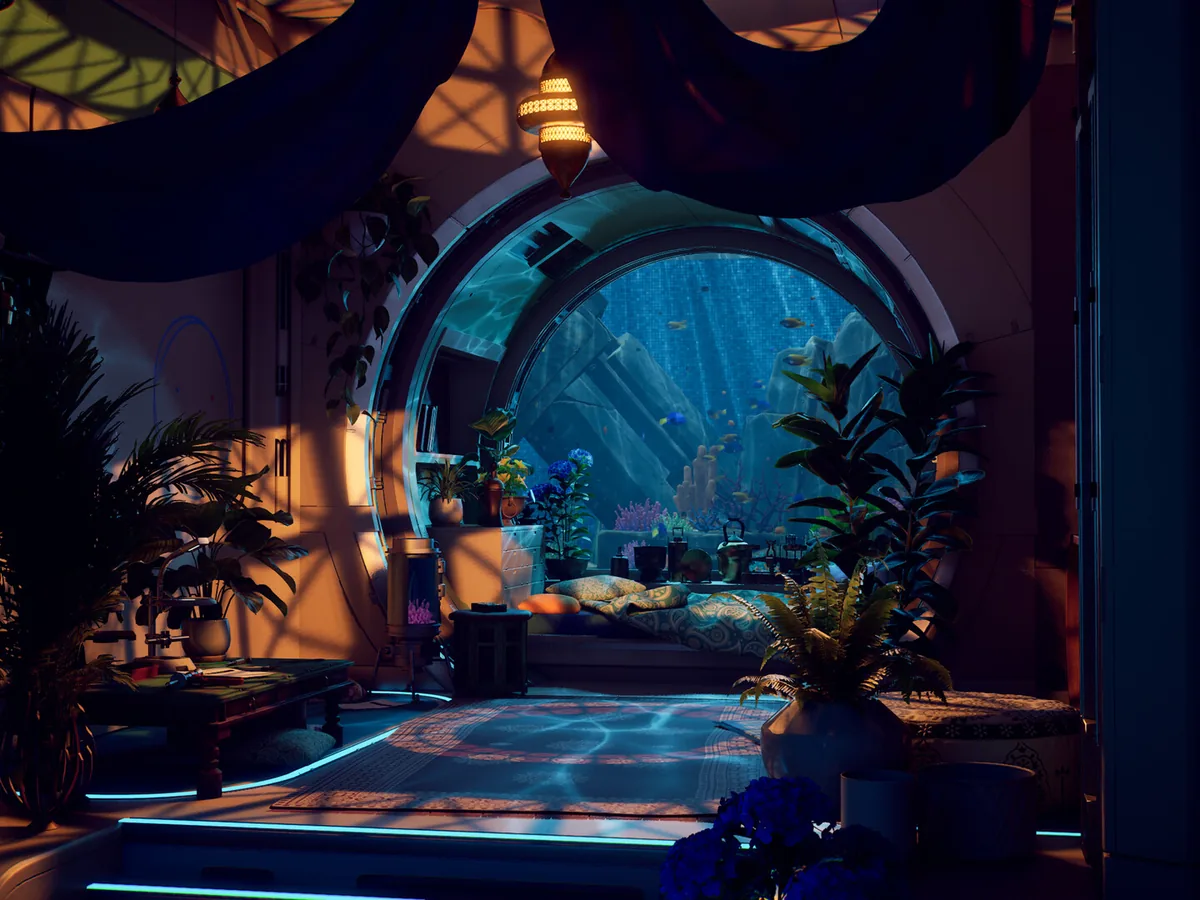
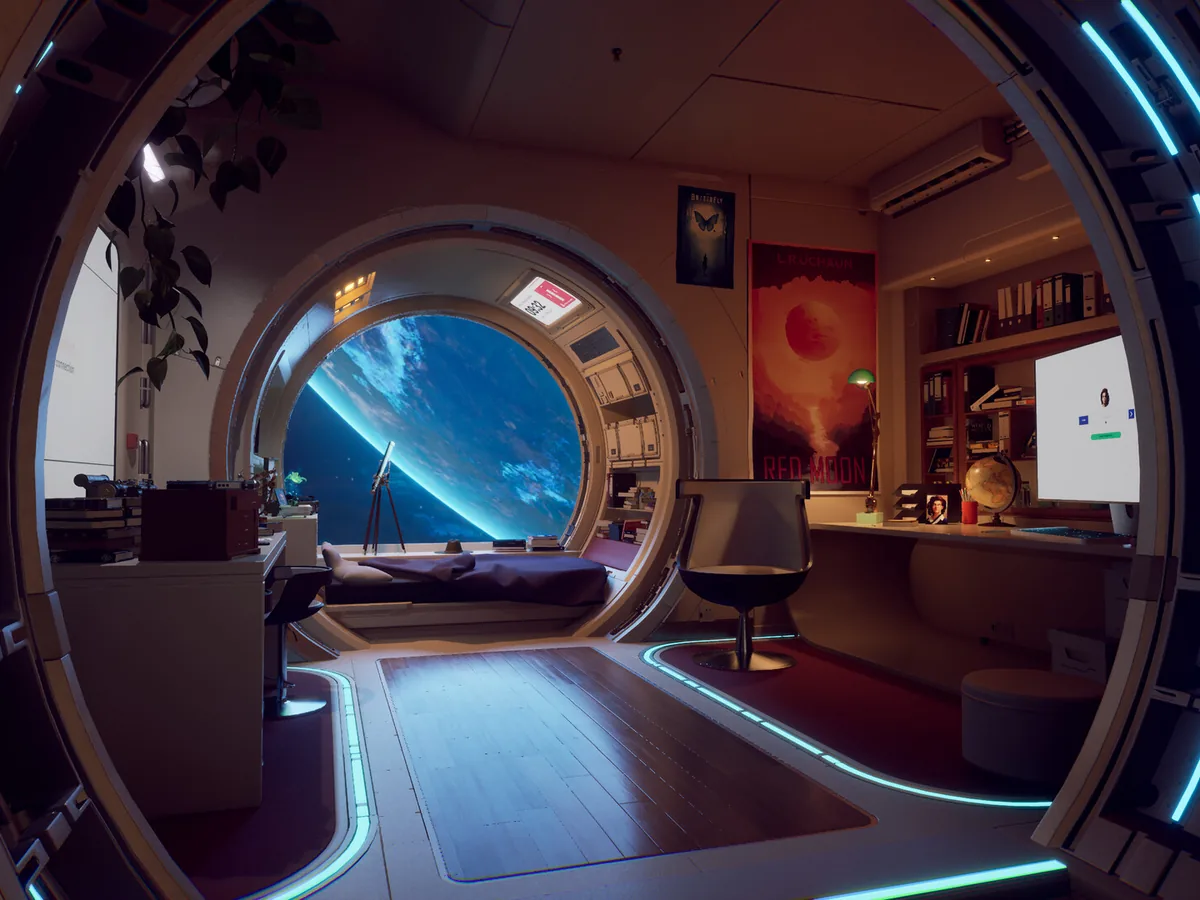
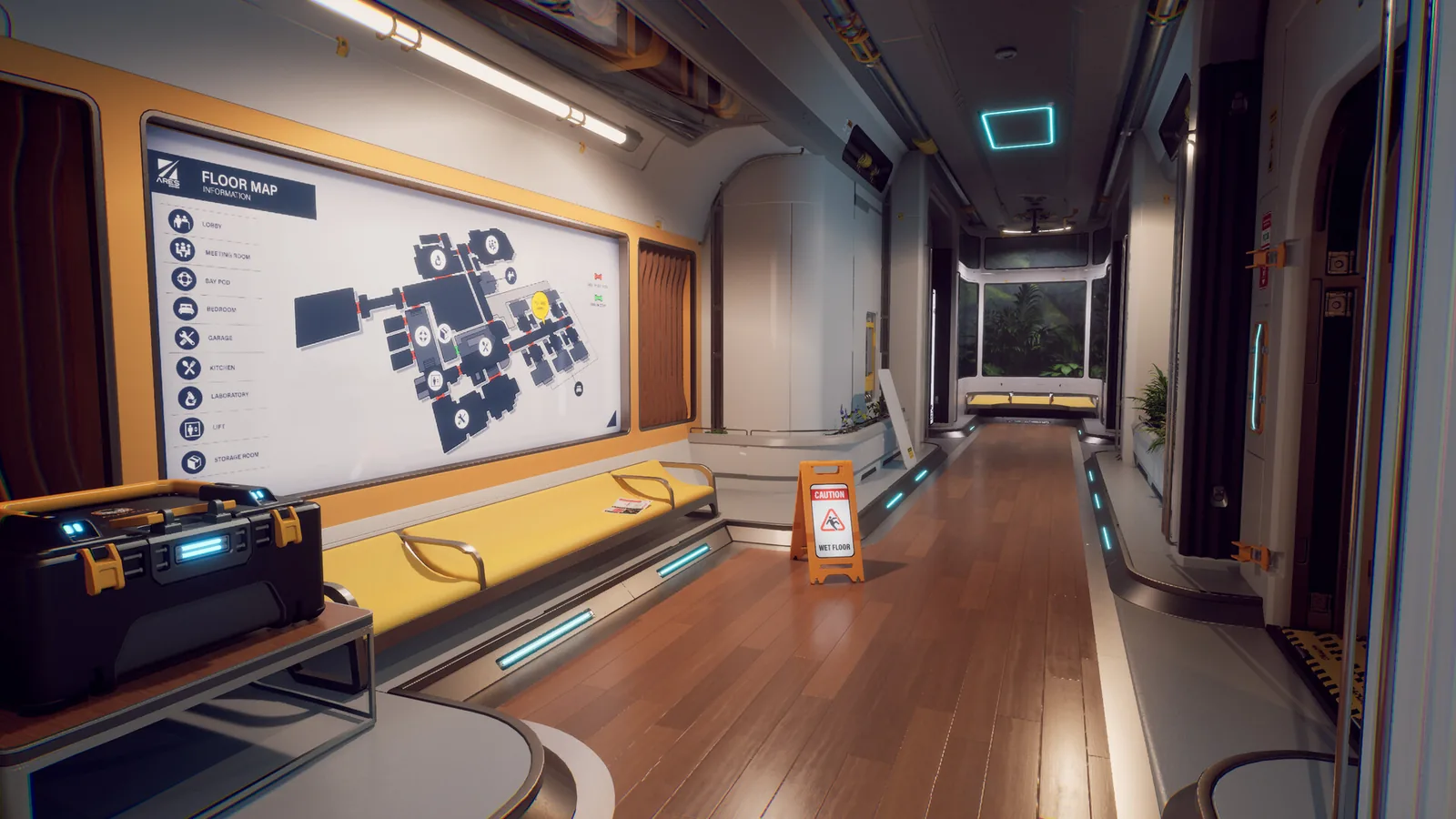
The official screenshots reinforce the scale Rivage is aiming for. They show lived-in rooms, a floor map, workstations and domestic clutter instead of only vast observation decks and emergency lighting. Screenshots cannot prove that the station's spaces will remain interesting after repeated visits, but they make the intended contrast legible: A.R.E.S. looks like a place with routines interrupted, not a generic corridor maze built solely to hold locks. For a mystery about absence, that is a smarter starting point than covering every wall in warning lights.
Who should board A.R.E.S.
Rivage looks best suited to the player who enjoys turning a place over in their mind: taking a note, a route and a strange machine seriously enough to see how they connect. Its public descriptions promise an atmospheric first-person puzzle adventure, not fast action, and its central idea asks for some tolerance of going back through familiar territory. The appeal lies in the possibility that a previous route changes meaning once a new clue or retained solution enters the picture. If that sounds like homework, a power-limited loop will not make it feel less like homework.
For everyone else, the strongest reason to keep an eye on Rivage is more precise than the broad claim that it is another space mystery. Its time loop has a job: to turn finite station power into a choice about what to investigate, and then to let some hard-won understanding outlive the reset. Rivage is scheduled for PC and PS5 on 22 September. Whether its revised puzzles and revised hints make that system feel elegant will have to wait for the final release, but the confirmed design is already clearer than an ominous corridor and a missing crew alone.
Sources
Where this story comes from, and where you can check it.
Official sources
- Raw FuryWorld Premiere: Announcing Rivage ↗
- SteamGame Improvements Planned - New Release Date September 22, 2026 ↗
- SteamImproving Rivage - Taking The Demo Off Steam ↗