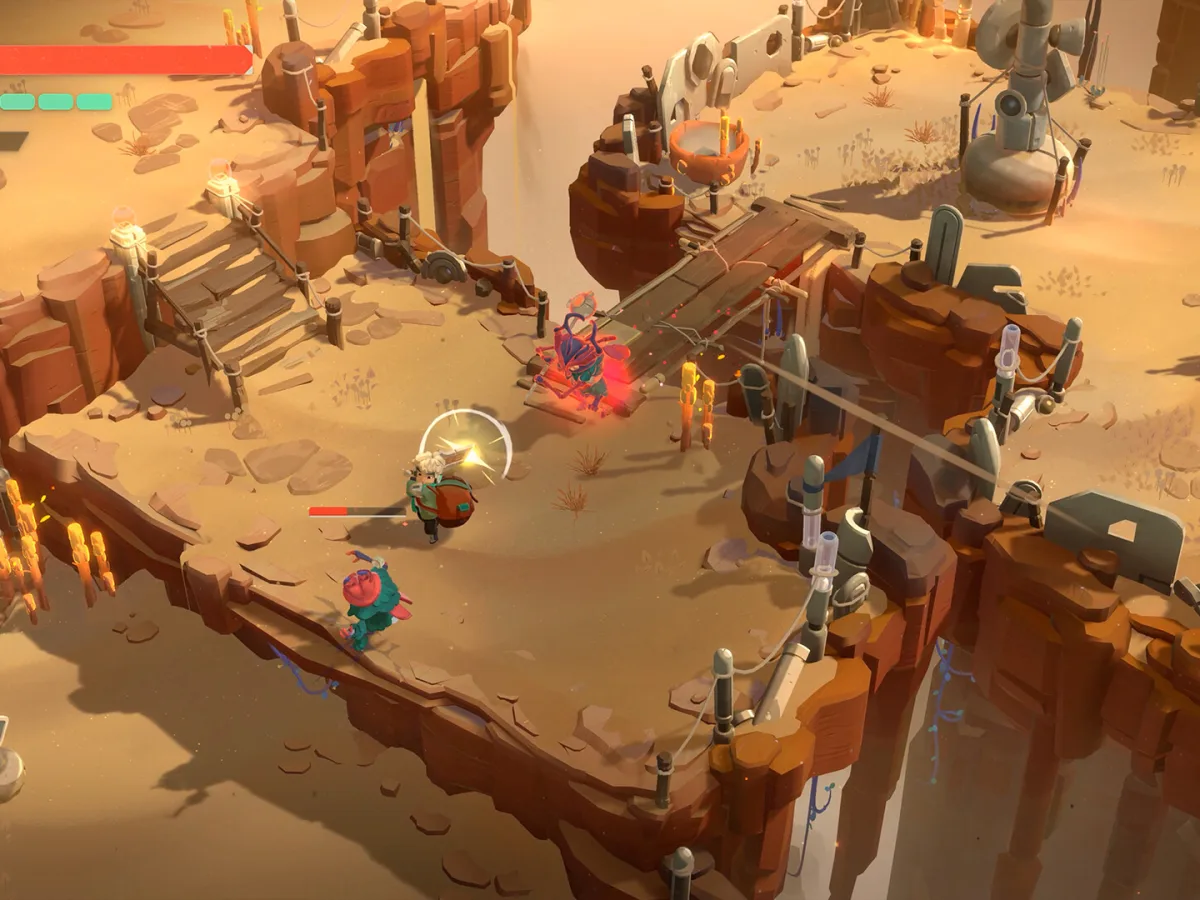
A relic in Moonlighter 2: The Endless Vault does not become valuable when it drops. It becomes a problem. Does it fit beside the relic already in Will's backpack? Will that neighbour improve it, ruin it, or turn the space into a more profitable arrangement? And, once it gets back to Tresna, is it better on a shelf at a cautious price or held for a better display? That is the sequel's most appealing bit of mischief. The same object is asked to work as dungeon loot, a spatial puzzle and shop stock, so a successful run has to make sense long after the last creature has fallen.
Moonlighter 2 reached its full PC release on 2 September 2026, after an early-access run that began in November 2025. Digital Sun and 11 bit studios still describe the central loop plainly: explore unpredictable dimensions, fight, collect relics, arrange them for item synergies, then open a shop and decide what they are worth. Plain is not the same as simple here. The pitch joins three familiar activities, but it does not leave them in separate rooms. The bag is where a combat run starts becoming a business decision, and the shop is where that decision gets tested by customers rather than a damage number.
The backpack is a second encounter
There is a useful kind of pressure in having a limited bag that is not merely an inventory limit. The official store description says relics can be arranged to unlock unique synergies, which means a new find changes the value of the things already carried. An earlier GamesRadar+ account of the accessible build gives that abstract promise some teeth: it described relics that could burn neighbours away, and others that became more valuable when a neighbouring item turned to ash. That is a much richer question than whether an item has a larger sale price. A cheap piece can be worth keeping because it makes the more valuable piece beside it behave differently.
The system earns its place because it interrupts the ordinary roguelike instinct to take everything that is not nailed down. A full backpack is not automatically a successful backpack. A player may want to preserve a valuable layout, make room for a chest at the end of the next room, or accept a destructive interaction because the payoff outweighs the loss. Those are specific trade-offs, not decorative management. The official description calls deeper runs riskier and more rewarding; the backpack gives that sentence a practical meaning. Risk is not only taking a hit in combat. It is deciding which bits of a fragile plan can survive one more room.
The dungeon route has a price list attached
Independent reporting on the finished game suggests Digital Sun has made that calculation stretch across a whole run. Nintendo Life describes a node-based route of combat encounters, bosses, upgrade stops and NPC conversations, with modifiers earned along the way. It also reports that Will can warp out of a dungeon to cut losses. That escape option matters more in a game carrying a bag of potential shop stock than it would in a straightforward score chase. Leaving is not simply giving up on a boss; it is choosing to protect a haul whose best value may still be days of in-game work away.
The Big Lead's full-release review adds another useful detail: enemy drops now go into a separate upgrade inventory, while chest relics are the things packed for sale. Its reviewer also reports regional price structures and higher-value relic tiers in the game's dungeons. Taken together, those accounts explain why the loop need not turn every reward into another crafting token. Combat can supply a different kind of progression, while the chest loot stays legible as future merchandise. The split gives the player a reason to look at a chest not only as a power increase, but as the beginning of a route, a packing puzzle and a retail choice.
The shop is the verdict on the run
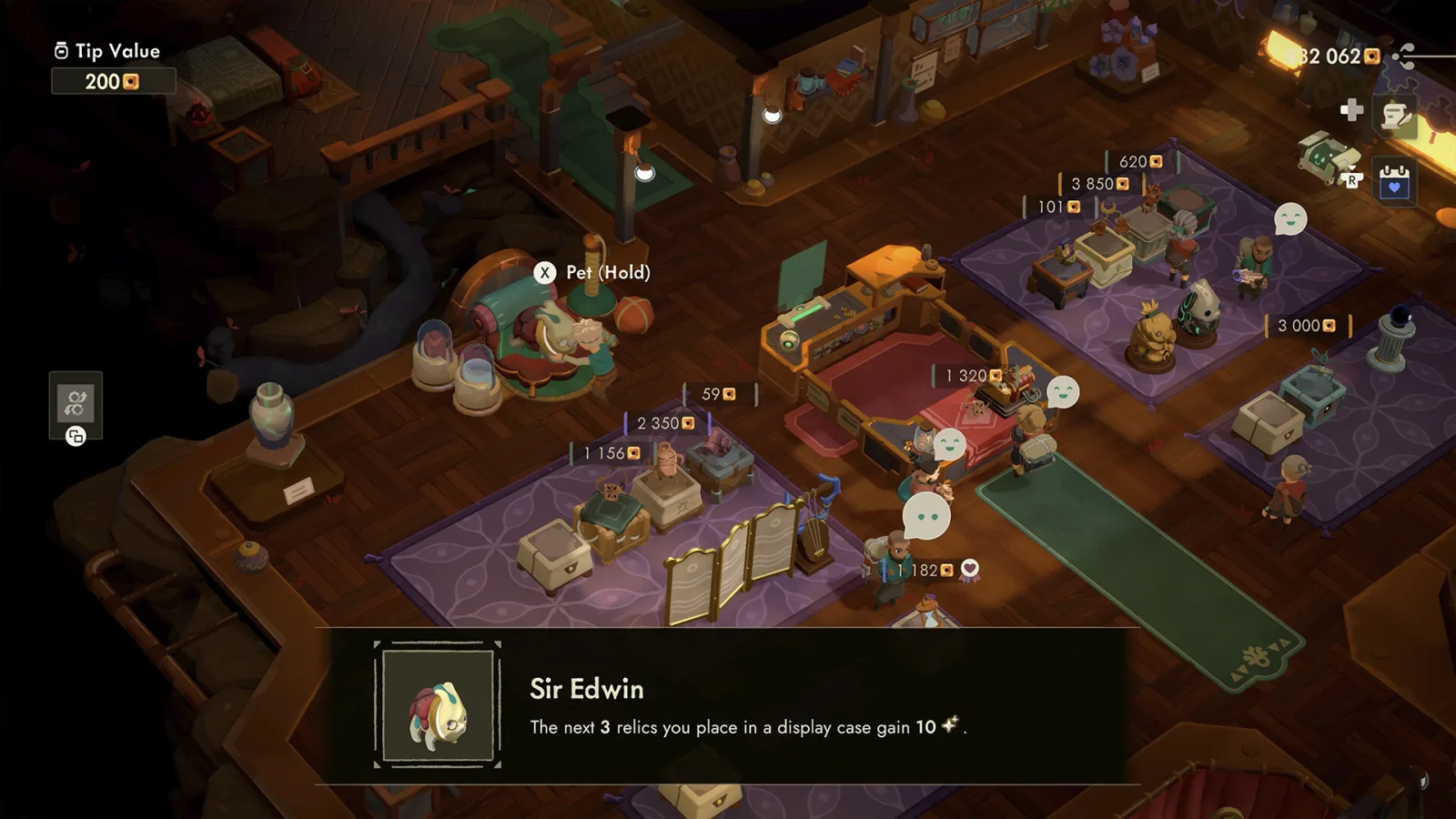
Back in Tresna, the official material says players customise the shop, set prices, read customer reactions, unlock sales perks and optimise displays. That is the point at which Moonlighter 2 avoids making the bag its own clever little minigame. A neat arrangement only matters because it feeds a shop that has its own demands. A player cannot claim to have solved the relic puzzle just because the backpack looked tidy at the exit. The item has to make it to a display, attract a buyer and turn into enough money to fund weapons, armour, town upgrades or another risky expedition.
Nintendo Life's current review describes sales awakening the Endless Vault and unlocking upgrades for both Tresna and the shop. It is a tidy way of making the town feel like more than a pause screen. The feedback loop runs in a clear direction: the dungeon creates goods, the bag decides what form those goods take, the shop turns them into money, and the town gives that money somewhere to go. The danger in this kind of design is busywork: too many systems that merely pass resources along. Moonlighter 2 has the stronger idea. It asks the player to make a judgement at every hand-off.
Why the same relic keeps changing shape
The feature is not that Moonlighter 2 contains combat, inventory management and shopkeeping. Plenty of games can bolt a sale screen onto a loot drop. Its distinctive move is to make the object in your hand carry consequences across all three. A relic can be loot, an awkward neighbour, a sale item and a source of the next upgrade budget without ever becoming a vague currency. That gives the player a reason to remember it. The successful expedition is not the one with the biggest pile; it is the one whose pile still makes sense when it reaches the counter.
That is also why the sequel's move into a bigger 3D, node-based adventure feels like more than a change of camera. The scale creates more chances to take a route, push deeper or leave safely, but the bag stops those choices from becoming abstract bravery. A run asks a very material question: what can I bring home without spoiling what I already have? Moonlighter 2's answer is admirably fussy. It makes the most ordinary fantasy-RPG reward - a thing found in a chest - argue with the next thing found beside it, then asks the shopkeeper to settle the dispute.
Sources
Where this story comes from, and where you can check it.
Official sources
Independent reporting
- Nintendo LifeMoonlighter 2: The Endless Vault Review (Switch 2) ↗
- The Big LeadMoonlighter 2: The Endless Vault review - A new dimension to dungeons and deals ↗
- GamesRadar+Moonlighter 2: The Endless Vault review: "Dungeon delving, balancing sacks of loot, then hawking your wares is still a compelling loop - but the exchange rate between those pillars is wobbly in early access" ↗