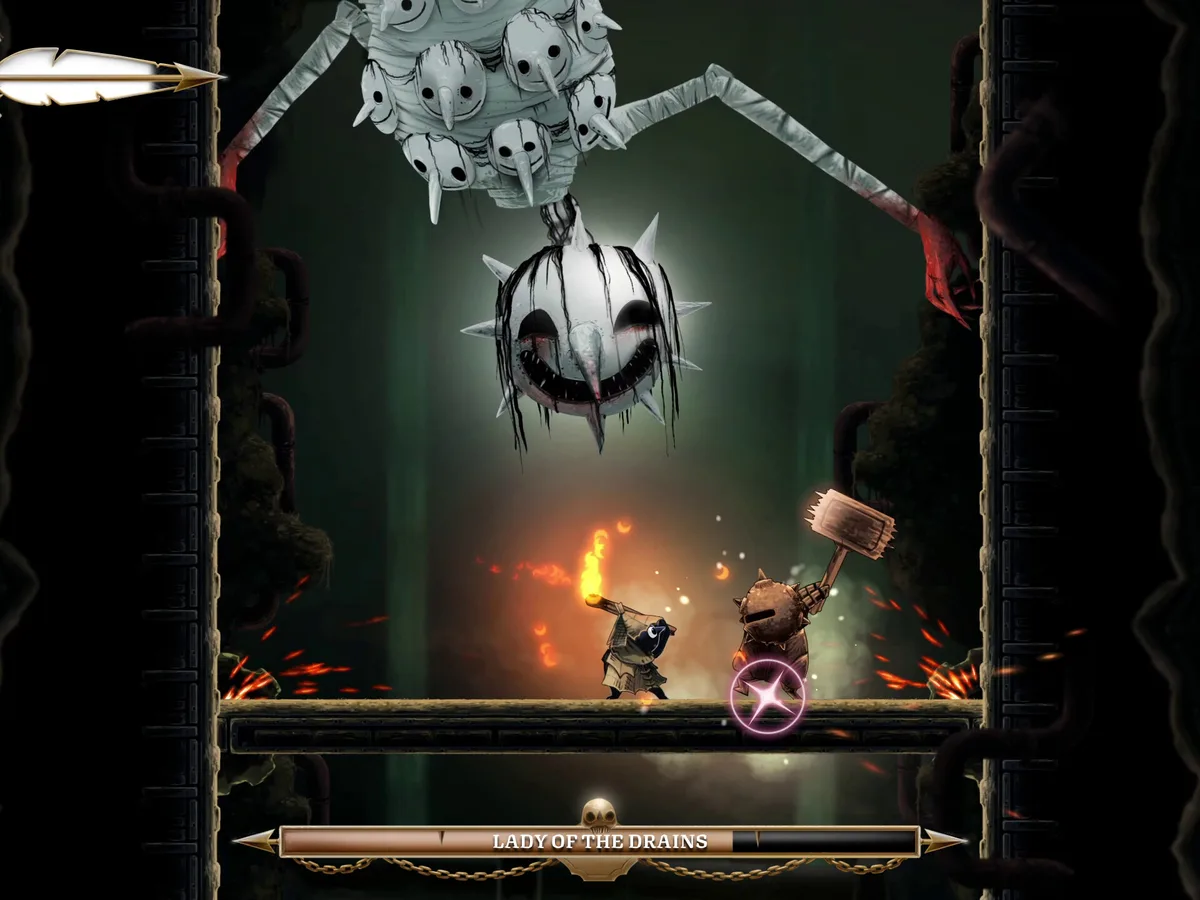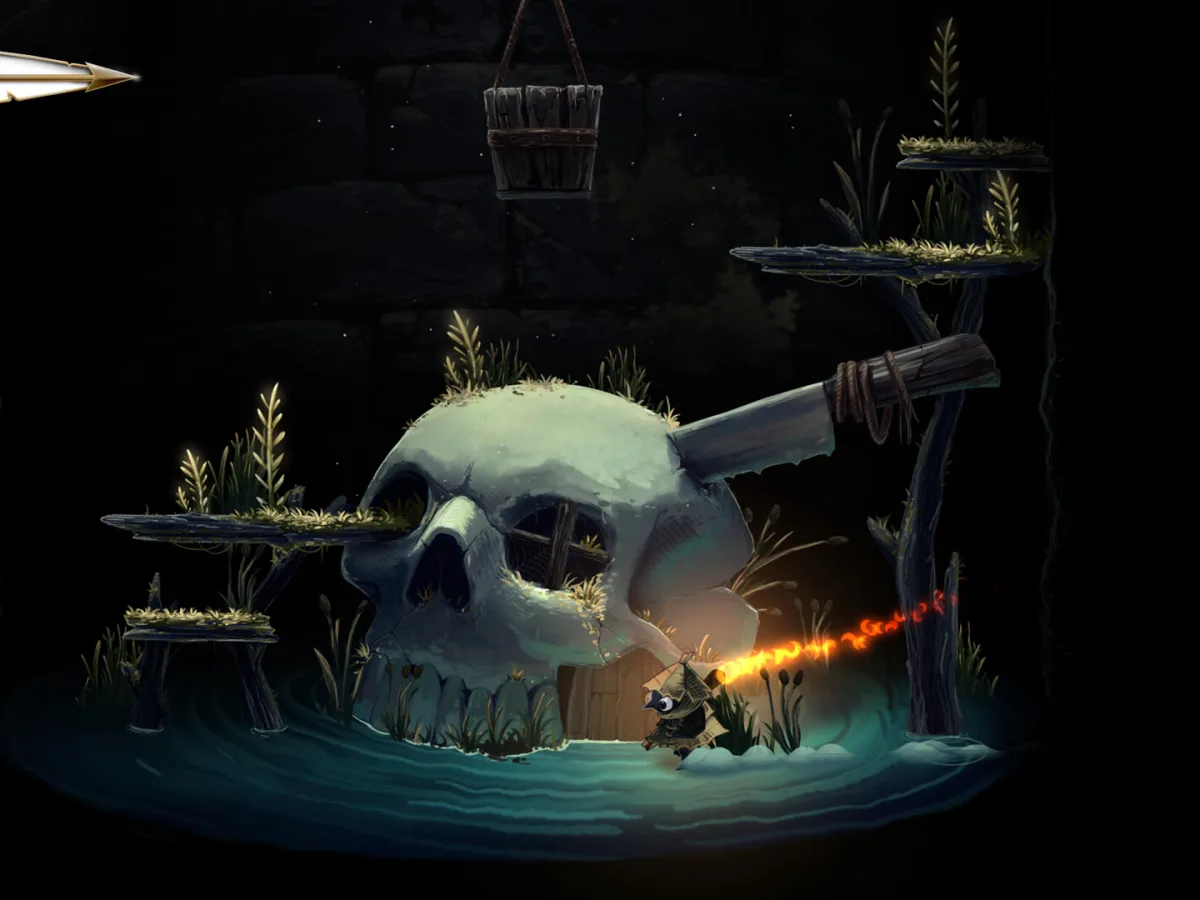
Glimmer carries a matchstick through Well Dweller, and its official description gives it two jobs: it lights the dark and helps in combat. The trailer material makes it look less like a decorative fairy-tale prop than a tool with a place in the world, pressed against walls, platforms and monsters. That matters because its creator has already named the weakness he wants this new game to answer. In Crypt Custodian, Kyle Thompson felt too many acquired abilities affected movement only in the places designed to demand them. His next Metroidvania is promising a different kind of upgrade: one that changes how a player reads the route between those places.
That is a more interesting target than making an ability list longer. Metroidvanias are built on the click of a previously blocked door becoming useful, yet that click can become procedural. Get the dash, return to the dash gate; get the hook, return to the hook gate. The map grows, but the player's relationship with it may stay oddly fixed. Thompson's previous games have each shifted the form around a particular priority. Islets linked separated landmasses into a larger whole; Crypt Custodian made its top-down afterlife more interconnected and more open to different orders. Well Dweller tests whether mobility can carry that same sense of connection through every room.
A sequel to a self-diagnosed limitation
Gamepressure's 2025 interview with Thompson supplies the candid starting point. He described Crypt Custodian as an attempt to improve on Islets through a more interconnected map and greater build customisation. Then he identified the trade-off: most of Crypt Custodian's abilities changed movement only in specific areas. For the game that became Well Dweller, he said he wanted abilities that were less obvious and useful throughout the adventure, alongside a world whose areas connected with a more coherent background. It is a neat diagnosis of a problem players can feel even when they cannot name it. A gate can show progress; an ever-useful tool can make progress alter the ordinary journey too.
The distinction is not a promise that every upgrade will work everywhere, and the pre-release material cannot settle how well the finished game will deliver it. It does, however, give the matchstick more weight. Steam's official page says Glimmer can light it to illuminate the world and aid combat, while trinkets can be mixed and matched to alter abilities. Those are confirmed functions, not a full explanation of the system. An action that belongs in exploration, fighting and customisation has more chances to become a habit than a single-use key. That is how an upgrade can change a map without erasing the need for places to have their own character.
The matchstick has to become a verb
Metroidvania movement works best when it gives old rooms a fresh grammar. A double jump does not merely reach a high ledge; it makes a familiar gap negotiable in a new rhythm. A grappling hook can turn a ceiling into a route, an escape tool or a combat position. The point is not that every power must solve every problem. Quite the opposite: it needs limits, timing and situations where its use is a choice. But when a tool's value survives beyond its tutorial door, players start scanning a room for possibilities rather than for the one icon the designer expects them to recognise.
Well Dweller has shown enough to make that ambition legible, but not enough to declare it achieved. The Steam description confirms a matchstick, collectible trinkets, puzzles, bosses and new abilities that expand the map. Its screenshots show Glimmer in a world that alternates between damp ruins, sharp platforms and storybook silhouettes. They do not reveal the final chain of upgrades or the exact rules of a lit match. The feature to watch is not whether the game contains familiar locks, but whether the matchstick and whatever follows it keep generating decisions after the obvious lock is gone. A small weapon is memorable when it keeps being reinterpreted.
A map needs connections, not just gates
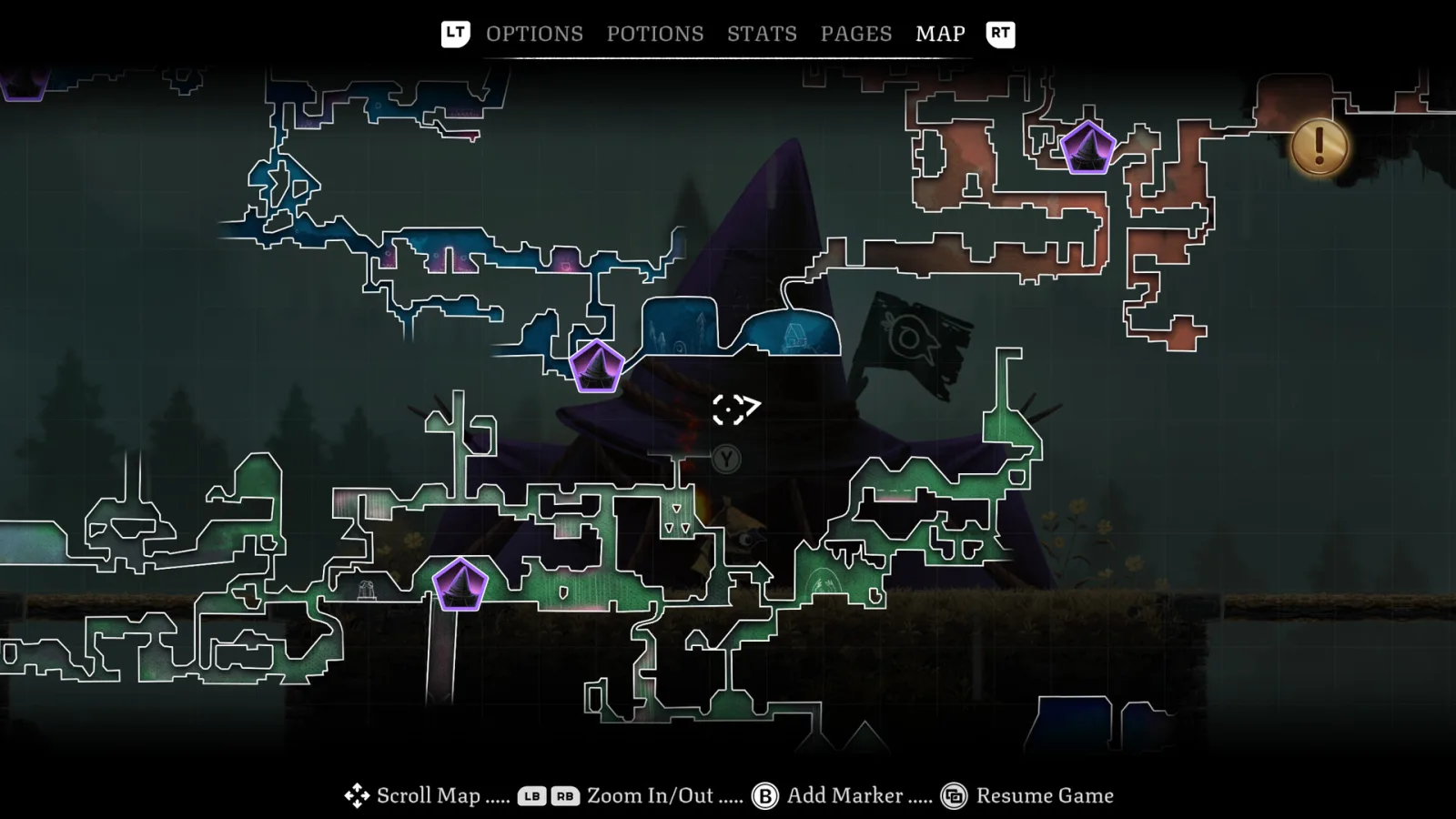
The second half of Thompson's goal keeps movement tricks from becoming clever tricks. A map can be dense with shortcuts and still feel assembled from challenge rooms if its areas have no reason to touch. Islets made geography visible by reconnecting islands; Crypt Custodian used its flexible order to let players arrive at places by different paths. Well Dweller's map shows corridors and markers, not a finished structure. It cannot establish pacing, secrets or the logic of those links. It does underline why the developer's emphasis on a coherent background matters: geography is more persuasive when a route feels like part of a place rather than an arrangement of tests.
That is why the matchstick is a better hook for Well Dweller than a checklist of bosses and biomes. It concentrates the design question in one object. If it only opens appointed obstacles, the game may still be a lovely return to side-scrolling for Thompson. If it keeps altering light, combat, movement and the reader's sense of what a familiar corridor permits, it could make exploration feel less like a queue of permissions. Gematsu reports that Well Dweller arrives on 22 September for PC, PlayStation 5, Xbox Series, Switch and Switch 2. The useful anticipation is that its maker has explained what he wants that map to do differently.
Sources
Where this story comes from, and where you can check it.