The most surprising item in METAL SLUG ULTIMATE COLLECTION is not another familiar arcade entry. It is the Location Test Version of the original Metal Slug, a build SNK says was never officially released. Thirty years later, it offers a particularly good kind of curiosity: a chance to see a beloved game before it found the decision that made it work. The early project put players in the series' squat, expressive tank full-time. The finished arcade game made that tank a prize. That change sounds small until you notice how much of Metal Slug's rhythm depends on climbing in, feeling unstoppable for a minute, and then being tossed back into danger.
SNK has not yet published a full technical breakdown of the version in its 2027 collection, so the differences are not fully settled. But the history around the location test is unusually revealing. GamesRadar's recent reporting, based on an interview with original project lead Kazuma Kujo, describes a version in which the vehicle was the only character under the player's control. After the location test received a poor response, the team made soldiers central instead. The collection is therefore more than a museum shelf of old ROMs. It is an opportunity to compare two answers to a basic arcade question: should the player begin as the spectacle, or earn it?
The tank was the idea before it was the reward
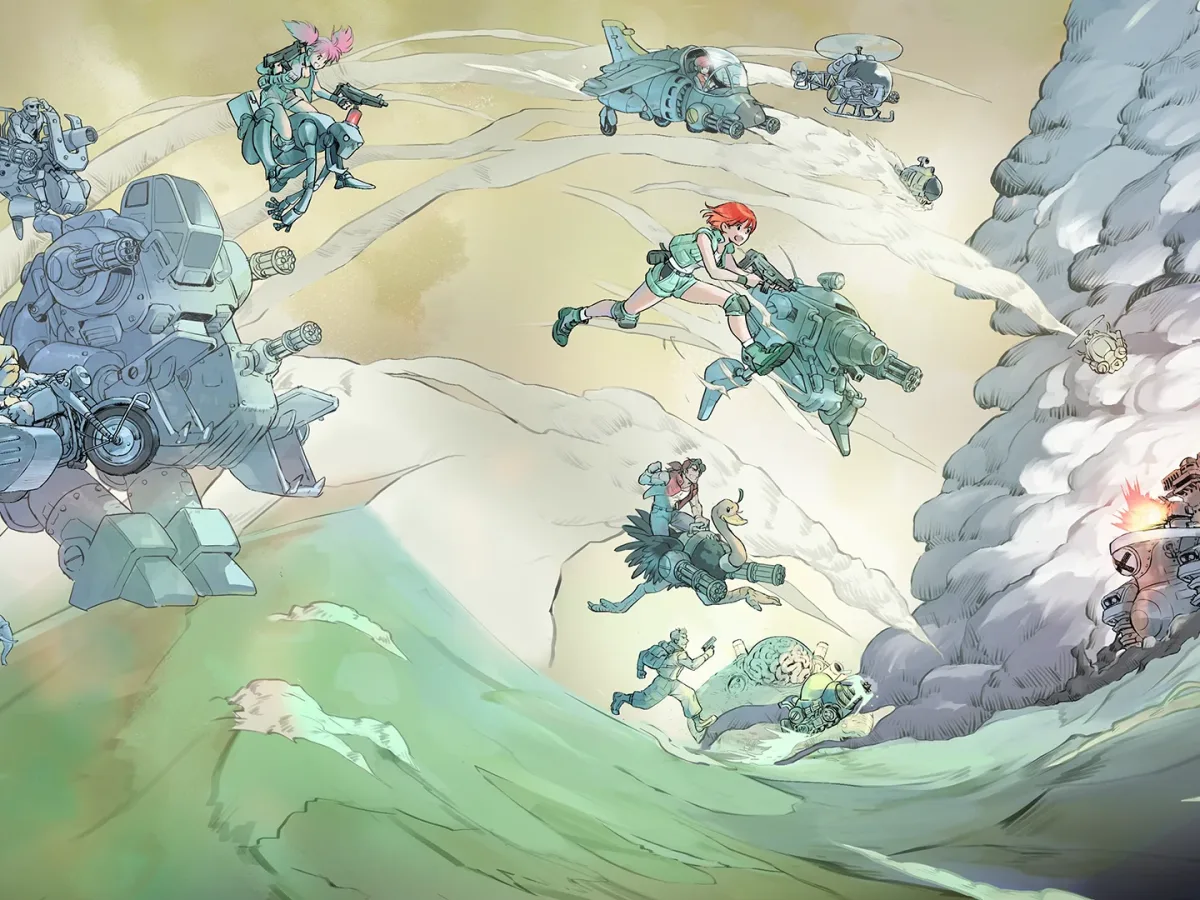
It is easy to see why the first answer appealed. The SV-001 is an absurdly personable machine: a bulbous little armoured car that waddles over infantry, fires a cannon, and looks as if its suspension is enjoying itself. Metal Slug's artists gave vehicles the same animated character as its soldiers, so a tank could carry an entire game without feeling like a static bonus. Shmuplations' translation of a 1998 developer interview records that the team initially designed maps for tank-only play. The surviving locations did not need to sell the fantasy of becoming powerful. They began there.
That design also had a cost. A permanent tank gives a player a broad weapon and protection, but it removes the change in scale that lets a run-and-gun game breathe. The final Metal Slug starts with a small soldier, a modest handgun and strict firing directions. GamesRadar notes that the original team's decision to limit the soldier's aim was deliberate; genuine angled fire arrives with the tank. That makes vehicle access legible immediately. Boarding one does not only add armour. It rewrites the space around the player, letting a wide enemy formation or a high platform become manageable in a new way.
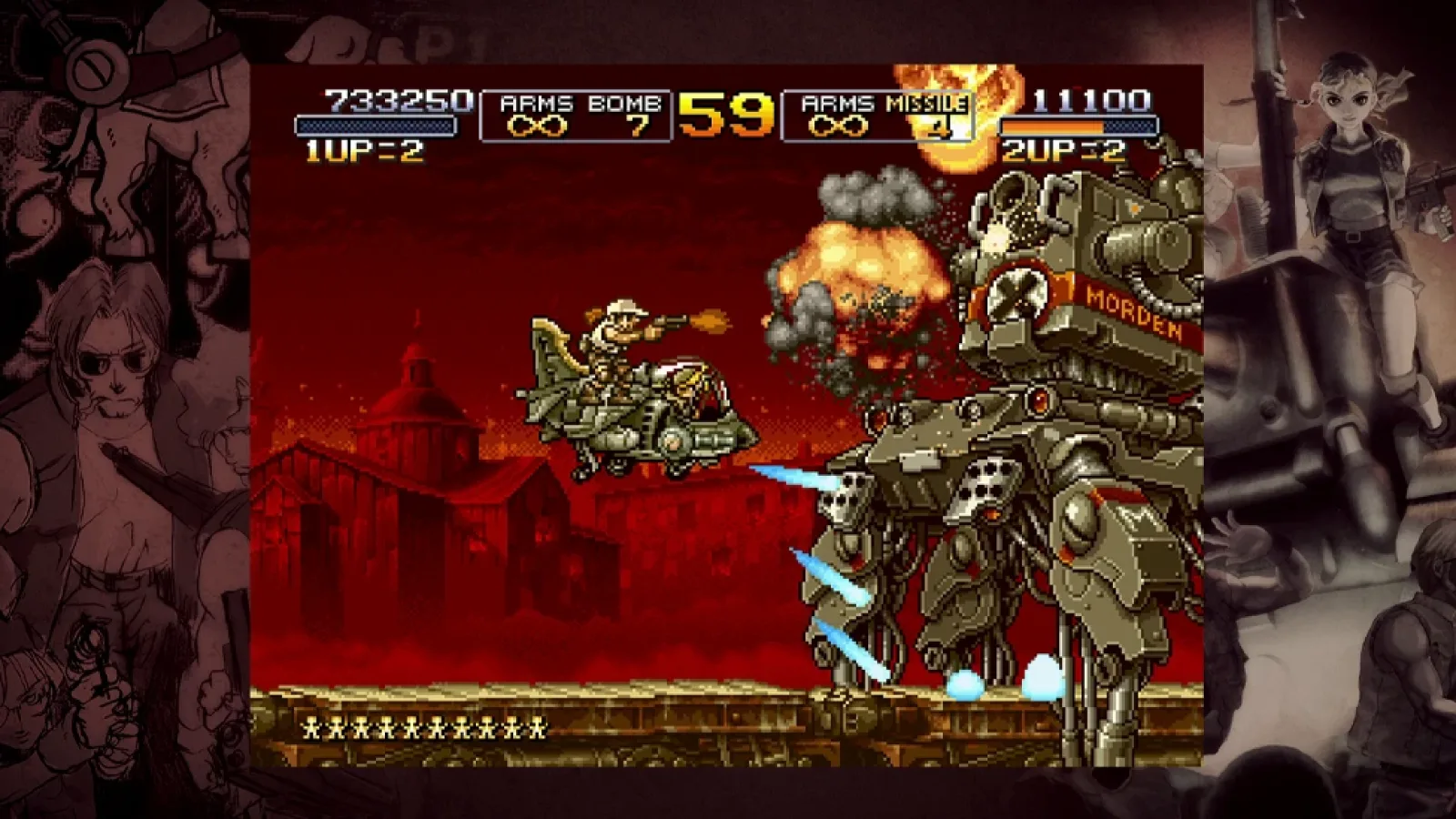
Vulnerability gives the spectacle somewhere to go
The finished game does not make the tank scarce simply to be mean. It uses the gap between soldier and vehicle as a source of movement. On foot, players thread through bullets, use a knife at close range, rescue prisoners and grab temporary weapons. In the tank, they can ride over troops and throw shells around the screen. Those are not two unrelated power levels. One makes the other easier to read. The ordinary soldier establishes what danger feels like; the Metal Slug makes a brief escape from that danger feel huge, even before a boss arrives to put its armour under pressure.
It also gives the game a clean way to stage reversals. A vehicle can be destroyed or left behind, and the player has to carry on with less reach than they had a moment earlier. The result is not a simulation of military hardware; it is an arcade tempo change. Metal Slug can turn a rescue into a weapon pickup, a vehicle into a noisy burst of confidence, then make the next screen dangerous again without inventing a new rule. The tank earns its name because it is memorable, but it earns its design value because it is temporary.
A prototype can explain a classic better than a bonus mode
That is why the Location Test Version is more interesting than a footnote about rarity. A prototype is often treated as a box of discarded curiosities: different art, missing stages, a strange menu. This one appears to preserve a larger fork in the game's identity. If the location-test material really does let players spend the whole experience in the vehicle, it will make the released Metal Slug's restraint visible by contrast. The soldiers, the limited on-foot firing and the nervous trip towards the next machine are not merely the bits left around a tank. They are the structure that made its arrival funny, useful and dramatic.
There is a sensible limit to the lesson. The collection's announcement promises quick saves, rewind, Combat School, score attacks and online features for supported games, while warning that availability differs by title. It does not tell us how the early build will be presented or feel in the package. Still, SNK and M2 have chosen a more revealing form of preservation than a gallery caption. When the collection arrives, the location test should let players encounter a road not taken, then return to the 1996 release and feel the missing step that became Metal Slug's best trick: the tank is glorious precisely because it is not yours forever.
Sources
Where this story comes from, and where you can check it.
Official sources
- SNK CorporationMETAL SLUG ULTIMATE COLLECTION rolls out in 2027! Includes nine memorable titles, plus the rare location test version! ↗
- SNK CorporationMETAL SLUG ULTIMATE COLLECTION ↗