When a Batman game reaches for the well, the museum or the bat signal, it is touching props that have already done decades of work. LEGO Batman: Legacy of the Dark Knight has a more useful response than simply asking the player to applaud the reference. TT Games has described its new story as a remix assembled from many versions of Gotham, and the reported result suggests a good rule for licensed games: recognition is the invitation, not the activity.
That is particularly welcome in a series built from bricks. The physical joke of LEGO has always been that a supposedly solid world can come apart, be reassembled and suddenly become a vehicle, a staircase or an excuse for a pratfall. A licensed game can use that same spirit with its source material. The interesting question is not whether a player spots a famous Batman moment. It is what a game lets that moment become once it has stopped being a scene the player must faithfully recite.
References need a job beyond recognition
TechRadar's May interview with TT Games executive producer Matt Ellison supplies the clearest account of the approach. Ellison said the new story was developed with DC and pulls from many places without being tied to direct recreations. Its opening uses the familiar image of Bruce Wayne's training in Nanda Parbat because learning how to control Batman fits that part of his story. The reference has a mechanical use: it gives early-player instruction a setting that already makes sense, rather than pausing the action for a museum label.
The same interview describes the team moving Catwoman into the Flugelheim Museum sequence and reshuffling other moments when a different combination serves the story. That freedom matters because Batman's continuity is not one straight road. It is a cupboard packed with gadgets, cities, origin stories and versions of the Joker. A game that treats every familiar piece as fixed canon can become oddly timid. A game that moves the pieces can make room for a route, a fight or a comic interruption that belongs to play rather than to a checklist of references.
The retelling is not the only LEGO tradition
LEGO Star Wars: The Skywalker Saga offers the useful counterpoint. TechRadar characterises its nine-film structure as an often playful but largely note-for-note remake of the films. That form has its own pleasure: the player gets to occupy landmarks in an enormous, well-known story, with LEGO's sideways humour taking some of the stiffness out of the script. It also illustrates the limit of literal adaptation. The plot is already known, so the game has to find its surprises in detours, collectible hunting and the odd absurd sight gag.
Legacy of the Dark Knight appears to be seeking a different bargain. Its cast and locations are still recognisable, but the reported design does not have to wait for a film scene to grant permission for a vehicle chase, a new companion or a changed confrontation. The player is not being asked to demonstrate that they remember the source correctly. They are being given a Gotham assembled from things they remember, then invited to see how those ingredients behave when the usual sequence has been disturbed.
Changing the tone changes the action
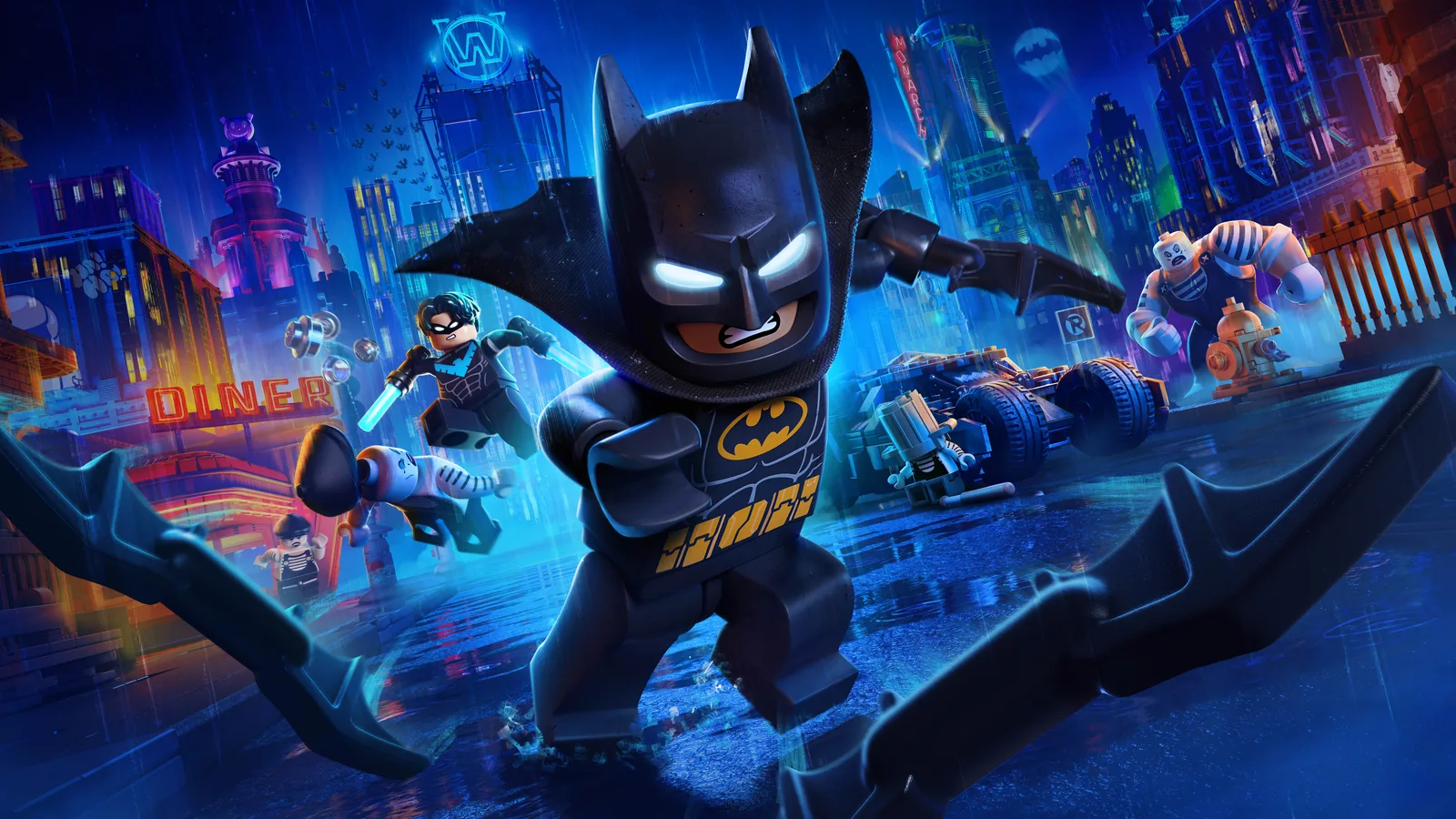
That looseness should not be mistaken for indifference to Batman. Ellison told TechRadar that TT Games took inspiration from the feel of Arkham's free-flowing combat while adapting it for a broader audience. The result, he said, is less brutal and willing to make a gag out of a frying pan. This is a small but telling choice. The game is not chasing the tone of one definitive Batman; it is deciding which parts of Batman can carry the sensation of power while still allowing a plastic minifigure to puncture the mood.
The reported Gotham also gives the remix physical room. TechRadar describes four connected islands, Batmobile travel, ramps, grappling and gliding across rooftops. Those systems matter more to an adaptation than another line lifted from a film. A city that can be crossed in several ways gives a player time between story beats to make their own small choices: take the road, pull up to a roof, chase a trial or simply notice a familiar landmark from an unfamiliar angle. Canon becomes a place instead of a corridor.
The player should get to rearrange the furniture
There is a sensible boundary here. A remix still needs enough clarity for a newcomer to understand who is in trouble and why a particular location matters. Ellison's account of the game is encouraging on that point: the intention was for long-time Batman fans to recognise moments while a first-time visitor could follow the story. That is a better ambition than stuffing every corner with winks. It treats a reference as context for an action, not payment demanded from the player before the action can be enjoyed.
That is why LEGO Batman's approach is more interesting than an exercise in franchise recall. The richest adaptations do not preserve every prop under glass. They take the things an audience already knows, put them in reach and let the game make a modest mess of them. A bat signal is still a bat signal. It just becomes more useful once there is somewhere to glide from, something silly to hit and a route through Gotham that was not already printed in the script.
Sources
Where this story comes from, and where you can check it.
Official sources
- Warner Bros. GamesLEGO Batman: Legacy of the Dark Knight Nintendo Switch 2 version to launch on Sept. 18 ↗