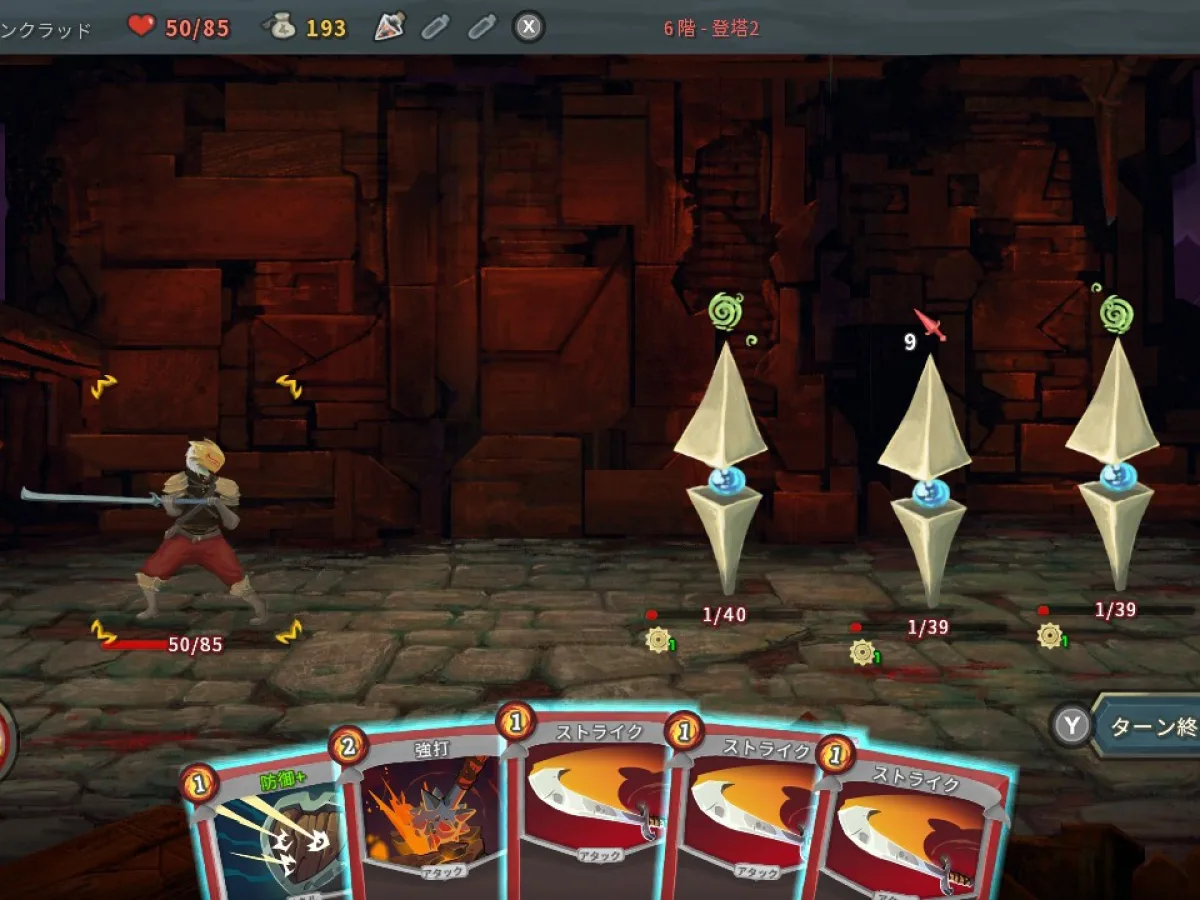
A Vek in Into the Breach does not conceal where it plans to strike. An arrow, a target and a damage number sit on the board before the player's mechs move. In Slay the Spire, a small icon above each monster announces its next intent before a card is played. Those displays look almost too generous in genres associated with cruel surprises. They are actually the reason both games can be so demanding. By putting immediate danger in plain sight, they turn a bad turn from an ambush into a problem with several imperfect answers.
That is a useful distinction in games built around uncertainty. A roguelike can shuffle the next card, choose the next encounter or place a fresh enemy, then leave the player with little time to make sense of it. Hidden information can create suspense, but it can also make a loss feel like paperwork: there was no sensible response because the relevant fact was withheld. Into the Breach and Slay the Spire put uncertainty somewhere else. Their next move is visible, while the tools, circumstances and longer journey remain unstable. The player gets a decision, not a forecast of victory.
Into the Breach makes the whole board a threat
Subset Games takes the idea furthest. Game Developer's 2018 interview with co-founder Justin Ma describes telegraphed enemy attacks and no random chance in the player's attack options as a core choice: each turn becomes a puzzle. The important word is not 'telegraphed' on its own. The Vek's intended blows sit beside buildings, allies, spawn points and hazards, so seeing them is only the beginning. A mech may be able to kill one attacker, push another into a mountain, or move a threat so it hits its own side. None of those solutions automatically saves everything.
That is why the display does not make Into the Breach forgiving. Ma told Game Developer that preserving the city was often more important than eliminating the enemy, and that varied priorities were meant to force adaptation. A player who sees two attacks can still stop only one. They might take damage on a mech to protect a power grid, or let a building fall because the alternative loses the mission. The visible future makes the cost legible. When a plan fails, the player can trace the missed shove, the blocked lane or the threat they chose to leave alive, rather than wondering which unseen dice roll ruined the run.
Slay the Spire makes a hand of cards speak
Slay the Spire uses a smaller version of the same trick. In a 2019 Nintendo interview, Mega Crit explained that its early enemies selected actions from a list without showing the player what was coming. With a random hand of cards as well, the team found that players lacked a clear basis for a turn. Clicking an enemy to read a detailed next-move panel was not the answer either: it asked the player to process too much text. The finished intent system reduces the point to an icon and number, visible for every enemy at once.
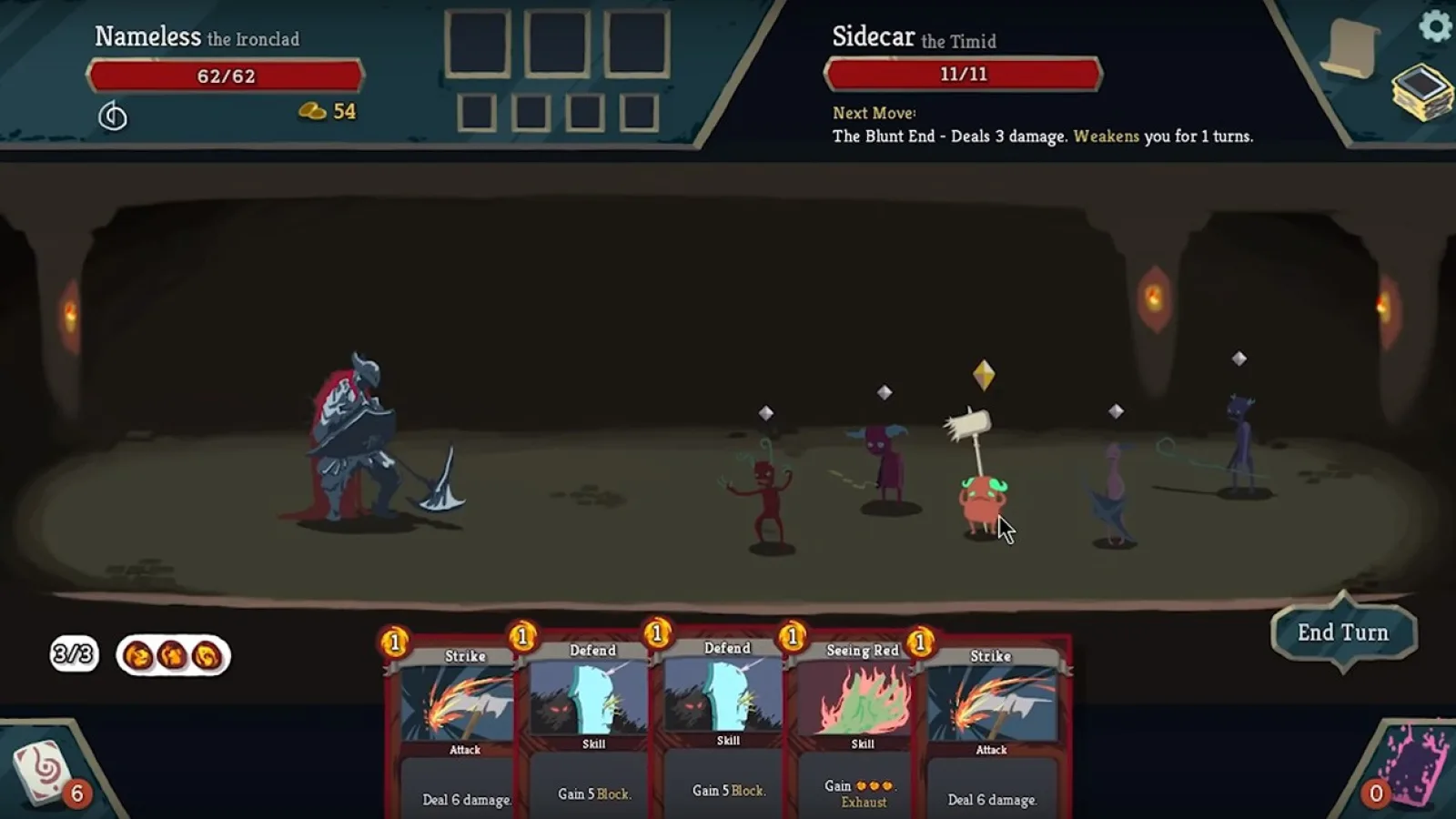
That compression is doing serious design work. A player who sees an incoming attack can decide whether today's hand should become Block, damage or a longer-term set-up. The answer is never supplied by the icon. A bad draw may not contain enough defence; an enemy may be vulnerable now but dangerous later; spending a rare card can make the next fight worse. Steam's official description still calls the wider run a changing Spire built through card choices, encounters and relics. Intent simply makes the immediate question readable enough for those larger uncertainties to matter.
Information can make failure more honest
The two games therefore do not remove chance so much as decide where chance is allowed to live. Into the Breach lets a new board create its tension, then asks for a deterministic reply. Slay the Spire lets the deck and route keep producing unfamiliar situations, then tells the player what each enemy is about to demand. Both reject the idea that difficulty needs an obscured target. Their pressure comes from competing priorities: a threatened city block, a weak mech, a limited hand, a card worth saving, an enemy that has to die before its next pattern arrives.
There is a broader lesson in that small act of disclosure. Good combat information does not tell a player what to do; it tells them what they are responsible for. Into the Breach makes every collateral cost visible. Slay the Spire makes defence a response rather than a guess. The pleasure is not that either game is easy to solve. It is that a clever solution can be recognised as clever, and a disastrous turn can be read back as a chain of choices. In games that happily reshuffle the world around the player, putting danger in plain sight is a remarkably stern kind of fairness.
Sources
Where this story comes from, and where you can check it.
Official sources
- NintendoHello! Indie Vol. 28: Developers talk about the depth and balance of Slay the Spire ↗
- SteamInto the Breach on Steam ↗
- SteamSlay the Spire on Steam ↗
Independent reporting
- Game DeveloperRoad to the IGF: Subset Games' Into the Breach ↗