The crowd at HITMAN's Paris fashion show is part of the disguise. Agent 47 can walk into a room as a guest, a guard or a member of the crew, but each role changes which doors open and which people notice him. At Dishonored's Lady Boyle's Last Party, the invitation buys Corvo a different kind of freedom: masked aristocrats let him move through their rooms while he works out which of three sisters is his target. Both missions dress stealth as a party. One makes belonging a rule system; the other turns the party into an investigation.
Paris runs on the right uniform
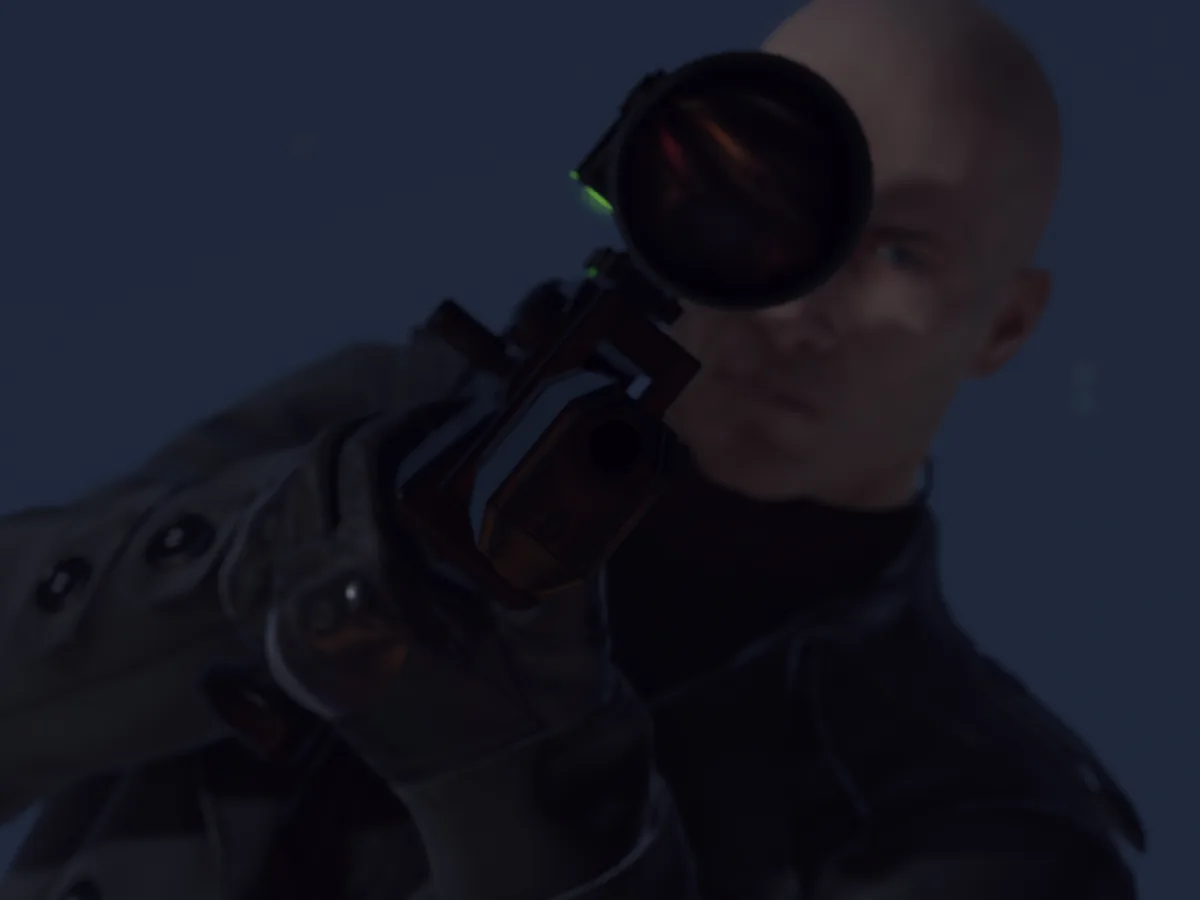
In the Paris mission, Agent 47 arrives at a fashion show held in a grand private residence. The setup is unusually legible: people have gathered to watch a catwalk, protect the event, work behind it or move through the house as guests. Changing clothes gives 47 a way into some of those groups, but it does not erase the social map. A staff uniform may suit one part of the event and still look wrong in a room reserved for another role. The player has to learn who belongs where, then use the role that fits the next step.
That is why the disguise works as more than a visual costume. It is a small bundle of permissions with limits. Feral Interactive's manual says a disguise makes it less likely that 47 will be suspected in a restricted area, while anyone not fooled by it counts as a threat. So the question is not simply whether he is seen; it is whether the room accepts his role. IO's creative director described the Paris level as a night-time gala built around the fantasy that 47 could infiltrate any location. The disguise lets the player test that fantasy in pieces, by taking on the job that can get them closer to a target.
The outfit also changes the performance. IO game director Mattias Engström has described Hitman's disguises as a form of role-playing: 47 can take on work such as a barber or mechanic. The Paris fashion show sharpens that idea into theatre. The player is not simply hiding behind a box; they are trying to pass as someone with a reason to be in this particular room. A staff role can put the assassin near the machinery of the event, while a guest's access can bring him closer to its hosts. Each costume suggests a route, then asks the player to check whether the room agrees.
At Boyle's party, the mask conceals a person
Lady Boyle's Last Party begins with a harsher journey. Corvo approaches the mansion through plague-ridden streets and watch patrols; once inside, he crosses into a room of masked aristocrats where he can move more freely. Dishonored co-creative director Harvey Smith told PC Gamer that this change in space was central to the mission's contrast. The party is not merely a dressed-up version of the streets outside. It makes the city visible in miniature: guards patrol beyond the walls while the wealthy guests eat and dance out of reach.
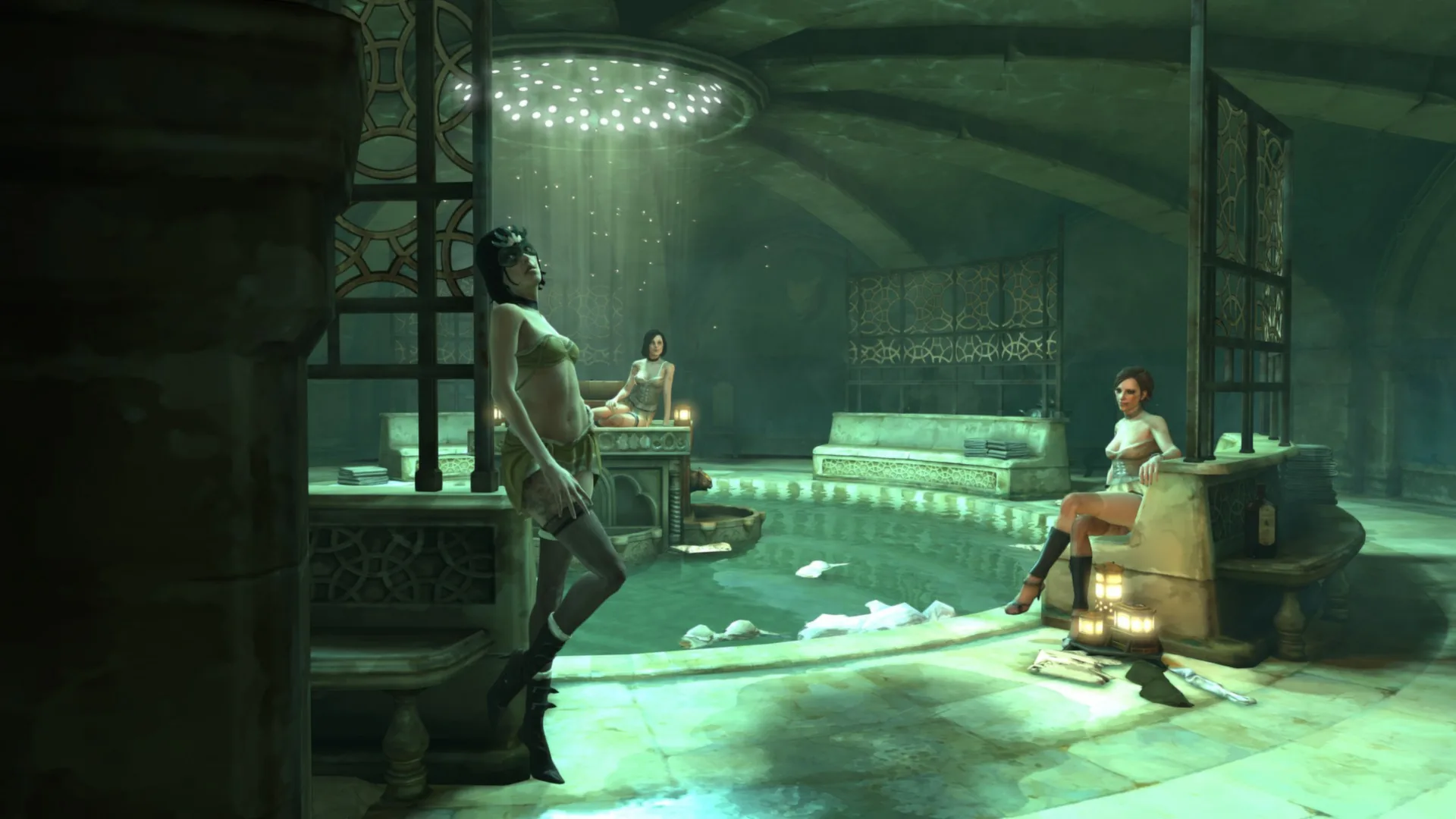
The mask does not tell Corvo what to do next. One of the three Boyle sisters is the target, and the player must gather clues to identify her. That means the mission's social space is useful because it contains information as well as cover. The sisters' names, behaviour and conversations are part of the problem. Even before Corvo chooses how to deal with the target, he has to work out who she is. PC Gamer's reporting on the mission's development says the team paired two ideas: a costume party and a task in which three possible targets included only one correct answer.
The two parties therefore make opposite demands on a disguise. In Paris, clothing is a key that works only for certain locks; learning the staff's hierarchy and the guests' boundaries opens routes through a living venue. At Boyle Estate, the shared masks flatten appearances, so the important task is to notice the distinctions the costume cannot hide. One mission invites the player to borrow an identity; the other asks them to look past a crowd's identical cover.
Two parties, two kinds of stealth
Neither design reduces to a simple rule. Hitman's Paris level still asks the player to read people and listen for opportunities, while Lady Boyle's party still has routes, guards and dangerous places to avoid. The difference is where the missions put their emphasis. Paris makes social status and access tangible through disguises. Boyle's party makes the room's mystery tangible through the guests who might reveal the target. In one, the player experiments with the role that belongs in a space; in the other, they use the space to discover which person matters.
That contrast explains why a masked ball can support two very different stealth fantasies. The clothes in Hitman are a practical map of the building's social boundaries. The masks in Dishonored turn a party into cover for a question of identity. At the Paris show, the satisfying moment is earning entry to the next room. At Lady Boyle's, it is realising that the room has already told Corvo whom to find. Both levels hide an assassin in a crowd; they make the crowd worth reading for different reasons.
Sources
Where this story comes from, and where you can check it.
Official sources
- Feral InteractiveHITMAN™ - manual ↗
- Bethesda.netDishonored | Bethesda.net ↗
- IO InteractiveHITMAN World of Assassination ↗
- SteamHITMAN ↗
- SteamDishonored ↗