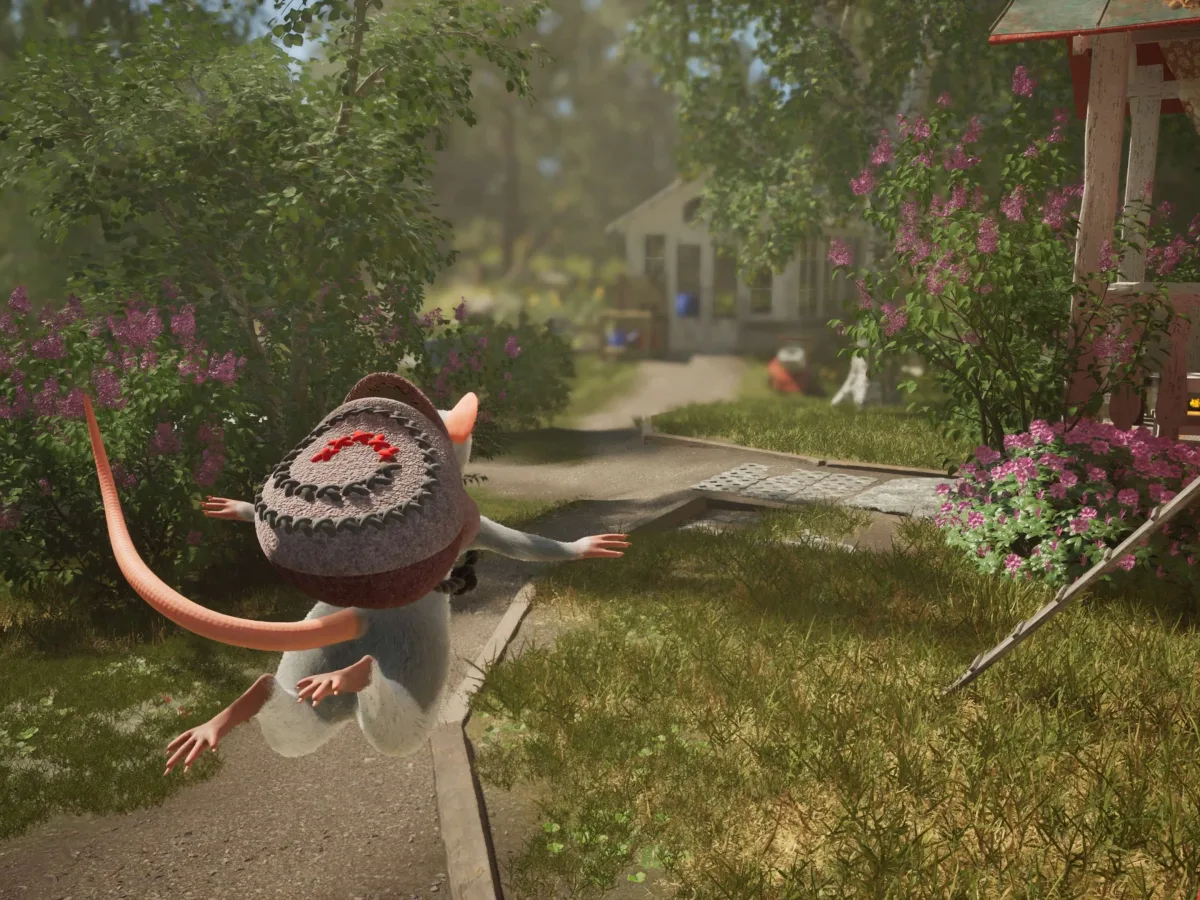
Hela: of Mice & Magic is worth watching because its frog-shaped backpack makes mouse scale matter. Gliding, swinging and pulling are not just ways to cross a garden or wetland; they can turn a second mouse into an anchor, a bridge or a way back from a bad jump. With a confirmed 1 December 2026 release across PC and current consoles, Hela has a clear hook. Its real test is whether those tools make a shared world feel like a place players are actively changing for one another.
A co-op world needs useful distance
Windup Games has framed Hela around a familiar of a kindly witch who has fallen ill. The mouse is meant to explore, collect ingredients, brew potions and help the people and creatures the witch once cared for. That premise does not explain why players should travel together. Plenty of co-op games mistake company for co-operation: friends arrive in the same clearing, collect the same objects, then divide across a large map because no task asks them to notice each other. Hela's demonstrated ideas point towards a more demanding answer. The journey needs routes that become different when another player is nearby.
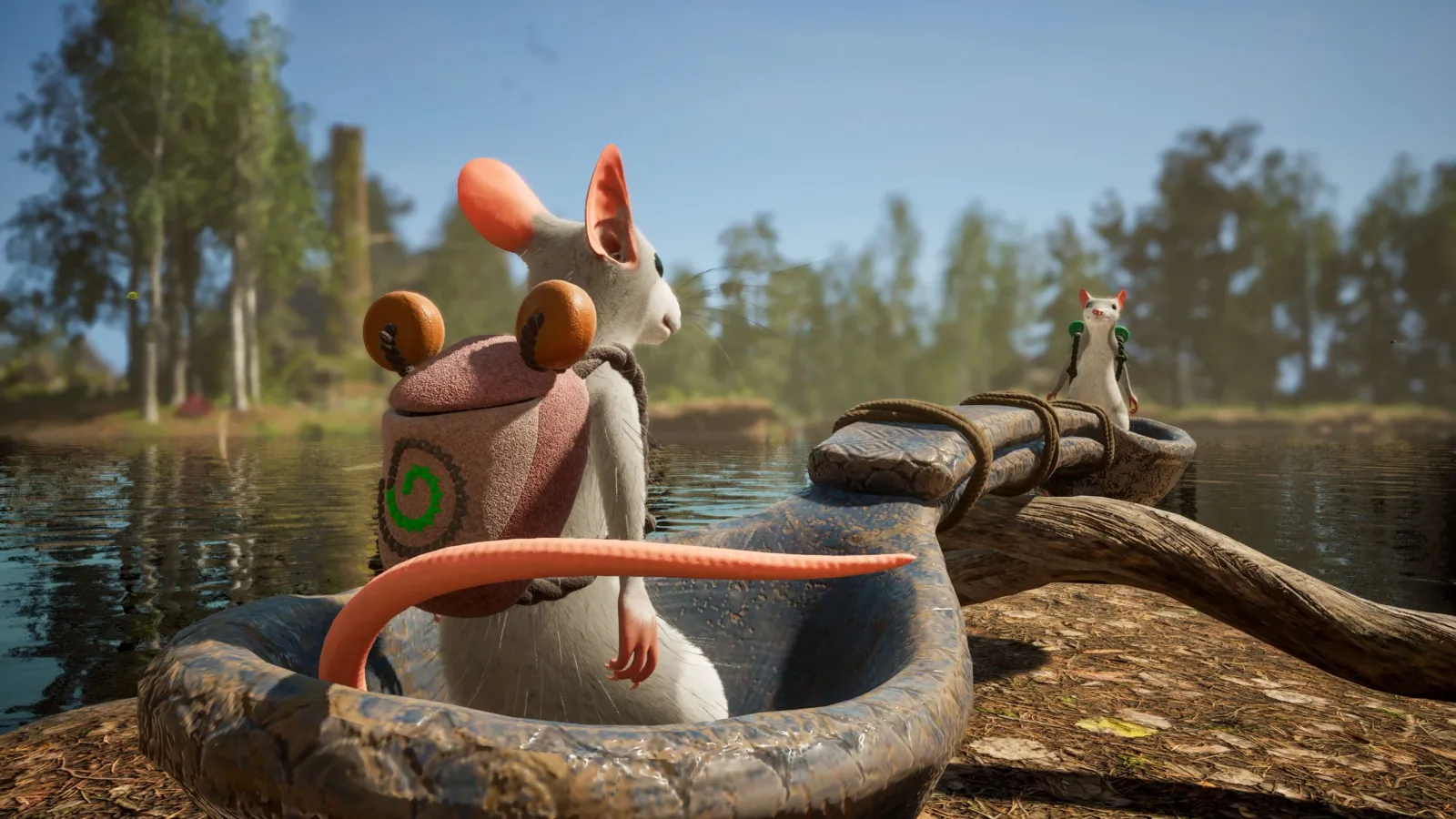
The scale makes that plausible. Official material describes forests, meadows, wetlands and burrows, with a backpack for gliding, swinging, climbing and pulling. Each verb can change who reaches a ledge first, who holds a line, or who makes a risky crossing worth attempting. A world made for tiny characters should not only make ordinary objects look enormous. It should make ordinary terrain a conversation between players. The aim is not constant proximity, but separating to discover a route and reconnecting because a find or piece of movement asks for another set of paws.
The backpack has to be a shared language
That is why the backpack matters more than Hela's cosy surface. Xbox Wire says its lasso can connect to a Shade or another player, creating a bridge that can be walked or bounced across, while a higher position can become an anchor for a swing or climb. These are specific promises rather than a vague claim that the game supports teamwork. They suggest that traversal can be improvised from where the group has already been, not only from fixtures placed by the level designer. A good route could be something players build in the moment: one mouse holds position, another crosses, then the group has a new way to move.
Hands-on reporting gives the idea texture. Shacknews, which played an early PC build with the developers during Summer Game Fest, described recipe steps at the witch's cauldron that divided work between players: reading a spellbook, adding ingredients and using a grappling hook to stir. It also saw a Tailwind potion used to propel rafts or activate a zipline. Those examples matter because they make co-operation a sequence of roles rather than an excuse to put four characters on screen. The outlet was clear that the build was unfinished, but its account suggests a design trying to give movement, gathering and brewing the same social logic.
Solo play cannot be an afterthought
Hela's Shade system is the part that could make this approach work beyond a full party. Windup says solo players can create up to three spectral copies that repeat an imprinted action; with fewer human players, the combined total can still reach four characters. That is a sensible response to the awkward compromise at the centre of many co-op adventures. If a game is balanced around four bodies, playing alone can feel like arriving at a locked door without the other keys. If it is balanced only for one, extra players can become spectators. The systems need to recognise both ways of playing.
Gamereactor's earlier hands-on described using Shades to satisfy several puzzle positions in a session with fewer people, and leaving them as positions the player could return to. That sets a tougher standard than a simple substitute button. Shades must be readable enough that a player understands what has been recorded, dependable enough that a planned route does not collapse on a vague input, and flexible enough to reward experimentation. The clever version lets a solo player discover the kind of satisfying arrangement a group reaches by talking. The weaker version turns every multi-part puzzle into admin. Hela's movement will need to make the difference obvious.
The remaining question is what holds the journey together
There is still plenty Hela has not demonstrated in enough detail. A lovely forest and a broad set of movement verbs can create memorable afternoons, but an open world needs reasons to keep revealing itself after the first swing. The witch's illness, village tasks and potion-making provide a framework, yet the long-term shape of the story and how areas feed into it remain unclear. Gamereactor enjoyed the movement and fairytale backdrop while identifying the central narrative as an open concern. That is a fair expectation to carry forward: the game needs progression that makes helping the world feel more substantial than ticking off errands.
For now, Hela is worth following because its most tangible feature does more than advertise charm. A backpack that turns friends, spectral copies and familiar terrain into traversal tools could give a peaceful co-op game a real point of view about being together. Knights Peak and Windup have confirmed the game for PC, PlayStation 5, Xbox Series X|S and Nintendo Switch 2 on 1 December. What remains unconfirmed is how deep the campaign is, how often its systems combine in the wild, and whether its open world can keep those small acts of assistance meaningful. The next useful look should answer those questions, not simply show another scenic mouse.
Why Hela is worth watching
- Demonstrated hook
- The backpack can turn players and Shades into bridges, anchors and routes.
- Evidence so far
- Independent hands-on reports describe co-op brewing, traversal and early Shade puzzles.
- Open question
- The campaign's scope and the long-term rhythm of its open world remain unconfirmed.
Hela has a credible co-op idea; it now needs a journey with enough purpose to carry it.
Sources
Where this story comes from, and where you can check it.
Official sources
- MicroidsHela: of Mice & Magic will enchant players worldwide on December 1st, 2026 ↗
- HelaHela | Adventure Together on Nintendo Switch 2, PS5, Xbox Series X|S & PC ↗
- Xbox WireHela: A Co-Op Adventure for Every Kind of Player ↗