A screen in Celeste can end in a spike, a fall or a bad dash into open air. The answer arrives almost before the mistake has settled: Madeline is back at the start of that small room, with the troublesome gap still on screen. Nothing has been made easier. The game has merely declined to turn a useful failure into a trek back to the interesting bit.
That is the quiet deal beneath a lot of precision platforming. Celeste's Steam description calls its controls simple - jump, air-dash and climb - then says every death is a lesson and credits lightning-fast respawns with keeping the climb moving. It is unusually exact language for a store page, because the respawn is not a convenience added after the hard part. It is part of how the hard part can ask for so much.
The jump is a question with an answer
In a long, checkpoint-starved platformer, a missed jump can leave the player remembering the walk back more clearly than the mistake. That is dead time: terrain already understood, inputs already proved, a small irritation gaining the shape of a punishment. Celeste cuts the cost down until a fall can be read as a diagram. Perhaps the dash began too late; perhaps the climb spent too much stamina; perhaps the player simply needs to let the moving block carry them for another beat.
The point is not that immediate failure feels pleasant. A difficult screen can still be maddening, and repeated attempts can still expose a rough edge in a player's timing. The difference is that the game keeps the evidence close. PC Gamer's recent platformer guide describes Celeste's checkpoints as generous while insisting the mountain remains hard. That is the useful distinction: forgiving placement does not erase precision. It gives precision enough repetitions to become legible. The best rooms keep that loop short enough for impulse to become judgment rather than impatience.
Meat Boy made the mess visible
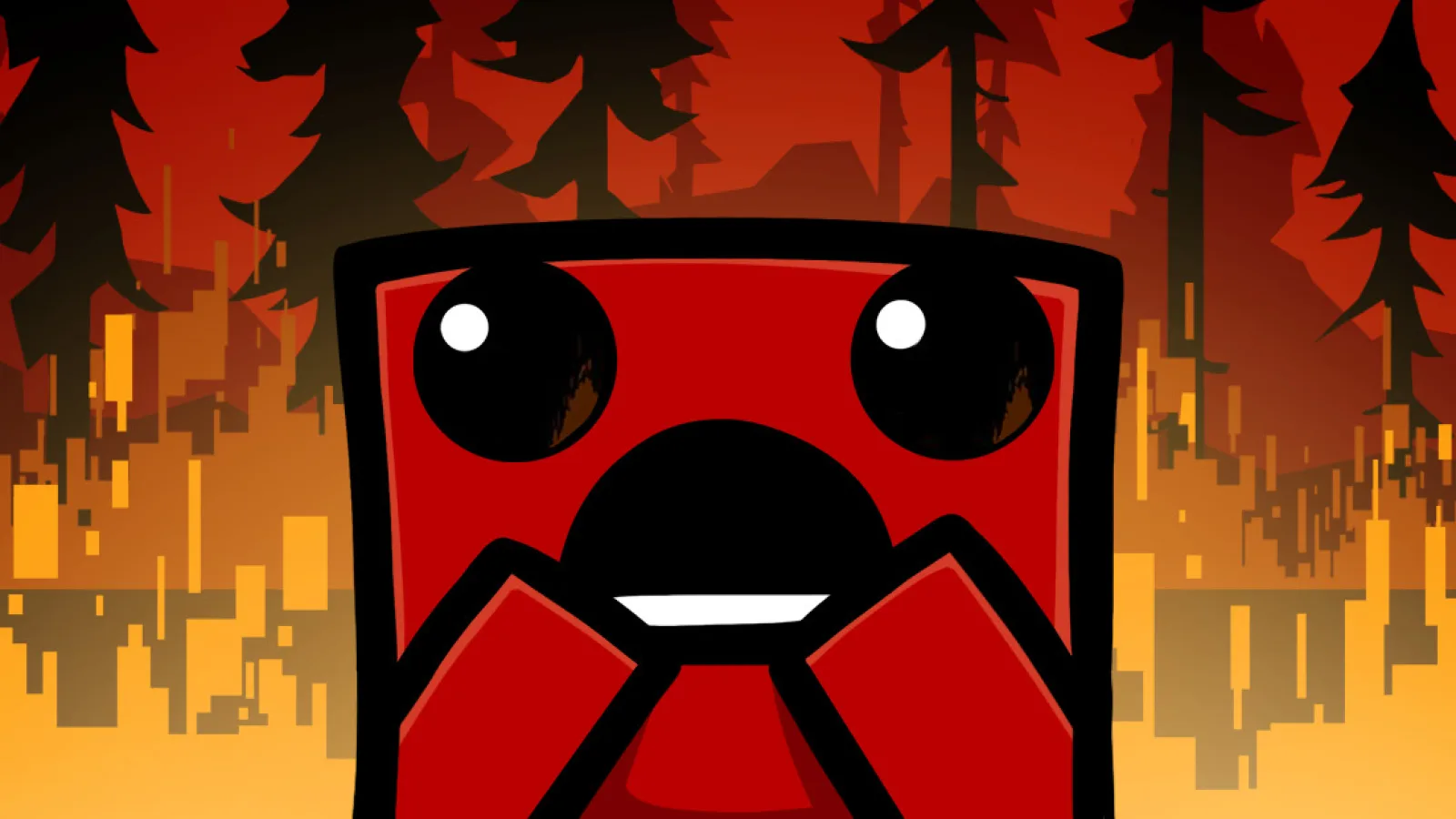
Super Meat Boy is less tender about the whole business. Its Steam page promises old-school difficulty stripped down to twitch-reflex platforming, then sends its hero through saws, crumbling caves and needles. The game treats frequent death as part of its cartoon gross-out. Meat Boy bursts, the room remembers the red smear, and the next attempt begins. Failure is both a reset and a record of where the last route ended.
That last part matters. A restart only becomes encouraging when the player can form a better plan. Meat Boy's tiny rooms and clear hazards make the route readable at speed: a wall jump leads to a narrow platform, a saw dictates the delay, a falling ledge asks for commitment. The replay of a completed stage then turns all those doomed runs into a frantic crowd behind the successful one. The failed versions are not scrubbed away; they help frame the clean line that finally worked.
Why 3D makes the bargain harder
This is why the recent move to Super Meat Boy 3D is more interesting than a familiar mascot acquiring depth. In March, Sluggerfly co-founder Dominik Plassmann described the series' core loop as "fail, learn, retry" and said the team had to preserve it while dealing with depth perception. A free camera did not provide enough clarity at Meat Boy's speed, so the developers settled on controlled angles, 45-degree level geometry and ground indicators to make a route easier to judge.
Those aids are not a retreat from difficulty. They are the 3D equivalent of a fast respawn: a way of ensuring the next failure teaches the player about their decision rather than about a camera hiding the landing. The developers also kept the character visible and built levels around the camera, which is a fairly blunt admission that precision relies on information as much as dexterity. A punishing jump can be thrilling; an unreadable one is just a tax collector.
Difficulty needs a short memory
Celeste and Super Meat Boy do not make the same emotional argument. Celeste makes a climb out of a compact move set and lets its fast restarts support a story about continuing; Meat Boy turns the same insistence into slapstick carnage. Yet both understand that hard games need to be economical with a player's patience. The obstacle should be allowed to occupy the mind. The commute back to it should not.
That principle also explains why their demands age so well. A player does not have to feel instantly capable of a screen in either game. They only need to believe the next attempt will say something new. Give a difficult jump that courtesy and it becomes an invitation to look again. Make the player repeat five dull minutes before they can look again, and even a clever obstacle starts to feel like it is wasting its own time.
Sources
Where this story comes from, and where you can check it.
Official sources
- SteamCeleste on Steam ↗
- SteamSuper Meat Boy on Steam ↗
- PlayStation.BlogHow Super Meat Boy 3D captures the series' identity, out March 31 ↗
Independent reporting
- PC GamerThe best platformers on PC ↗